

頁內案例及教學紀錄保留實際發生年份;年份是紀錄日期,不代表當前年份的保證或統計。
Looking for a private math tutor? Whether it is primary school math tutoring, middle school math tutoring, DSE math tutoring, college math tutoring, or adult math tutoring. IGCSE math tutoring, IB math tutoring. Hong Kong Tutors Association GETUTOR can provide relevant mathematics tutors.
Serving Hong Kong for 10 years, we have a large number of mathematics tutors from different majors and academic qualifications for you to choose from. We can match you with the most suitable tutor according to your needs.
When I went to university, some mathematics such as Calculus and Linear Algebra are really at a different level, the prof speaks very fast, and the tutorial is not able to keep up with it. I couldn't even understand my own temperature, and the assignments came to dl. I was lucky to find a tutor at GETUTOR who could help me with the maths in Tai Po. She explained the abstract concepts with real life examples, and took me through the Past Paper from simple to deep, which made me understand a lot more, and I wasn't so scared of the exams.
Ethan Lam
Tai Po Market Tertiary Mathematics Tutorial Students
It's hard to find a maths tutor in Tai Po Market, I've had a lot of trouble with the concepts before and I don't know where to start when I see the application questions. I was lucky to find GETUTOR with a tutor who was near my place. He was very patient and would break down the formulas and concepts slowly, and then try different questions until I understood them. He would not ask me to memorise, but taught me how to think, and I was not so scared of the numbers, at least I knew how to start doing them.
Alex Chan
Carmel Boyu Middle School
Teacher Mavis is very patient with my daughter who is very poor in Maths. She will take apart complicated problems and teach her step by step, drawing pictures until she understands them. Although her journey in Maths is not an easy one, having such an attentive teacher gives her parents a little more confidence.
Mrs Chan
current teacher
- As a Mathematics tutor rooted in Tai Po Market, I deeply understand the learning challenges and needs of students in the district, and endeavour to provide on-site support to students from prestigious schools in the district as well as those from other districts.
- I have a strong sense of patience and responsibility, and I have a thorough grasp of the Hong Kong Mathematics Curriculum (including DSE and IAL). I am good at reorganising complex mathematical knowledge and making it simple for students to grasp the core concepts of each topic.
- For students with different abilities, I insist on teaching students according to their aptitude. I teach a variety of problem variations and problem solving techniques for each maths topic, and I specialise in MCQs, which are commonly found in public exams, and I have unique insights and methods of solving them.
- For example, a S4 student of Shatin Government Secondary School, whose initial Mathematics score was hovering around 50 points, jumped to over 80 points in just three months after my systematic reorganisation of the knowledge of functions and geometry, and focused on the MC strategy.
- Another student of Po Leung Kuk Lam Man Chan English Primary School, who is preparing for secondary school, originally lacked confidence in Mathematics. I tailored the exercises to her weaknesses and strengthened her skills in solving applied problems, and she was eventually admitted to the DSS secondary school of her choice.
- With my targeted teaching methodology and rich experience, I have successfully helped more than 15 students from Tak Wang, Sacred Heart, American International School, etc. in Tai Po Market to improve their academic performance within a relatively short period of time (e.g. one to two terms), and even to win the top 10 places in their grades.
- I will continue to provide students in Tai Po Market with the best and most caring guidance in Mathematics to help them move forward steadily and achieve good results in their studies.
Featured Guest Reviews
Ms Leung is a very nice person and never gives me any pressure in class. I am scared of maths and get dizzy when I see some long questions, but she guides me patiently. Even if I make a mistake in calculating or ask some basic questions, she will not say anything to me, instead, she will smile and draw a diagram with me, and explain the steps again. Thanks to her confidence, I dare to try and think about things.

2 years of tutoring experience specializing in math and science subjects
I am the youngest in my year to receive university offers as I was give an opportunity to skip 2 grades. My profile is as below:
Year 1-Year 9 – studied in an international school in Hong Kong
Year 12 & 13 – studied in one of the top performing high school (OIC) in UK after I achieved 3 其他學制 A* and 8.5 IELTS results. My 其他學制 predicted grade in Maths, Pure Maths, Physics and Chemistry is A* for each subject.
I got conditional offer for Mathematics from three top universities in UK and conditional offer for Quantitative Finance in CUHK and HKUST.
I have 2 years of tutoring experience teaching Maths, Physics and Chemistry. All the students I taught had a massive improvement in their grades.
Featured Guest Reviews
I'm a fast reader. 其他學制 Math (AA HL)I'm not sure I can do it. I'm not sure I can do it. Calculus 嗰課跟得好辛苦。搵到呢位老師真係好好彩,佢對其他學制課程好熟,一兩堂就睇得出個仔邊啲概念未清,即刻針對性俾練習。佢啲筆記好精要,覆message又快,好有交帶。

More than 10 years of tutoring experience
本人於band 1英中任職數學科教學職位,香港中文大學及香港華仁書院畢業,主修風險管理科學,副修數學。具備多年專補數學的教學經驗,近年頗專門教授國際學校學生,熟悉AP、SAT、其他學制DP、其他學制MYP、IAL及其他學制課程及公開試答題要求。會考數學、附加數學、物理、化學及經濟都獲得甲級成績(可視為現時的5**),其中數學、附加數學及化學更榮獲最高級別甲1級成績(比甲級更高級別;只頒授予當時最高分約1%考生)。同時,於大學及中學擔任學長多年。故除學術上,也可給予升學及職業規劃的參考建議。
This year, our students mainly come from famous international schools and traditional schools such as ISF, Harrow, YCIS, HKIS, SISHK, West Island, South Island, CKY, Concordia, Hong Kong Wah Yan, Men's Battalion, St. Joseph's Primary School, Keith's Primary School, St. Stephen's College, St. Mary's Canossian School, Kowloon Wah Yan, etc. Our previous students have successfully entered famous overseas universities such as Cambridge University, Imperial College London, London School of Economics, University of Toronto, etc. Our students have also successfully entered University of California, Los Angeles, and University of Toronto. Our former students have been successfully admitted to prestigious overseas universities such as Cambridge University, Imperial College London, London School of Economics, University of California at Los Angeles, University of Toronto, etc.; local universities include University of Hong Kong, Chinese University of Hong Kong, etc. We believe that with our rich experience in exam practice and teaching, we are able to tailor our teaching to the needs of our students, and with the help of specific teaching materials, we are able to provide in-depth explanations, promote interest in learning, and teach question-answering and examination techniques to help our students to achieve good results. Depending on the students' learning situation, we have different styles of teaching materials, including past public examination questions and analyses, practice papers, test papers and exercise questions to supplement classroom lectures and training, and we also provide Whatsapp homework service.
Featured Guest Reviews
My daughter got 5* in DSE Maths this year, which was a great surprise, as her school teacher predicted that she would get level 4! I am very grateful to Mr Yeung for not telling my daughter to memorise formulas, but teaching her how to deduce them and how to apply them to different questions. My daughter said that when she learnt the logic, she would know how to start with unfamiliar questions and her grade would be improved so fast.

7+ years tutoring experience
I graduated from the City University of Hong Kong, with excellent results of 5** in both DSE Mathematics and M1. I have a lot of knowledge and resources in Mathematics. I have a deep understanding of the DSE Mathematics curriculum, which can help students in Mathematics. There are more accurate directions for thinking and answering questions in the subject. I have seven years of experience in teaching middle school mathematics. Whether it is one-to-one, group or cram school, I can effectively consolidate and complement students' strengths and weaknesses. It can also teach students in different teaching methods according to their personalities and provide appropriate guidance and encouragement. In the past, many students with weak foundation in mathematics ended up skipping three levels in DSE and successfully admitted to their favorite university.
Featured Guest Reviews
Miss Cheung helped her with her Maths class, and it was really quite good. Daughter is quiet and doesn't dare to ask questions at school, but the teacher is very good at guiding her, asking her "What do you think you can do next? The atmosphere is very relaxed. And my daughter is willing to take the initiative to talk about where she is stuck, so I feel much more at ease. The most important thing is that she is very punctual and willing to come over! Tai Po Market He is a reliable teacher.

More than 3 years of specialized mathematics experience
* Hello, I am a tutor who focuses on helping students to overcome the difficulties in Mathematics, and I am particularly familiar with the curriculum and examination pattern of schools in Tai Po Market District.
* With a silver medal in the 2018 Olympiad, I am best at breaking down complex mathematical concepts into simple and easy-to-understand pieces, suitable for both students who need to build up their foundation and those who want to take on a 5** challenge.
* In class, I will teach you a lot of practical examination techniques, especially for the MC paper. Many of the techniques are simple and easy to use, so that you can save time and get a high score at the same time.
* To ensure that you have really learnt, I will arrange regular tests to check your learning progress, and I will not use the word "tell".
* I have taught many students in Tai Po Market, with successes including helping a Form 5 student from Lam Tsuen Public School to improve his Mathematics results from Level 3 to Level 5 in one term, and assisting more than 15 Form 4 students in Tai Po to improve by more than 15 points in their internal exams through targeted practice of my examination techniques.
* For those who are going to S6, please note that in the last lesson, I will give you a free self-made mock question paper and a mock examination, which is close to the DSE mode, to help you to make a final push.
* What's more, we provide unlimited WhatsApp support for your homework, so you don't have to wait until the class to find me when you have problems! We look forward to working with you in Tai Po Market to get high marks in Maths!
Featured Guest Reviews
The teacher does not just teach me how to calculate the right answer, but he teaches me how to start from a concept and explore and prove it on my own instead of waiting for the standard answer. online class is very convenient, we don't have to go around and save a lot of time.
4+ years tutoring experience
- Hello. I am a tutor who specialises in tutorials for primary and junior secondary school students! I am a tutor who specialises in providing tutorials for primary and junior secondary school students, and I am particularly familiar with the curriculum and learning needs of students in the Tai Po Market area.
- In science, I have excellent results in the Diploma of Arts, and I have rich experience in tutoring, especially in solving Mathematics and Science problems in a clear way.
- I am very systematic in my teaching, answering students' immediate questions patiently, then designing exercises to address their weaknesses, providing lots of self-made worksheets from the basics to the more in-depth, and exercises that are close to the exam questions.
- For example, last term, I helped a Secondary 2 student from Tai Po, focusing on his failure in Mathematics, and strengthened his training in equations and geometries, and successfully raised his score by more than 20 points within 3 months!
- For example, through systematic foundation strengthening and intensive pre-test practice, I have helped more than 15 Primary 6 students in Tai Po Market to effectively improve their Mathematics and General Studies results before the examination, with most of them improving by at least one grade.
- I believe that it is important to have local teaching materials and to understand students' way of thinking, so I have dedicated my time to collate the question types and common mistakes made in Tai Po schools' question papers.
- If you or your child is experiencing bottlenecks in learning, especially in Mathematics, please feel free to contact me and we will work together to find the most effective ways to progress!
Featured Guest Reviews
I'm really bad at maths, sometimes I have to ask a formular or concept several times before I understand it, and I'm afraid that my teacher will think I'm annoying. However, he never got tired of me, instead, he would use real life examples and talk until I understand it. He is also willing to log in. Tai Po Market I'm really a nice guy.

7 years of teaching experience
A topic serves as the essential subject or central theme of any communication, providing necessary focus and direction. Without a clearly defined topic, discourse lacks structure, making it difficult for an audience to grasp the intended message or for information to be organised effectively. Topics act as anchors, guiding the development of arguments, the selection of supporting details, and the logical flow of ideas. Topics act as anchors, guiding the development of arguments, the selection of supporting details, and the logical flow of ideas. Topics act as anchors, guiding the development of arguments, the selection of supporting details, and the logical flow of ideas. Whether in academic writing, business presentations, or casual conversation, establishing a specific topic is integral to coherence and shared understanding. Whether in academic writing, business presentations, or casual conversation, establishing a specific topic is integral to coherence and shared understanding. The Joint Committee also notes that the Government has not yet adopted a specific topic for the purpose of the dialogue.
Featured Guest Reviews
When Ah Chai was promoted to Secondary School, Algebra has always been his weak point and he was always getting the positive and negative numbers wrong. Mr Liu teaches algebra in a systematic way. He will break down abstract concepts and explain them one by one, together with exercises of different levels, so that Ah Chai understands them much easier. He is very patient and does not mind him asking basic questions, so at least he will not be shocked at the sight of formulae.
Worked as a marker for a large-scale mock examination and as a teaching assistant in the Department of Mathematics in a large-scale tutorial centre.
Language serves as a fundamental human faculty, enabling the complex expression of thoughts, emotions, and cultural identity through structured systems of symbols, sounds, and gestures. Language serves as a fundamental human faculty, enabling the complex expression of thoughts, emotions, and cultural identity through structured systems of symbols, sounds, and gestures. It functions primarily as a tool for communication, facilitating social interaction, knowledge transmission, and collective problem-solving across generations. Beyond mere utility, language shapes perception and cognition, influencing how individuals conceptualize reality and experience the world. Its immense diversity-evident in thousands of distinct languages and dialects-reflects unique historical, geographical, and social adaptations. Languages continuously evolve through usage, borrowing, and innovation, responding dynamically to technological and societal shifts. Mastery of language underpins education, diplomacy, and professional endeavours, while linguistic rights remain crucial for preserving cultural heritage and ensuring equitable participation in global discourse. Mastery of language underpins education, diplomacy, and professional endeavours, while linguistic rights remain crucial for preserving cultural heritage and ensuring equitable participation in global discourse.
Featured Guest Reviews
I learnt a lot of computer programme and MC skills from Mr Chan which are not taught in school, and it really saved me a lot of time when I took the DSE. Tai Po Market It is really important for the students. If I don't understand something in class, he can give me a second example right away, which helped me to consolidate many concepts. Thank you, Mr Chan!

Master of Science in Mathematics, The Chinese University of Hong Kong
Approximately 7,000 distinct languages are spoken globally today, representing a profound tapestry of human culture and cognition. This linguistic diversity is a cornerstone of cultural identity, shaping worldviews, social structures, and the transmission of heritage. This linguistic diversity is a cornerstone of cultural identity, shaping worldviews, social structures, and the transmission of heritage. Languages are dynamic entities, constantly evolving through contact, technological innovation, and shifting societal norms. Understanding this evolution is crucial for Understanding this evolution is crucial for linguists studying language families and historical connections. In addition, effective communication across languages is paramount in our interconnected world, driving demand for skilled interpreters, translators, and language educators. Preserving endangered languages is also a significant endeavour, safeguarding irreplaceable languages. Preserving endangered languages is also a significant endeavour, safeguarding irreplaceable cultural knowledge and intellectual heritage. Ultimately, the study and practice of languages foster deeper cross-cultural understanding, and the development of a new culture of peace. Ultimately, the study and practice of languages foster deeper cross-cultural understanding, facilitate global cooperation, and unlock access to vast reservoirs of human experience and recorded knowledge across diverse societies and historical periods. Ultimately, the study and practice of languages foster deeper cross-cultural understanding, facilitate global cooperation, and unlock access to vast reservoirs of human experience and recorded knowledge across diverse societies and historical periods.
Featured Guest Reviews
I tried for one hour, my goal was to understand Probability in a short period of time. Mr Foo was very quick to understand all the bits and pieces that I didn't know, and then he took me through a few classic problems from the very beginning to the very end. When I made a mistake, he would immediately correct me on which concept is wrong, instead of just saying that the answer is wrong, which makes me feel so efficient.

Current Teachers in the UK
Language serves as the fundamental human capacity for symbolic communication, enabling the expression of complex thoughts, emotions, and cultural identity through structured systems of symbols, sounds, and gestures. Language serves as the fundamental human capacity for symbolic communication, enabling the expression of complex thoughts, emotions, and cultural identity through structured systems of symbols, sounds, and gestures. Its primary function transcends mere information exchange; it facilitates social bonding, establishes shared understanding within communities, and allows for the transmission of knowledge across generations. Linguists study its intricate components: phonology (sound systems), morphology (word formation), syntax (sentence structure), semantics (meaning), and pragmatics (contextual use). Languages are dynamic, constantly evolving. Languages are dynamic, constantly evolving entities, shaped by historical contact, migration, technological shifts, and social change. This inherent dynamism results in immense possibilities of change. inherent dynamism results in immense linguistic diversity, with thousands of distinct languages currently spoken worldwide, each reflecting unique This inherent dynamism results in immense linguistic diversity, with thousands of distinct languages currently spoken worldwide, each reflecting unique worldviews and cognitive frameworks. Beyond spoken and signed forms, written language provides permanence and facilitates complex record-keeping, literature, and long-distance communication. The study of language acquisition reveals remarkable human cognitive abilities, as children The study of language acquisition reveals remarkable human cognitive abilities, as children intuitively grasp grammatical rules from limited input. Language also holds significant power, influencing perception, shaping social hierarchies, and serving as a potent tool for persuasion or control. Understanding language variation, including dialects and sociolects, is crucial for appreciating social dynamics and avoiding the need for a new language. Understanding language variation, including dialects and sociolects, is crucial for appreciating social dynamics and avoiding linguistic discrimination. Furthermore, language preservation efforts are vital for maintaining cultural heritage, as many languages face extinction due to globalisation and dominant language pressures. In the contemporary interconnected world, multilingualism offers cognitive, social, and economic advantages, fostering cross-cultural understanding and collaboration. Ultimately, language is not merely a tool but the very medium through which human consciousness, society, and culture are constructed and perpetuated, making its Ultimately, language is not merely a tool but the very medium through which human consciousness, society, and culture are constructed and perpetuated, making its study essential for comprehending the human experience itself.
Featured Guest Reviews
Ah Chai is studying in an international school and he has a hard time in Maths, especially the questions are different from those in Hong Kong. I have found a few local tutors before and they are not good at it. Fortunately, I found Mr Tam, who is the best tutor in Hong Kong.Current Maths Teacher in UKI think it is a good thing that I am not going to lose! He knew right away that the bits on his side were common mistakes of Hong Kong students, and that they were no different from the examination requirements over there in the UK. It's not just about maths, it's about thinking. He is confident in Maths and his results are stable, and it is very convenient for him to come to Tai Po Market for lessons, it is really hard to find such a professional teacher.
Tai Po Government Primary School Tutorial
Tai Po Old Market Public School Tutorial
Tai Po Old Market Public School (Plover Cove Road) Tutorials
Hong Kong Taoist Association Yunquan Wu Lai Wo Memorial School Tutorials
Tai Po Shung Tak Wong Kin Sheung Memorial School Tutorials
S.K.H. Nguyen Cheng Mong Tsin Primary School Tutorials
Tai Po Methodist Primary School Tutorials
Po Leung Kuk Tin Ka Ping Primary School Tutorials
Tai Po Baptist Public School Tutorial
Lam Tsuen Public Wong Fook Chiu Memorial School Tutorials
New Territories Women and Juvenile Welfare Association Leung Shun Tak School Tutorials
Sacred Heart of Mary Catholic Primary School Tutorial
Hong Kong & Kowloon Kai Fong Women's Association Sun Fong Tutorials for Primary and Secondary Schools
Carmel Holy Word Secondary School Tutorial
CCC Fung Leung Kok Memorial Secondary School Tutorials
Moon Secondary School Tutorial
Wong Shiu Chi Secondary School
Salvation College Tutorials
Tai Po Sam Yuk Secondary School Tutorial
Ling Liang Tong Lau Mui Hin Secondary School Tutorials




You need to fill in your case information and your requirements for the tutor.

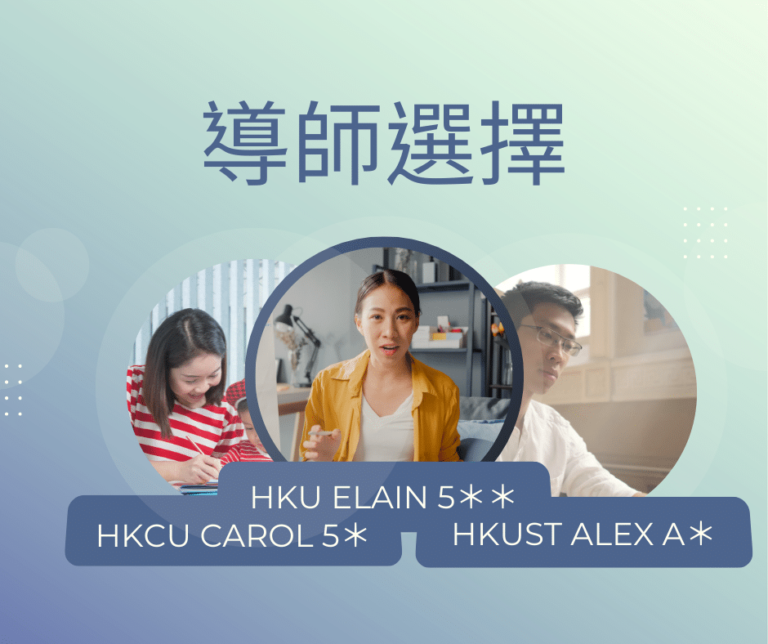
We will recommend 3-5 suitable GCSE A-Level IGCSE tutors by providing their resumes, GCSE A-Level IGCSE teaching experience ,and other related information. It will take one working days to process your application normally.

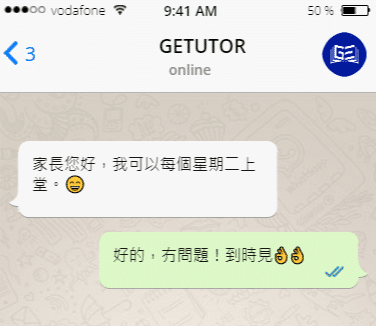
We will coordinate the time and arrange to start classes.
Let's hear from our customer Nicole, 2022 IGCSE candidate
由 GETUTOR 升學研究組撰寫|數據來源係 GETUTOR 內部配對紀錄
大埔墟係香港核心補習區之一,每年都有大量中四至中六學生家長搵 DSE 私補科專業導師。私補係 GETUTOR 配對嘅核心服務,覆蓋全科目同所有年級。好多家長以為私補淨係幫小朋友溫書,其實私補真正嘅價值係個別化教學,根據學生嘅學習風格、強弱項、考試策略 design 完整 plan。
根據 GETUTOR 後台 2024-2026 年 大埔墟區嘅配對紀錄,樣本約 253 宗,DSE 私補科平均配對時間約 4.5 小時,試堂後繼續率達 87%,係相對穩陣嘅 benchmark。今次我哋訪問咗區內兩位平均 4.3 年教學經驗嘅專業導師,幫家長拆下中招位。
林** Miss(按導師私隱要求使用化名)— 香港中文大學相關學系畢業,DSE 私補 5*。教學年資 5 年,累計教過超過 28 個 DSE 私補學生,當中 12 個攞到 Level 5 或以上。教學風格偏向先拆 concept、再操卷,而唔係齋操 past paper。林** Miss 嘅學生通常喺第 4-5 堂之後就會開始見效。
「好多同學以為操卷夠多就會升 grade,其實 私補科最重要係 concept 嘅 internal model。我教學生每個 chapter 都要識用自己嘅説話講返個 logic 出嚟,唔識講就即係未明,未明就操幾多卷都係錯。」— 林** Miss
第一個重要概念係私補嘅 diagnostic assessment。第一堂專業導師會做完整嘅 diagnostic,包括 past paper sample test、學生面談、家長 expectation alignment。呢個 assessment 會 produce 一份弱項報告,pin-point 邊個 chapter、邊個技能、邊個答題框架要 priority 補。
第二個係學習風格嘅 adaptation。學生可以分 visual、auditory、kinesthetic 三大類型。Visual learner 鍾意 diagram、mind map;Auditory learner 鍾意聽 explanation;Kinesthetic learner 鍾意 hands-on practice。專業導師會根據學生 style 調整教學方法。
林** Miss 仲分享過一個區內觀察。大埔墟學生因為交通方便,多數會跟 1-2 間補習社加埋私補嘅組合。佢建議家長唔好同時報太多 source,因為唔同 source 嘅教學 framework 唔同,學生反而會 confused。佢嘅學生 typically 只跟一個私補導師,全程跟到考完 DSE 或 Mock,呢個 setup 嘅 success rate 最高。
吳** Miss(按導師私隱要求使用化名)— 香港理工大學相關學系畢業,DSE 私補 5*。教學年資 6 年,累計教過 30 個學生,13 個攞到 Level 5。吳** Miss 強項係整理 notes 同 mind map,幫到怕 long question 嘅學生重新建立答題框架。佢嘅家長 feedback 多數係「終於明白小朋友卡喺邊」呢類,因為 吳** Miss 會用 visual 嘅方法將 abstract concept 簡化。
第三個係時間管理嘅 framework。私補學生通常要兼顧多個科目,導師會教學生用 priority matrix(緊急 vs 重要)分配溫習時間。例如 Mock exam 前一個月,priority focus 喺最弱科目;之後再 sweep 其他科目。
吳** Miss 仲會配合 GETUTOR 嘅學習進度追蹤系統,每堂後填寫評估表,幫家長監察小朋友進度。佢試過教一個由 Level 1 一直跟到 Level 5* 嘅學生,前後用咗 22 堂時間,最後 Mock 同 DSE 真正考試表現都符合預期,呢個係其中一個典型嘅成功案例。大埔墟區嘅家長對 progress tracking 嘅 expectation 比較高,呢個系統嘅幫助唔細。
另一個 吳** Miss 嘅特色係會用本地時事做例子。譬如近年 DSE 開始考 real-life application,齋背 textbook 嘅學生即刻冇方向;反而平時有跟時事去理解嘅學生,可以拎到頭等。吳** Miss 會要求學生每週讀 1 篇相關新聞或 article,最好係大埔墟或附近區嘅例子,幫助 concept internalization。
家長最常問嘅問題之一,就係點解小朋友校內默書 OK 但 Mock 就差成一截。答案通常係兩個原因。第一,校內默書多數係單一 chapter 同類似題目;但 Mock 同 DSE 係混合 chapter 出題,要學生 cross-link 唔同概念。第二,校內試題比較貼 textbook,DSE 嘅 Paper 1 / 2 都好鍾意搞 application,學生唔慣應變就會跌坑。林** Miss 同 吳** Miss 兩位專業導師都強調,每個學生由校內水平過渡到 DSE 水平,至少需要 4-6 個月準備。
另一個常見問題係補習要唔要做埋校內嘅功課。根據 GETUTOR 後台統計,2024-2026 年入面有 78% 嘅家長傾向校內功課自己做、補習集中操 DSE 卷呢個分配。原因係導師嘅時間有限,應該擺喺最影響成績嘅 DSE 框架上。如果學生有特別搞唔掂嘅校內 topic,導師亦會花 1-2 堂幫手過 concept。
陷阱一,唔好同時報太多 source。大埔墟區好多學生同時報 3-4 個補習社加私補,結果每個都跟得鬆。專業導師建議只揀 1 個 main source(私補),深入跟到考試。其他補習社可以做 supplement,但唔好做 main learning path。
陷阱二,唔好淨係要求導師「教書」。一個好嘅私補唔淨係 explanation,仲要 quiz、homework、progress tracking。家長要求導師每堂後 send 進度報告,呢樣係 quality assurance 嘅重要環節。
陷阱三,唔好頻繁換導師。換導師會 disrupt 學生嘅 learning continuity。試堂之後決定咗個 fit,就 commit 至少 8-10 堂先 evaluate。GETUTOR 嘅試堂繼續率達 79%,反映多數 fit 都係成功嘅。
| Chapter | 建議堂數(每堂 1.5 小時) | difficulty |
|---|---|---|
| Diagnostic Assessment | 1-2 堂 | 易 |
| 弱項 mapping 同 priority planning | 1 堂 | 易 |
| Core 主科 deep dive | 4-6 堂 | ★ 最難 |
| Secondary 主科 sweep | 3-4 堂 | middle |
| 答題框架 training | 3 堂 | middle |
| Past Paper drills | 4-6 堂 | middle |
| Mock exam 模擬 | 2-3 堂 | middle |
| Time management drills | 2 堂 | middle |
| Exam strategy review | 2 堂 | 易 |
| Final week 衝刺 | 2-3 堂 | middle |
堂數為導師建議中位數,實際因學生程度而異
| index | 大埔墟區數據 |
|---|---|
| 試堂後繼續率 | 約 87% |
| 導師平均教學年資 | 4.3 年 |
| 私補科相關學位持有率 | 約 69% |
| Average Matching Time | 約 4.5 小時 |
| 樣本宗數 | 253 宗 |
| 學生平均 MC 正確率提升 | 約 17 題(2.6 個月內) |
| 區內 Band 1 英中比例 | 約 45% |
基於約 253 宗配對樣本,統計自 GETUTOR 2024-2026 年內部紀錄
第一,唔好淨係操 MC。DSE 近年喺 Paper 1 / 2 嘅應用題動手腳,齋操 MC 嘅學生平均失分率達 35-45%。專業導師會強調 concept 同 application 並重。
第二,千祈唔好死背定義。DSE 鍾意用 real-life scenario 包裝,背字典式定義一落筆就答錯 context。每一個 key term 都要自己想生活例子。
third,個別學生弱項 係私補科最難嘅板塊。記住一點,呢度係拉開高低分嘅關鍵,要預留至少 5-6 堂時間集中攻。
第四,唔好分散資源跟太多 source。大埔墟區好多學生同時報 3-4 個補習社加私補,結果每個都跟得鬆。專業導師建議只揀 1 個 main source,深入跟到考試。
第五,要識 leverage GETUTOR 嘅 progress tracking。每堂後嘅評估表會話畀家長知小朋友邊度仲未掌握,再針對性追加練習,比家長自己估有效十倍。
家長搵導師其實有 3 個關鍵判斷標準,唔係單睇大學排名或者價錢。第一個係教學年資。GETUTOR 統計顯示,教學年資 4 年以上嘅導師,學生試堂後嘅繼續率達 81%;3 年以下嘅導師繼續率只有 64%。大埔墟區嘅平均導師年資係 4.3 年,相對穩陣。年資代表導師見過唔同類型嘅學生,知道點樣應對唔同程度同性格。
第二個係 DSE 私補成績。專業導師最少要 5 級,5* 同 5** 更好。原因好簡單,導師自己拎得幾多分,就反映佢對 DSE 框架嘅理解程度。冇拎 5 級嘅導師,自己都未掌握全部嘅 marking scheme 細節,點教學生攞高分?林** Miss(DSE 私補 5*)同 吳** Miss(DSE 私補 5*)兩位大埔墟區專業導師都符合呢個標準。
第三個係溝通模式。一個好導師唔淨係識答題,仲要識聆聽家長同學生嘅需求。大埔墟區家長通常會問導師你會點同小朋友溝通、如果佢冇做功課你會點處理、點樣同我 update 進度呢類問題。一個專業嘅導師應該有清晰嘅 answer,唔會含糊其辭。GETUTOR 平台有 review 系統,家長可以睇返其他家長對導師嘅評分同評論,幫手做決定。
| time | 預期進度 |
|---|---|
| 第 1 週 | 導師評估弱項,鎖定 1-2 個 chapter 重點補 |
| 第 2 週 | 核心概念第一輪打通,常見 distractor 唔再混淆 |
| 第 3 週 | 應用題答題框架建立,開始識應對陷阱題 |
| 第 4 週 | 個別學生弱項 第一輪掌握,校內測驗開始見效 |
| 第 5-6 週 | 校內試開始升 grade,learning loop 形成 |
| 第 7-8 週 | 長題目結構穩定,閱卷員可以 follow 思路 |
| 第 9-10 週 | MC 正確率穩定 75%+,Paper 1 升 1 個 grade |
| 第 11-12 週 | Mock exam 穩定 Level 4-5,弱項補完 |
| 第 13-16 週 | 衝刺階段,每週 1-2 份 past paper 全面強化 |
根據 GETUTOR 後台紀錄,大埔墟學生平均喺配對後 2.6 個月,MC 正確率會由原本基準提升約 17 題(統計自 2024-2026 內部紀錄)。
好多家長以為 DSE 操卷就係由舊年操到去年,其實呢個方法唔最有效。林** Miss 同 吳** Miss 兩位大埔墟區專業導師都建議分 3 個階段操卷。第一階段(補習頭 4 週)只操單 chapter 嘅 MC,例如本週上 針對性主科補習 就只操呢個 chapter 嘅題,目的係鞏固單 chapter 概念。第二階段(第 5-10 週)開始操混合 chapter MC,模擬 DSE 真實環境,鍛鍊跨 topic 思維。第三階段(第 11 週後)全卷 timed practice,要求一個半至兩小時內完成 Paper 1 ,同步操 long question 結構。
大埔墟區一個常見錯誤係學生太早操 full paper。仲未掌握基本概念就上戰場,結果每張卷都得 Level 2-3,自信心打擊嚴重。導師會根據學生程度調整節奏,唔會逼學生做佢未準備好嘅題目。GETUTOR 後台數據顯示,跟到呢個 3 階段策略嘅學生,DSE 平均成績比齋操卷嘅學生高約 0.8 個 grade。呢個 difference 喺 Level 4-5 嘅關鍵分數線最明顯。
如果你嘅小朋友喺大埔墟一帶讀書,想搵一位真正識拆 concept、肯幫你重新打基礎嘅 DSE 私補科專業導師,可以入 GETUTOR 配對系統睇下有咩導師適合你。大埔墟區平均 4.5 小時配到導師,試堂後繼續率約 87%,話俾我哋知你嘅目標 level,系統會幫你揀合適嘅人選。Pair now,無需信用卡,免費試堂。
一位喺大埔墟 大埔墟區某 Band 1 中學 讀 中四至中六 嘅學生(按學生家長要求使用化名 K 同學),配對前嘅 Mock 私補得 Level 3,最大問題係 個別學生弱項。經過約 12 堂私補,DSE 最終攞到 Level 5。個重點唔係佢操咗幾多卷,而係 林** Miss 幫佢由零開始重建 私補嘅 mental model;之後佢自己識答變形題,遇到陌生情景都唔再亂咁估。家長最後 feedback 話,呢個係佢哋第三次搵補習,前兩位導師都係齋操卷無拆 concept,搞到小朋友愈讀愈灰。林** Miss 嘅 approach 唔同,第一堂就問清楚 K 同學(化名)卡喺邊個 step,再針對性 design 接下來嘅課程。
另一位大埔墟學生係 大埔墟區某 DSS 中學 嘅 中四至中六 學生(按家長要求使用化名 L 同學),最初 Mock 只係 Level 2,老師反映佢 個別學生弱項 完全冇 framework。吳** Miss 接手後,先用 3 堂集中拆 針對性主科補習 概念,再用 4 堂拆 針對性主科補習 應用,最後 7 堂模擬 Paper 1 同 long question 答題。DSE 出成績嗰日,L 同學(化名)升咗去 Level 4,雖然唔係滿分但已經過咗大學 JUPAS 嘅基本要求。家長覺得呢個 14 堂 ROI 高,因為佢哋一早估計大概要 25 堂先做到。呢個成功案例反映 吳** Miss 嘅教學方法夠有針對性。
趕得切。DSE 私補科 syllabus 相對其他科短,中四至中六 暑期或開學初開始補,通常 3-4 個月內可以追到 Level 4 水平,關鍵係導師肯唔肯幫你重新建立概念,而唔係齋操卷。大埔墟區嘅成功案例,有唔少都係 中四至中六 先補但最後攞到 Level 5。導師會根據學生入學時嘅程度調整節奏,目標係保證學生唔會跟唔上進度。
根據 GETUTOR 2024-2026 紀錄,最多人卡 個別學生弱項,佔查詢約 40-50%。其次係 針對性主科補習 同 application 嘅應用題。呢啲 chapter 都係 concept heavy,死背冇用,必須要有導師逐步拆。大埔墟區嘅學生程度同其他區差唔多,但因為交通方便所以願意試多個導師,最後揀到啱嘅導師。
大班講速度,私補講 feedback。如果你係 Level 3-4 想升 Level 5,私補導師可以即時睇你份答卷,逐題指出邊度唔 match marking scheme,大班導師根本做唔到呢啲。大埔墟區嘅試堂繼續率達 87%,反映多數家長試完之後都覺得私補有效。當然如果家長預算有限,可以考慮小班教學作為過渡。
視乎導師背景同學生年級。一般 HKD 280-380 一堂(1.5 小時),DSE 衝刺班約 HKD 380-480。大埔墟區嘅平均收費同其他核心區相近,但因為導師供應充足,家長可以揀到合適嘅 fit。記住唔好淨係比較價錢,要睇導師有冇針對 DSE 嘅實戰經驗。同樣價錢可以有質素差成倍嘅導師。
三樣嘢必睇。第一,自己 DSE 私補嘅成績最少 5 或以上。第二,教學年資最少 3 年。第三,過往學生升 grade 嘅實例。GETUTOR 平台所有導師都經過認證,唔會有亂報資歷嘅問題。試堂之後家長都可以同學生傾下意見再決定。如果試堂後唔啱 fit 都可以重新配對,平台唔會收任何 cancellation fee。
有。大埔墟區大部分導師都接受上門,視乎地點同時間 slot。如果家長想小朋友喺屋企專注,呢個係好選擇。視像補習都係多數導師接受嘅 mode,特別係 DSE 衝刺期,時間彈性大啲。GETUTOR 平台會根據家長嘅 mode preference 自動 filter 導師,唔使家長自己一個個問。
GETUTOR 配對嘅試堂全部免費。家長提交需求之後,平台會配對 1-3 位適合嘅導師,揀好之後可以同導師約一堂試教(通常 1 小時),試完先決定要唔要繼續。大埔墟區平均 4.5 小時就有導師回覆。試堂目的係幫家長同學生 evaluate 個 fit,唔係要學生第一堂就升 grade。
大班講速度,私補講 feedback。如果你係 Level 3-4 想升 Level 5,私補導師可以即時睇你份答卷,逐題指出邊度唔 match marking scheme,大班導師根本做唔到呢啲。
建議唔好超過 2 個(例如數學加英文)。私補資源密集,學生要有時間消化內容;同時 take 太多會令學生過勞,反而降低 efficiency。
按導師私隱要求使用化名
由 GETUTOR 升學研究組撰寫|數據來源係 GETUTOR 內部配對紀錄
全港數學補習: 返回全港數學補習導師名單 →


馬上為您安排 __ 的老師
請填寫簡單資料讓我們為你聯絡__導師