
In Hong Kong, tutoring has become an integral part of a student's academic life. Whether it's to improve grades or to prepare for exams, tutorial centres and private tutoring play an important role. In this article, we will take a closer look at the salary structure of the tutoring sector, from tutorial centres to private tutors, and we will give you an overview of the income profile of the sector.
Pay in the tutoring sector varies widely, ranging from $100 to $1,500 per hour. This variation reflects the diversity of the market and the complexity of demand. We will analyse the various factors affecting tutoring earnings, including educational attainment, teaching experience and area of specialisation.
As the education market changes, so does the tutoring world. From traditional one-on-one tutoring to modern video lessons, the diversity of tutoring methods has brought about changes in the income structure. We'll explore how these trends are affecting tutors' salaries.
Highlights
- Tutoring fees range from $100 to $1,500 per hour.
- Educational attainment, experience and area of specialisation are the main factors affecting tutorial income
- Tutoring fees vary significantly by subject and programme type
- The tutoring industry is undergoing structural changes affecting revenue patterns
- Quality of teaching is a key consideration in choosing tutorial services
Income Profile of the Tutorial Sector
The income of the tutorial sector has changed in line with changes in the education market. In recent years, the rise of smart education has brought new features to the tutorial sector's revenue. According to statistics, the smart education market has grown from $496bn in 2016 to $825.55bn in 2020, showing great potential.
Difference in Income between Private Tutoring and Tutoring Agencies
Private tutoring and tutoring centres have different incomes. Private tutors are free to set their own prices and have a more flexible income. On the other hand, tutorial centres have a fixed salary structure, but the working environment is more stable. Below is a comparison of their incomes:
| type | Revenue Features | Advantage |
|---|---|---|
| IB Private Tutoring | Freedom of pricing and flexibility of income | Prices can be adjusted according to experience and demand |
| Tuition club | Fixed salary structure with stable income | Provide stable working environment and clientele |
Factors affecting tutorial income
A number of factors affect the income from tutoring, and the richness of education resources is very important. There are 44,000 resources on the primary and secondary school platform, and 1,173 national and provincial professional teaching resources on the vocational education platform. The higher education platform has 27,000 high-quality catechism courses, forming the world's largest education resource database. The availability of these resources has a direct impact on tutoring demand and revenue.
Successful case studies
Success stories in the tutoring sector are often closely linked to innovative teaching methods and market demand. The global smart education market is expected to reach US$141.43 billion in 2022 and grow to US$263.94 billion by 2026, at an annualised compound growth rate of approximately 16.81 TP3 T. This rapid growth provides ample room for the creation of new tutoring models, such as online one-on-one tutoring and AI-assisted tutoring, which are becoming the new profit points.
Analysis of the artificial structure of tutorial centres
Salary structures in tutorial centres are complex, reflecting the competitive and diverse nature of the education market. Large tutorial centres usually use a stepped pay system. This system is based on teachers' qualifications, experience and student evaluations.
A new teacher's salary may not be high, but it will rise gradually as he or she gains experience and performs well. In this way, teachers will earn more for their experience and performance.
Some tutorial centres also have a performance bonus system. This system encourages teachers to improve the quality of their teaching and attract more students. Teachers' income is determined by the number of students and the evaluation of the programme.

Experienced teachers targeting GCE classes will also receive a higher salary.
With the growth of online education, many tutoring associations have begun to adopt a hybrid payroll model. This model combines revenue from offline classes and online tutoring. In this way, teachers not only earn more, but they also need to have well-rounded teaching skills.
Private Tutor Salary
In Hong Kong, the salary of private tutors is a hot topic. Statistics show that tutors earn a wide range of income, from a few thousand dollars to hundreds of thousands of dollars. This difference demonstrates the complexity of the tutoring market.
Primary School Tutorial Fee Scale
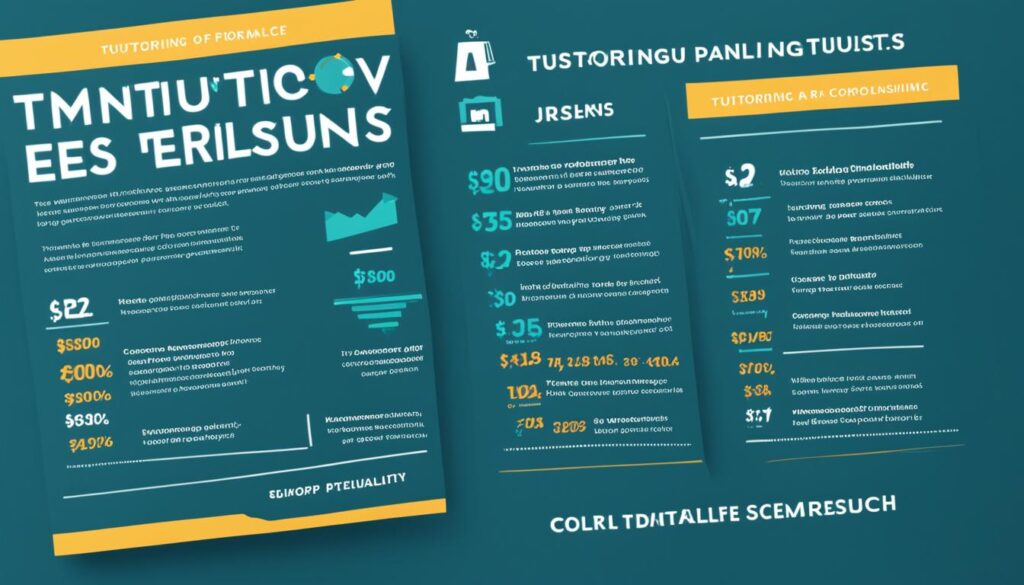
Primary tutoring fees are relatively low, but flexible. A novice teacher may start at $100 per hour, while an experienced teacher may charge $300 or more. Below is a simple fee reference table:
| grade/Year | Beginner Teacher | Senior Teacher |
|---|---|---|
| Primary 1 to Primary 3 | 100-200 RMB/hour | 200-400RMB/hour |
| Primary 4 to 6 | 150-250 RMB/hour | 250-500RMB/hour |
Secondary School Tutorial Fee Scale
Secondary school tutoring is more expensive than primary school tutoring, especially for high school students. Top tutors may charge $1,000 or more per hour. Below is the range of fees for secondary school tutoring:
- Junior Secondary (S1-S3): $200-600 per hour
- Senior Secondary (Form 4 to Form 6): $300 - $1000 per hour or more
High Salary Potential of Specialist Tutorials

What it takes to become a tutor
In order to stand out in the Hong Kong tutoring industry and become a tutor of choice, you need to possess a wide range of abilities and qualifications. First of all, professional knowledge and teaching skills are the basic requirements. A tutor must have an in-depth understanding of the subject he/she is teaching, and be able to simplify complicated concepts so that students can understand them easily.
Secondly, innovative teaching methods are also key. Take Lin Yixin for example, he uses YouTube to make teaching videos and even organises music parties to attract students. This unique way of teaching not only increases interest in learning, but also gives him a high reputation among students.

In addition, strong team support is also indispensable. Lin has a teaching team of over 40 people who are responsible for editing teaching materials and producing videos. This allows him to focus on the teaching itself, while ensuring that the teaching resources are of high quality.
Last but not least, it takes a lot of hard work and time to become a tutor. Lam Yat Yan says he works almost all year round and sleeps only four hours a night on average. This dedication has paid off, as he once set a record for the highest salary in the tutoring industry at $85 million a year. However, it also means striking a balance between personal life and professional development.
"Becoming a tutor is not only a matter of professional knowledge, but also a matter of creative thinking and perseverance".
Changes in the Income of Tutorial School Teachers
Impact of "house dragging" and "Video class"
The rise of "trailer rooms" and "video classes" has had a significant impact on teachers' incomes. These new teaching methods allow teachers to teach more students, thus increasing their income. Generally speaking, teachers can earn more than HK$3,000 per class and receive 20% in tuition commission.
Current Income Status of Emerging Tutors
New tutors do not earn as much as experienced tutors, but they still earn well. Some tutors earn more than HK$3,000 per hour for one-to-one lessons. Tutors who specialise in specific areas earn even more, such as Kelly Yang's English tutorial centre for international school students in Causeway Bay, which charges high fees and has a waiting list of one to two years.
Elimination rate in the tutorial sector
The tutorial sector is highly competitive and the elimination rate is high. To succeed in this industry, teachers need to constantly upgrade themselves and adapt to the market demands. Below are some of the top tutors' income statistics:
| suject | Annual income (HK$) | Remark |
|---|---|---|
| Chinese | 35.4 million - 4$4 million. | Exceeding the company's cumulative profit for the same period |
| English | undisclosed | Giving up barristership for tutoring |
| Other subjects | Over 3 million | Average annual |
These figures show that the tutoring industry has great income potential, but it is also very competitive. Only teachers who continue to improve the quality of their teaching and adapt to market demands will be able to succeed in the industry in the long run.
Basic Requirements for a Tutor in the Profession
If you want to become a tutor, you must first of all have a good knowledge of the subject. Secondly, there are some basic requirements to be met. Academic qualifications are very important, and most tutoring centres require teachers to have a bachelor's degree in a relevant subject.
If you have a Diploma in Education, it will also be a plus point. There are five universities in Hong Kong that offer Postgraduate Diploma in Education (PGDE) programmes. These include HKU, CUHK, HKIEd, HKBU and TUHK.
In interviews, tutorial societies assess your teaching philosophy, classroom management skills and problem-solving skills. Well-prepared teaching materials and innovative teaching methods will increase your chances of being hired. Last but not least, the tutoring community also values a continuous learning and self-improvement attitude.
Impact of HKDSE on the tutorial market
The implementation of the Hong Kong Diploma of Secondary Education Examination (HKDSE) has had a profound impact on the tutorial market. As the education system changed, so did the demand for tutoring. Let's take a closer look at these changes.
Trends in Student Population
The student population in Hong Kong has been on a declining trend in recent years. However, the demand for tutorials remains strong. Statistics show that more than 501 TP3T of Secondary 3 students participate in tutorials for various subjects, and the proportion is as high as 721 TP3T for senior secondary students, reflecting the competitive pressure brought about by the HKDSE.
Impact of Increased Supply of University Places
Changes in tutoring needs
The implementation of HKDSE has led to a qualitative change in the demand for tutorials. Students are no longer just looking for high grades, but are more interested in all-round development. The following are the major changes in demand for tutorials:
- Emphasis on core subjects: Chinese, English, Mathematics and Liberal Studies as the focus of tuition
- Emphasis on examination techniques: more attention to examination strategies and question answering techniques
- Personalised counselling: one-to-one counselling for students' individual weaknesses is more popular.
- Online tutoring on the rise: the epidemic has fuelled the development of online tutoring, with attendance at one provider's DSE online course approaching 90%
| Type of tutoring | Features | Changes in demand |
|---|---|---|
| Tutoring service | One-to-one Sexualised Teaching | Steady growth in demand |
| Small and medium-sized tutorial centres | Flexible Programmes | Increased competition |
| Tutorial Centre Chain | Regularisation of operations | Stable market share |
| Specialist Tutorial Centres | Subject-specific | Demand continues to rise |
Overall, the implementation of HKDSE has changed the landscape of the tutorial market. Tutoring organisations need to keep innovating in order to adapt to the new education environment and students' needs.
Future Development Trends of the Tutorial Sector
The tutoring world is undergoing unprecedented changes. The global tutoring market is already worth more than US$700 billion and is expected to reach US$1,060 billion by 2026. Taiwan's tutoring market has already exceeded NT$600 billion.
Advances in technology have led to the rise of online education and artificial intelligence learning technologies. These technologies have improved the efficiency of teaching and learning, providing students with flexible and personalised learning options. Many tutoring organisations are actively adopting these new technologies to stay competitive.
Diversification of tutorial services is also an important trend. Apart from academic counselling, there are now a wide range of options for language learning and talent development. Such diversification meets the needs of different students and provides more job opportunities for tutors.
Internationalisation is also an important direction for the future development of the tutorial sector. Japan has already established 94 Japanese schools and 224 Japanese language tutorial schools overseas. This model of cross-border education is likely to be emulated by other countries. Countries such as the United States and Finland are also promoting educational innovation, bringing new opportunities and challenges to the tutorial sector.
Overall, the future trend of the tutoring sector is technological, diversified and internationalised. In the face of these changes, tutors need to keep upgrading their skills in order to adapt to this fast-changing industry.
in conclusion
The growth of the tutoring sector has had a significant impact on the academic life of students. It has also become a large economy. in 2014, the market capitalisation of one of China's leading tutoring centres reached approximately HK$3,664 million, outstripping many well-known companies.
With the changes in government policies and social demands, the tutorial industry is facing new challenges and opportunities. The policy of reducing the burden on education has led to the closure or reform of some tutorial centres. This has also prompted the industry to develop in the direction of high quality and compliance.
In the future, tutorial centres may be transformed into sustainable business models serving niche customers.
The application of Artificial Intelligence (AI) in education is developing rapidly. A number of universities in Hong Kong have started to formulate AI teaching guidelines. For example, the Hong Kong University of Education has proposed the "6-P Teaching Method", which makes use of AI tools to enhance learning effectiveness.
This innovative approach not only fosters students' independent thinking skills, but also opens up new opportunities for the tutoring industry. In the future, tutoring with AI technology may become a new trend. It will provide students with a more personalised and efficient learning experience.
FAQ
What is a tutorial centre?
"A tutorial centre is an organisation that provides extracurricular tutorials. They are founded by experienced tutors or educators. These organisations employ excellent teachers to help students improve their academic performance.
What is the difference between a tutorial centre and a private tutor?
Tutorial centres are educational institutions that provide a fixed location and facilities for lessons. Private tutors are individuals who usually teach at home. They differ in terms of fees and teaching methods.
What are the main factors affecting tutorial income?
Factors affecting tutoring income include teaching experience, qualifications and quality of teaching. There is also the popularity of the subject matter and the competition in the area where it is taught. Outstanding teachers are usually paid more.
What are the typical characteristics of a successful tutor?
Successful tutors have extensive teaching experience and expertise. They have excellent teaching skills and student-teacher relationships. They are also passionate about education, enthusiastic about their work and have excellent time management skills.
Is there a higher "elimination rate" in the tutorial sector?
Yes, the tutorial sector has a higher elimination rate. Outstanding teachers are better paid and have a higher chance of staying in the profession. Newcomers with poor teaching quality and difficulty in attracting students are easily eliminated.
What are the basic requirements for a tutor?
Tutors are required to have a tertiary qualification and professional knowledge. Good communication skills, patience and responsibility are also important. Teaching experience is a plus.
What is the impact of HKDSE on the tutorial market?
With the implementation of HKDSE, the demand for tutorials and popular subjects have been adjusted. This has created new opportunities for the tutorial market.
What will be the future trend of the tutoring industry?
In the future, the tutorial sector will be diversified and personalised. Traditional face-to-face tutoring and online tutoring will become popular. Artificial intelligence and education technology will also bring about changes.