
Korean 5

More than 5 years of tutoring experience Minor in Korean, Department of Linguistics, City University of Hong Kong

Associate Degree Programme in Chinese and Korean Bilingual Interpretation, City University of Hong Kong









Are you fascinated by Korean culture and want to learn Korean? Learning Korean will not only help you catch up with Korean dramas and listen to K-pop, but also enhance your competitiveness in the workplace. This article will introduce the most effective ways to learn Korean quickly.
Learning Korean not only provides an in-depth understanding of Korean culture, but also opens up new career opportunities. As the global influence of Korean companies grows, so does the demand for Korean speakers. Mastering Korean will give you a strong advantage when working for a Korean company or communicating with Korean clients.
Learning Korean has become important in today's globalised world. Korea's rapid cultural, economic and technological development has made Korean a valuable language. Take a look at the benefits of learning Korean.

Korean companies are expanding globally and the demand for Korean speakers is increasing. Learning Korean will open up more opportunities in your career, especially in the fields of international trade, translation, travel and technology.
Learning Korean not only enhances language skills, but also promotes personal growth and cross-cultural understanding. It allows you to meet new people, experience different ways of thinking, and expand your horizons.
| Benefits of learning Korean | personal development | Career Opportunities |
|---|---|---|
| cultural understanding | Enhancement of self-confidence | International Trade |
| Language Skills | Meet new friends | Translation |
| Thinking Outside the Box | Improve learning ability | Tourism |
Learning Korean will not only give you a better understanding of Korean culture, but it will also help with career development and personal growth. Whether it's for fun or for a career, learning Korean is a great choice.

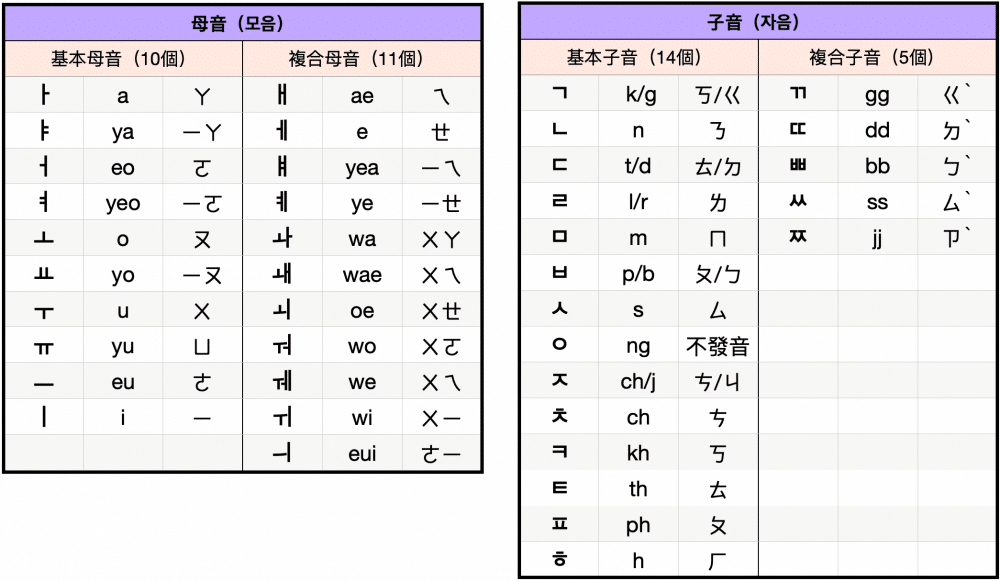
The design of the Korean alphabet is both scientific and logical. The shape of each letter is similar to the shape of the sound producing organ. This makes it easier to learn and remember. For example, the letter ㄱ (g/k) is shaped like a tongue against the palate.
Korean characters are divided into three main categories:
To learn the Korean alphabet, it is recommended to start with the basic 14 consonants and 10 vowels. Once you have learnt these, it will be easier to learn the other variants and combinations. Remember, it is important to practice writing and pronouncing words to help you understand and remember better.
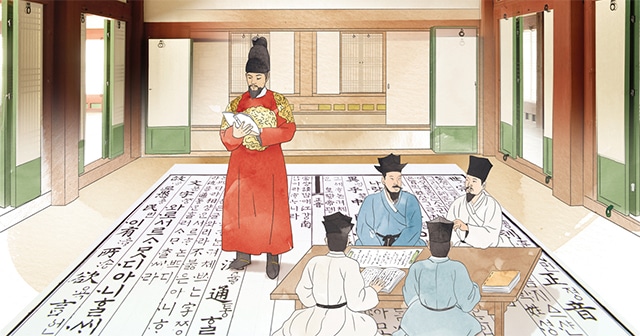
The creator of the Korean alphabet was King Sejong the Great, the fourth king of the Joseon dynasty. He created this simple and scientific writing system in 1443 with the aim of making it easy for everyone to learn and use.
Once you have learnt the Korean alphabet, you will be able to start reading Korean. It may be difficult at first, but with continued practice, you will soon be able to read Korean. Remember, learning a language requires patience and persistence.
To learn Korean, you must first master the basics of Korean pronunciation. The Korean pronunciation system is unique and has rules. Understanding these rules will help you learn Korean faster. Check out the secrets of Korean pronunciation.
The Korean pronunciation system consists mainly of vowels and consonants. There are single vowels and compound vowels, and initial and final consonants. Here are some basic pronunciation rules:
The syllable structure of Korean is usually "consonant + vowel" or "consonant + vowel + consonant". Understanding this structure will help you spell Korean words correctly. Here are some common syllable structures:
| Pitch Structure | example | literary (rather than colloquial) pronunciation of a Chinese character |
|---|---|---|
| Consonant + Vowel | 가 (ga) | [ga] |
| Consonants + vowels + consonants | 강 (gang) | [gang] |
| vowels | 아 (a) | [a] |
When practising your pronunciation, start with simple syllables and work your way up. Using a Korean pronunciation app or online resources to listen to and imitate the standard pronunciation over and over again will help you improve your pronunciation.
Korean also uses auxiliaries to express functions in a sentence. Common auxiliaries are:
Korean has a wide variety of verbs. It has different forms according to tense, tone and respect. Beginners can start by learning the basic variations of present and past tense.
Once you have learnt the basic grammar and vocabulary, you will be able to start constructing simple Korean sentences. Remember to practice, listen and speak more often, and your grammar skills will gradually improve.
To learn Korean, it is important to have a good command of common words and phrases. This helps you to communicate in daily life, business and travelling. Let's take a look at some useful Korean expressions.
Words and phrases that are frequently used in daily life in Korea:
In business situations, the right Korean phrases can make a good impression. Here are some business phrases:
| Korean language | literary (rather than colloquial) pronunciation of a Chinese character | Chinese meaning |
|---|---|---|
| 회의 | hoeui | Meeting |
| 계약 | gyeyak | Contract |
| 거래처 | georaecheo | Clients |
| 보고서 | bogoseo | Report |
When travelling, it's good to have some basic vocabulary to make the trip go smoothly. Here are a few travelling terms:
Firstly, language learning apps such as Duolingo and Memrise are recommended, as they allow you to learn Korean and have fun at the same time. For listening practice, try listening to Korean radio stations or Korean podcasts such as TBS eFM or Talk To Me In Korean.
Want to improve your reading skills? Korean news sites Naver and Daum are good choices. Beginners can start with children's news and work their way up, while Lang-8 is a great place to improve your writing skills, allowing native speakers to correct each other's writing.
A good way to learn authentic expressions is to watch Korean TV programmes and movies, and there are many Korean videos available on platforms such as Netflix and Viki, so choose the Chinese subtitles to learn. Don't forget to take advantage of the free classes and activities offered by the Korean Cultural Centre to gain a deeper understanding of Korean culture and improve your language skills.
Make good use of these resources and your Korean will definitely improve. Remember, continuous learning and practice are the keys to success.
When learning Korean, many people face the challenge of choosing between tutorials and self-study. Each of these options has its own characteristics and is suitable for people with different learning styles. Let's analyse their strengths and weaknesses to help you find the most suitable learning method for you.
Tutorials provide a structured learning environment with professional teacher guidance and peer interaction. This approach is suitable for learners who need external supervision and immediate feedback. Tutorials usually offer a comprehensive programme covering all aspects of listening, speaking, reading and writing.
There are a number of factors to consider when choosing the right learning style. Here is a comparison table to help you decide:
| Considerations | cram school | Self-study |
|---|---|---|
| time flexibility | lower | high |
| learning progress | fixation | self-determination |
| cost | higher | lower |
| interactive opportunities | how (what extent) | stop (doing sth) |
| Suitable for learners | fuss | People with strong self-discipline |
Regardless of which method you choose, persistence is the key to improving your Korean. You can choose the method that best suits your learning style and lifestyle, or combine the best of both worlds to create a personalised study plan.
Lastly, remember to practice your speech. Find a Korean learning partner and have regular conversations. This will not only improve your listening skills, but will also help you to use Korean better. Remember, it takes time and patience to improve your listening skills.
"Learning a language is like opening a new window to a different world."
To truly master the Korean language, oral skills are indispensable. Improving your speaking skills will not only help you communicate more confidently with Koreans, but also deepen your understanding of Korean culture. Below we share some practical strategies for practicing your spoken language and the importance of a language exchange partner for learning.
The key to improving your spoken Korean is consistent practice. Here are a few effective ways to do this:
Finding a language exchange partner can greatly accelerate your Korean learning process. Interacting with native speakers not only improves your speaking skills, but also allows you to learn authentic expressions and cultural knowledge. You can find a language exchange partner in the following ways:
| platform | Features | Usage |
|---|---|---|
| HelloTalk | Mobile App, support text, voice, video communication | The language of the learning programme after registration is Korean. |
| Tandem | Multi-language switching options available | Create a profile and match with a suitable Korean partner |
| italki | Professional language teaching platform and language exchange community. | Find a Korean partner in the Community section. |
Remember, it takes time and patience to improve your Korean speaking skills. Keep practising and communicating with native Korean speakers and you will improve beyond your wildest dreams. Keep up your enthusiasm for learning and in 11 months, you will be able to feel the improvement in your spoken Korean.
First, try writing a letter or email. Imagine you are communicating with a Korean friend or business partner. This way you can practice both formal and informal writing styles. This will not only improve your writing skills, but you will also learn about cultural etiquette.
Secondly, participate in an online Korean writing community. Here you can share your work, get feedback, and interact with other learners. This interaction will stimulate your creativity and increase your motivation to learn.
| Types of Writing Exercises | Objectives | Recommended Frequency |
|---|---|---|
| Diary | Familiarity with everyday language | everyday |
| Letters/Mail | Learning to write formally | 2-3 times per week |
| community sharing | Get feedback and motivation | 1-2 times per week |
Remember, writing is a gradual process. Keep practising and you will find that your ability to express yourself in Korean will gradually improve. Don't forget to review and revise regularly, as this is very important for improving the quality of your writing.
There is a close relationship between Korean culture and language. Understanding Korean history and culture helps us to learn Korean better. This connection is reflected not only in the development of the language, but also in all aspects of daily life.
The history of Korea has had a profound impact on the development of the Korean language. Cultural exchanges and political changes in the ancient Korean Peninsula shaped the characteristics of the Korean language. For example, the introduction and use of Chinese characters had a significant impact on the Korean vocabulary.
| Historical Period | Linguistic Impact |
|---|---|
| Three Kingdoms Era | Dialect formation |
| Goryeo Dynasty | Widespread Use of Chinese Characters |
| The Joseon Era | Creating Proverbs |
| modern times | Incorporation of foreign words |
Modern Korean culture has also had a significant impact on the use of Korean. Korean pop culture, such as K-pop and Korean dramas, has not only promoted the Korean language, but has also created new expressions and buzzwords. These cultural elements have become important resources for learning Korean and have attracted many language lovers.
Understanding Korean social etiquette and cultural practices can also help us use Korean more accurately. For example, the system of honorifics in Korean reflects the concept of class and the relationship between superiority and inferiority in Korean society. Learners need to be aware of these cultural details in order to use Korean appropriately in various situations.
Language is the carrier of culture, and culture is the soul of language. Learning Korean is not only a way to master a language skill, but also a window into Korean culture.
If you want to prove your Korean language ability, TOPIK is a good choice. It is a Korean language proficiency test that assesses the level of Korean of non-native Korean speakers.
The TOPIK exam has two levels: TOPIK I and TOPIK II. It has six levels; TOPIK I is for beginners and covers levels 1 and 2, while TOPIK II is for intermediate and advanced learners and covers levels 3 to 6. There are several exams each year, giving learners the opportunity to demonstrate their Korean.
| grade | describe | Vocabulary |
|---|---|---|
| Level 1-2 (TOPIK I) | Basic Korean Communication | Approx. 800-1,500 words |
| 3-Level 4 (TOPIK II) | Korean for Daily Life | Approx. 2,000 -41,000 words |
| 5-Level 6 (TOPIK II) | Advanced Korean | Approx. 5,000 -6Over 1,000 words |
TOPIK scores are valuable for Korean universities and companies. It not only improves your Korean language skills, but also helps you understand Korean culture. Whether you are a beginner or an advanced learner of Korean, TOPIK is a great way to check your results.
Learning Korean is both challenging and fun. Every step is important, from learning the Korean alphabet to understanding the grammar. These are the keys to learning Korean.
Whether you're taking a tutorial or studying on your own, it's important to keep practising. Use resources such as language exchange partners, Korean dramas and K-pop to make learning more fun. Remember, learning a language requires patience and perseverance.
Learning Korean will help you find more opportunities in work and life. Not only does it give you an appreciation for Korean culture, but it can also help you with your career and personal growth. Start learning Korean and enjoy the fulfilment and fun of the process!
Learning Korean will give you an understanding of Korean culture and open up more opportunities for career and growth. Korean is an important language for business, and mastering it will increase your chances of getting a job. It also helps you communicate with Koreans and experience different cultures.
The Korean alphabet consists of 24 letters with simple pronunciation rules. They represent single vowels or consonants, which form words. With practice, you can learn it quickly.
Grammar and vocabulary are both key to learning Korean. Grammar has fixed rules, while vocabulary is the basis for constructing sentences and expressions. It is recommended that you start with the basics by mastering common vocabulary and grammar.
There are many good resources for learning Korean, such as textbooks, audio, apps, websites, TV dramas and movies. Choose the resources that suit you and consider joining an online class or finding a language partner.
Self-study and tutorials have their own advantages and disadvantages. Self-study allows you to learn at your own pace but lacks guidance; tutorials have professional tutoring but are less flexible. Choose the one that suits you best according to your preferences and conditions.
Ways to improve your listening and speaking skills include listening and imitating, finding a practice partner, thinking and expressing yourself in Korean, using software, and watching Korean dramas. Continuous practice is very important for improvement.
由 GETUTOR 升學研究組撰寫 | 數據來源:GETUTOR 內部配對紀錄
過去三年,韓文喺香港嘅補習需求係火箭咁升。根據 GETUTOR 後台 2024-2026 年語言類配對紀錄,韓文配對數量按年增長約 47%,已經追過日文,僅次於英文成為第二大外語補習需求*。問題嚟啦:好多人報咗坊間嘅韓文班,學咗半年仲停留喺「안녕하세요」階段,TOPIK 一張卷都未敢報。點解?
我哋睇過全港約 8,150 宗外語配對紀錄*,發現一個好諷刺嘅現象:約 63% 報過韓文大班嘅學生,最後都要轉私補先考到 TOPIK*。原因好簡單——大班教法只係跟住教科書由 1 課行去 50 課,但 TOPIK 考試係要你聽得明、寫得出、講得通,三樣嘢三種訓練,大班根本顧唔晒。
呢篇文我哋會用 GETUTOR 內部數據,拆解 TOPIK 1 級到 6 級每個 level 究竟要補幾耐、邊度最易甩轆、香港學生最常踩嘅伏位。睇完你就知,學韓文其實有路徑可循。
*統計自 GETUTOR 後台 2024-2026 年全港語言類配對紀錄,樣本約 8,150 宗
講真,香港學韓文嘅人九成都係由 K-pop、K-drama 入坑。問題係,追星嘅韓文同 TOPIK 考試嘅韓文,根本係兩回事。
GETUTOR 平台上有約 12,480 位導師*,當中專補韓文嘅導師人數比起 2023 年增加咗將近一倍。我哋觀察到一個趨勢:約 41% 嘅韓文補習需求來自 18-25 歲嘅大學生或者 in-job 人士,目標係考 TOPIK 4 級或以上去韓國交流/升學/搵工*。剩低 約 32% 係中學生想學興趣,約 27% 係 working adult 想升職加分。
但問題係,約 58% 嘅學生入嚟搵導師之前,都報過至少一次坊間嘅實體班或者 online course*。即係話,私補對好多人嚟講係「最後一根稻草」。點解搞到要轉私補?最常見嘅 feedback 係:「老師講得太快」、「文法解釋唔清楚」、「冇人改我嘅作文」、「冇人陪我練口說」。
呢啲嘢,正正就係 TOPIK 考試最食死人嘅地方。
*基於 GETUTOR 平台 2026 年 Q1 導師資料庫;配對需求數據統計自 2024-2026 年韓文配對紀錄,樣本約 920 宗
專補銅鑼灣、尖沙咀區大學生及在職人士,擁有 6 年韓文教學經驗、TOPIK 6 級滿分嘅 Miss J 指出:「香港學生最大嘅誤解係以為 TOPIK 1 級到 6 級係線性難度,其實唔係。1-2 級(初級)係 TOPIK I 一張卷,3-4 級(中級)同 5-6 級(高級)係 TOPIK II 同一張卷。由 2 級跳去 3 級,係成個學習路徑入面最大嘅斷層,因為 TOPIK II 一開始就要你寫 3 篇作文,連寫一段嘅基本功都未掂嘅人,分分鐘交白卷。」
Miss J 用嘅教學框架我哋簡單拆解俾大家睇:
呢個 level 嘅重點唔係儲詞彙,而係發音同收音(받침)一定要準。Miss J 嘅做法係前 4 堂淨係教 한글(Hangul)發音,唔會急住教文法。「你諗下,如果連 ㄹ 同 ㄴ 都讀唔清,後面學咩都係廢嘅。」
呢個 level 嘅 killer 係寫作。TOPIK II 寫作有 3 題:51 題(短句填充)、52 題(短句填充)、53 題(200-300 字圖表分析)、54 題(600-700 字議論文)。約 71% 嘅 4 級失敗者,係喺 53 同 54 題拎少過 30 分(滿分 100)*。
到呢個 level,已經唔係「學韓文」,而係「用韓文諗嘢」。Miss J 嘅做法係要學生每星期睇一篇 KBS/JTBC 嘅新聞報導,用韓文寫 200 字 summary。
呢套方法外面學唔到嘅原因好簡單:大班一個老師對 30 個學生,根本冇可能逐個改作文、逐個糾發音。私補嘅價值就喺度。
*基於 GETUTOR 平台 2024-2026 年 TOPIK 4 級失敗個案 feedback,樣本約 180 宗
以下係 GETUTOR 平台上韓文導師建議嘅中位數堂數,每堂 1.5 小時,每星期 1-2 堂計:
| TOPIK 級數 | 對應內容 | 建議堂數 | difficulty |
|---|---|---|---|
| 1 級(入門) | 韓文字母、基本句型、800 詞 | 16-20 堂 | ★★ |
| 2 級(初級) | 過去式、敬語、1,500 詞 | 20-24 堂 | ★★★★★ |
| 3 級(中初) | 複合文法、寫作框架、3,000 詞 | 28-32 堂 | ★★★★ |
| 4 級(中高) | 議論文寫作、聽力速度、4,500 詞 | 32-36 堂 | ★★★★★ |
| 5 級(高初) | 漢字詞、學術文章、6,500 詞 | 36-40 堂 | ★★★★★ |
| 6 級(高級) | 抽象議題、文化背景、8,000+ 詞 | 40-48 堂 | ★★★★★★ |
留意:由 2 級升 3 級嘅斷層最大,因為要由「識聽識講」轉去「識寫識讀」。我哋平台上約 38% 嘅學生係喺呢個位停低咗超過半年*。
*堂數為導師建議中位數,實際因學生程度而異;統計基於 2024-2026 年韓文配對進度紀錄
| index | 全港韓文導師平均 | Remark |
|---|---|---|
| 試堂後繼續率 | 81% | 全港平均 |
| 導師平均教學年資 | 4.3 年 | 較其他外語高 |
| 持有 TOPIK 6 級或同等資歷 | 67% | 韓籍導師約佔 23% |
| Average Matching Time | 5.4 小時 | 較中英數慢,因好導師少 |
| 修讀韓文相關學位 | 34% | 包括翻譯/韓文系 |
韓文導師最大嘅特點係——真正識教嘅韓籍 native 唔多。因為韓國人識中文嘅本身已經少,仲要識教韓文俾廣東話人,呢個 combo 真係難搵。所以平台上反而係 TOPIK 6 級嘅本地香港導師最受歡迎,因為佢哋自己學過一次,知道香港人會喺邊度卡關。
以下幾個位,係 GETUTOR 平台導師最常 flag 出嚟嘅伏:
K-drama 入面講嘅係口語+年輕人 slang,但 TOPIK 考嘅係標準書面語。例如劇入面成日聽到「뭐해?」(做緊咩?),但 TOPIK 寫作如果你寫呢句,會被當成 informal 而扣分。要寫「무엇을 하고 있습니까?」先啱。
韓文同中文最大唔同係韓文係黏著語,動詞要變化。背 1,000 個單字但唔識變化,等於識 1,000 隻字但講唔到一句完整句子。
TOPIK 5-6