
















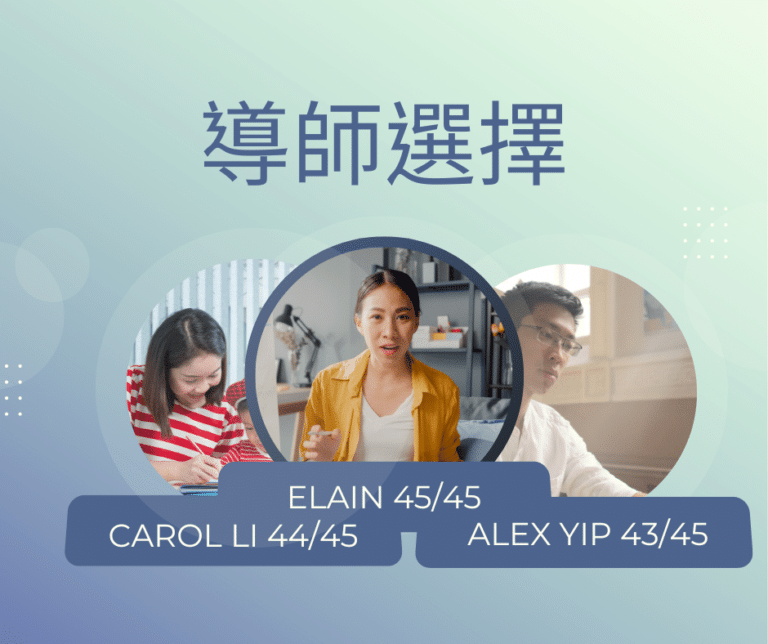
PHD in Chemistry 12+ years of teaching experience

Currently working as a Chem Teacher in an international school

10+ years tutoring experience Specialising in A Level Chemistry A Level

Over 8 years of tutoring experience Full-time Chemistry Tutor

More than 8 years of tutoring experience Former NTK CHEM tutor

More than 8 years of tutorial experience Master of Science in Biomedical Engineering







Are you worried about the upcoming GCE A-level Chemistry exam? Chemistry is a challenging subject that requires solid foundation knowledge and problem solving skills. Choosing the right A-level Chemistry tutor is crucial in order to excel in the exam.
在香港,有超過3,000名來自不同專業和學歷背景的ALevel、其他國際學制和GCSE補習導師。這些導師在化學課程方面擁有豐富的教學經驗,能夠針對學生的個人需求提供量身定制的高級程度補習班。無論你在化學學習中遇到了哪些難點,這些專業的導師都能夠提供有效的指導和幫助。

By joining the A-level Chemistry tutorials, students can gain a more systematic understanding of GCE Chemistry and improve the speed and accuracy of problem solving. The tutor will help students to understand the concepts and principles of Chemistry according to the examination syllabus and key points. At the same time, the tutor will teach students question-answering techniques and time management strategies so that they can perform at their best in the examination.
Apart from one-to-one tutorials, group tutorials are also an effective way of learning. In a group environment, students can communicate and discuss with other students and explore solutions to chemistry problems together. This interactive learning process not only deepens students' understanding of knowledge, but also increases their interest and confidence in learning.
A-level Chemistry is a very important subject, which not only has a significant impact on students' future education, but also has a wide range of applications in daily life and work. However, due to the complexity and abstract nature of Chemistry, many students encounter difficulties in the learning process. This is where choosing a quality chemistry tutor becomes especially important.
Chemistry is a widely applied natural science that studies the composition, structure, properties and patterns of change of substances. In modern society, chemical knowledge has penetrated into various fields, such as medicine, energy, materials, environment and so on. A solid knowledge of chemistry not only helps students to better understand the world, but also lays a solid foundation for their future development.
In addition, A-level Chemistry is an important foundation for students to enter university to study related professions. Many popular professions, such as Medicine, Pharmacy and Chemical Engineering, require students to have a good foundation in Chemistry. If students do not have a good foundation in Chemistry at A-level, they may encounter great difficulties in studying at university in the future.
Learning chemistry requires a great deal of time and effort, and many students encounter various difficulties during the self-learning process, such as poor understanding of concepts and inability to do problems. At this point, it is particularly important to seek the help of a professional tutor. Tutors are able to help students learn chemistry more efficiently by providing targeted explanations and training according to their learning situation.
| Tuition methods | Advantage |
|---|---|
| One-on-one tutoring | Provide personalised learning programmes to target students' weaknesses |
| Group Tutoring | Students can communicate and discuss with each other to enhance their interest in learning. |
Overall, choosing A-level Chemistry tutorials is important for improving learning efficiency and mastering chemistry knowledge. When choosing tutorials, students should select the right tutorials and teachers according to their own learning situation and needs, in order to achieve twice the result with half the effort.
A-level Chemistry is a comprehensive and challenging programme covering all aspects of the subject. The course covers inorganic, organic and physical chemistry, and students will need to master key concepts and theories such as the Periodic Table of the Elements, chemical bonding, chemical equilibrium, reaction kinetics and chemical thermodynamics.

The A-level Chemistry programme requires not only a solid theoretical knowledge of chemistry, but also the ability to apply what they have learnt to solve practical problems. During the course of study, students are required to carry out a large number of exercises and experiments in order to consolidate their theoretical knowledge and improve their practical skills.
A-level Chemistry is an essential part of any future career in petrochemicals, life sciences and pharmaceuticals.
Chemistry is one of the most popular subjects in the A-level programme. According to statistics, millions of students take A-level exams every year, and Chemistry is one of the most popular choices.
| A-level Programme Subjects | Suitable for students | Examination Content |
|---|---|---|
| Math | Expertise in logical thinking and calculation | P rolls, FP rolls, S1 rolls, S2 rolls, M1 rolls, M2 rolls, D1 rolls |
| Physics | Interested in physical phenomena | Mechanics, Electromagnetism, Thermal Science, Atomic Physics, etc. |
| Chemistry | I would like to work in the chemical and pharmaceutical industries. | Inorganic Chemistry, Organic Chemistry, Physical Chemistry |
| Biology | Plan to apply for medicine and biology related majors | Cell biology, genetics, ecology, etc. |
Overall, the A-level Chemistry programme requires a lot of time and effort from students. However, through systematic learning and training, students will not only be able to master the knowledge of Chemistry, but also improve their logical thinking and problem solving skills, laying a solid foundation for their future studies and career development.
Choosing a quality A-level Chemistry tutor is the key to improving your learning and exam results. How do you choose the best tutor for you? Here are a few points to consider:
A good A-level Chemistry tutor should have a Bachelor's or Master's degree in a relevant subject, which means that the tutor has a solid grasp of chemistry. In addition, a wealth of teaching experience is essential. Experienced tutors will be able to understand students' learning difficulties and help them break through bottlenecks with appropriate teaching methods.
Every student has a different learning style and receptive ability, so the tutor's teaching style and approach should be tailored to suit the student's needs. A good A-level Chemistry tutor should be able to explain complex concepts in depth, inspire students to think on their own initiative and develop their problem-solving skills. In addition, the tutor's teaching style should match the student's personality and learning habits to create a good atmosphere for learning.
When choosing an A-level Chemistry tutor, it is worthwhile to refer to the tutor's past student reviews and word of mouth. This first-hand information is a true reflection of the quality of the tutor's teaching and student satisfaction. Good tutors are often able to help students to make significant progress and are well regarded by students and parents alike.
"My A-level Chemistry grade improved significantly after tutoring, from a C grade to an A grade. The tutor's explanations are very clear and he always gives me effective guidance on my weak points." - Mary, A-level Chemistry tutor
In conclusion, choosing an A-level Chemistry tutor requires a thorough consideration of the tutor's academic background, teaching experience, teaching style and previous student evaluations. By choosing a tutor carefully, students will be able to find the most suitable tutor for them and get twice the result with half the effort.
In A-level Chemistry tutorials, the choice of teaching mode has a significant impact on student learning outcomes. Common modes of teaching include one-to-one tutorials and group tutorials, each of which has its own unique advantages. It is important to choose the right mode of teaching for A-level Chemistry according to your students' individual needs and learning characteristics.
One-to-one tutoring is the most personalised mode of teaching. Teachers can formulate tailor-made teaching plans according to students' learning progress, knowledge mastery and learning styles. Under this mode, teachers are able to focus on students' weaknesses and make timely adjustments to the teaching methods and progress to ensure students' learning effectiveness. In addition, one-on-one tutorials are more flexible in terms of scheduling, allowing students to choose tutorials according to their own timetable, thus improving their learning efficiency.
Small group tutorials are usually composed of 3-5 students, so that students can communicate and discuss with each other, creating an atmosphere of healthy competition in learning. In group tutorials, students can learn different ways of solving problems and learning methods to broaden their thinking. At the same time, the teaching content of group tutorials is relatively more systematic. Teachers will explain the knowledge points in an orderly manner according to the syllabus, helping students to fully grasp the knowledge system of A-level Chemistry.

| Teaching mode | Teaching characteristics | Suitable for students |
|---|---|---|
| One-on-one tutoring | Individualised teaching, strong focus and flexible progress. | Students with specific learning needs who wish to receive more attention |
| Group Tutoring | Highly interactive, systematic teaching to broaden the mindset | Students who want to communicate with other students and acquire a comprehensive knowledge system. |
When choosing an A-level Chemistry tutorial, students and parents need to consider factors such as the student's learning needs, learning style and budget. By choosing the right mode of tuition, students will be able to master A-level Chemistry knowledge more efficiently and improve their examination results.
The A-level Chemistry curriculum is broad and in-depth, covering the modules of Physical Chemistry, Inorganic Chemistry and Organic Chemistry. In the course of their studies, students will often encounter a variety of problems.A-level Chemistry DifficultiesandLearning Chemistry ChallengeThe following are some of the common questions that students ask. Here are some common questions that students ask:
Students need to dedicate a lot of time and effort to study and practise these A-level Chemistry challenges. Seeking help from a professional tutor is also an effective way to overcome the challenges of learning chemistry.
Below are some of the key learning elements and challenges in the A-level Chemistry programme:
| What you will learn | Learning Challenges |
|---|---|
| Physical Chemistry | Introduction to Proton, Neutron and Electron, Principles of Mass Spectrometry, Electron Orbits, Chemical Bonding, States of Matter, Chemical Energetics, Reduction, Chemical Kinetics, Chemical Equilibrium |
| Inorganic Chemistry | Periodic Table of Elements, Main Group Elements, Transition Metals, Coordination Compounds |
| Organic Chemistry | Structures and properties of organic compounds, stereochemistry, hydrocarbon derivatives, aromatic compounds, organic synthesis |
In addition to solid chemistry knowledge, students need to develop good study habits and problem solving skills to face the challenges of the A-level Chemistry exam. A professional tutor can help students to better understand the knowledge points, master the problem solving skills and improve the learning efficiency, so that they can better cope with the challenges of the A-level Chemistry exam.
Chemistry is a challenging subject and many students encounter various difficulties in their learning process. However, an experienced tutor will be able to provide students with effective learning strategies and methods to address their weaknesses, helping them to overcome obstacles in learning chemistry and boost their interest and confidence in learning.

Every student has his/her own weaknesses and blind spots in learning Chemistry. Tutorial teachers will carefully diagnose students' weaknesses and provide them with more focused training and explanations. For example, some students may have difficulty in understanding chemistry concepts, so teachers will use vivid examples and analogies to help students build up their understanding of the concepts; some students may lack problem-solving skills, so teachers will teach them problem-solving ideas and techniques to improve their problem-solving skills. Through targeted counselling, students will be able to overcome their learning weaknesses more quickly and effectively and improve their Chemistry results.
It is important to maintain a high level of interest and self-confidence in learning chemistry. A good tutor will use interesting and lively teaching methods, such as multimedia presentations and experiments, to stimulate students' enthusiasm for learning. At the same time, teachers will patiently answer students' questions, guide students to summarise and think independently, and help students build up self-confidence in learning. Through inspiring teaching interactions, students can regain their interest in chemistry, build up their confidence in learning, and become more active in chemistry learning.
| Tutors | Educational Background | Teaching experience |
|---|---|---|
| Miss Mavis | PhD in Chemistry | 12年其他國際學制化學教學經驗 |
| Christy Yu | Materials Science Background | Over 10 years of tutoring experience, currently working as a Chemistry teacher in an international school. |
| Harold Lee | Graduated from the Department of Chemistry, The Chinese University of Hong Kong | 10年以上其他國際學制 Chemistry (HL/SL)補習經驗 |
| Chole Lai | Background of Biochemistry in The University of Hong Kong | More than 8 years full-time chemistry tutorial experience |
以上經驗豐富的補習老師團隊,憑藉他們扎實的學科知識和豐富的教學經驗,能夠因材施教,採用個性化的教學方法,幫助學生提高化學科目的學習效率。在他們的悉心指導下,許多學生成功克服了化學學習中的困難,在考試中取得了優異的成績,例如在其他國際學制考試中獲得44分(滿分45分)的傑出表現。
Choosing an excellent Chemistry tutor who can address your student's learning weaknesses and boost their interest and confidence in learning is the key to overcoming Chemistry learning difficulties.
To excel in your A-level Chemistry exams, you need to master effective study techniques and methods in addition to choosing a quality tuition service. Here are some A-level Chemistry study tips that can help you study more efficiently:
In addition to the above study tips, choosing the right tutor is also very important. A good A-level Chemistry tutor will not only be able to impart knowledge, but will also be able to tailor their teaching to the student's individual characteristics, helping them to find the most effective way of learning for themselves.
"My A-level Chemistry tuition course at All Round Education Academy has not only provided me with solid knowledge, but also with many effective learning methods. The patience of the tutors and the targeted counselling has helped me to improve my grade from a D to a B. I feel much more confident!" - Tommy, All Round Education Academy student
All Round Education Academy has a team of experienced tutors with excellent academic backgrounds. They are familiar with the key points and difficulties of the A-level Chemistry curriculum and are able to provide personalised tuition to help students make the most progress in the shortest possible time.
| Tuition teacher | Educational Background | Teaching characteristics |
|---|---|---|
| Kelly Yip | Applied Biology, The Hong Kong Polytechnic University | Seven years of tutoring experience, providing notes and exercises |
| Iris Law | Bachelor of Dentistry, The University of Hong Kong | More than 3 years of tutoring experience, provide extra questions and detailed answers |
| Abby Chung | Bachelor of Arts and Science, The University of Hong Kong | 3 years of tutoring experience, in-depth teaching, tailor-made courses |
By choosing All Round Education Academy's A-level Chemistry tuition service, combined with effective study techniques and methods, you will be able to make breakthrough progress in your Chemistry studies, be well prepared for your exams and achieve your desired performance targets.
In A-level Chemistry, the key to effective learning is to tailor the teaching to the student's needs. A good tutor will tailor-make the teaching plan and progress according to each student's characteristics and needs. They will adopt a gradual or jump-start approach to ensure that students can keep up with the progress and consolidate what they have learnt, depending on their ability and foundation.

During the teaching process, teachers will make timely adjustments to the content and pace of teaching to maximise students' learning efficiency. According to Getutor's data, most students are recommended to take 1.5 to 2 hours of Chemistry tutorials and see significant progress after about 3 months. This is due to the teacher's ability to tailor the lesson to the student's needs and provide timely feedback on the student's learning situation.
"My Chemistry grades have improved significantly after tutoring, and my teachers are always able to give effective advice and exercises to address my weaknesses."
- An A-level student
In addition, the Getutor platform has over 140,000 professional Chemistry tutors across the three main streams of CCA, Dream and Leading, providing students with a wide range of choices. Through the platform, students can be matched with a suitable tutor within 30 minutes of contacting Getutor and enjoy a zero referral fee matching service. This efficient matching process ensures that students receive the tailored instruction they need in a timely manner.
| Teaching mode | Features | Applicable Students |
|---|---|---|
| step by step | Gradually increase the level of difficulty from shallow to deep. | Students with weak foundation |
| Jump Start Teaching | Focus on the key points and difficulties, rapid improvement | Students with a solid foundation who need to improve |
| personalized teaching | Tailor-made teaching programmes according to students' characteristics | all students |
In short, in A-level Chemistry teaching, the key to improving learning efficiency is to tailor the teaching to the student's needs. With Getutor, students can be quickly matched with the right tutor, enjoy personalised teaching services, and make more progress in their Chemistry studies.
In the A-level Chemistry programme, the training and enhancement of laboratory skills is a very important part of the programme. Students not only need to master solid theoretical knowledge, but also need to have excellent laboratory skills and data analysis ability. Through professional A-level Chemistry tutorials, students can get targeted training in laboratory skills and improve their laboratory results and general ability.
In A-level Chemistry labs, regularity and rigour are the basis for good results. Professional tutors will focus on the rules and regulations of laboratory operations, such as preparation of reagents, use of equipment, etc., to help students develop good laboratory habits. In addition, teachers will also teach students some practical skills, such as how to avoid common experimental errors, how to improve the efficiency of experiments, etc., so that students can become more proficient and precise in their experimental operations.
Recording, processing and analysing data are very important aspects of A-level Chemistry experiments. Students need to learn how to record experimental data accurately, and apply appropriate mathematical and statistical methods to process and analyse the data. Tutors will teach students how to record, process and analyse experimental data, so as to improve their data handling skills and report writing skills. In addition, teachers will conduct specialised training on experimental investigations, guiding students to draw reasonable conclusions based on the data, and to provide scientific explanations and discussions.
| A-level Chemistry Subjects | Grade A pass rate for summer 2023 exams | Pass rate for A* grades in summer 2023 exams |
|---|---|---|
| Math | 41.9% | 17.2% |
| Chemistry | 32.2% | 9.6% |
| Biology | 27.0% | 9.0% |
| Physics | – | 11.3% |
As can be seen from the table above, in the 2023 CAIE A-level summer exam, the A level pass rate for Chemistry is only 32.2%, and the A* level pass rate is even as low as 9.6%, making it one of the most challenging subjects in A-level. It is one of the most challenging subjects in A-level. This fully illustrates the necessity and importance of A-level Chemistry laboratory skills training. Through professional tutorials and training, students can fully improve their ability in laboratory operations and data analysis, thus achieving excellent results in the exams.
A comprehensive and effective preparation strategy for the A-level Chemistry exam is essential. By focusing on the key points of the exam, question answering techniques and time management, students will be able to perform at their best in the exam and achieve the desired results. Here are some strategies to help you excel in the A-level Chemistry exam.
Firstly, you should study the syllabus carefully to make sure that you have a clear idea of the scope of the examination, the types of questions and the weighting of the questions. According to the requirements of the syllabus, summarise the key knowledge of each chapter and section and the types of questions frequently asked, check the gaps and consolidate the weak points. Through systematic organisation, a clear knowledge framework is established to improve learning efficiency.
According to statistics, students' average grade in A Level Chemistry is A. After attending All Round Education Academy's programme, students' grades have improved by an average of 2 grades.
Familiarising yourself with the requirements and techniques for answering different types of questions is the key to improving your exam results. For common questions such as multiple-choice questions and quizzes, you should summarise your ideas and methods of answering the questions to improve your speed and accuracy. At the same time, you should allocate your exam time reasonably and prioritise high value questions to avoid bias and loss of marks.
| Exam Question Type | weighting | Answer Strategies |
|---|---|---|
| Multiple Choice Questions | 40% | Elimination, Keyword Location |
| Question and Answer | 60% | Well-organised and well-argued |
In conclusion, preparation for the A-level Chemistry exam requires thorough planning and scientific arrangement. By understanding the key points of the exam, mastering the question answering techniques and time management, students will be able to perform at their best and achieve the desired results.
In order to achieve the best results in A-level Chemistry tutorials, it is important to organise the time and frequency of the tutorials. Based on the student's learning progress and exam timetable, the teacher will tailor-make a tutorial programme for each student. It is generally recommended to arrange at least 1-2 tutorials per week, each lasting 1.5-2 hours, to ensure continuity and consistency of learning.
During the pre-test revision period, teachers will increase the frequency of tutorials to help students consolidate their knowledge and improve their speed and accuracy in answering questions. At the same time, teachers will also advise students on how to balance tutorials with classroom learning and extracurricular activities to avoid overwork and maintain a good physical and mental state.
Each student's learning ability and acceptance level is different, so the frequency of tutoring needs to be adjusted according to individual circumstances. Our teachers will maintain close communication with the students to keep abreast of their learning progress and make adjustments accordingly.
Here is our recommended timetable for A-level Chemistry tuition:
| Tutorial Stage | Tutoring Frequency | Duration |
|---|---|---|
| Regular Study Period | 1-2 times per week | 1.5-2 hours |
| Pre-examination period | 2-3 times per week | 2-2.5 hours |
In addition to regular tutoring hours, our tutors also provide additional support and assistance to students. Students can communicate with their tutors via email, instant messaging software, etc. to solve any problems they may encounter in their studies. We believe that with a reasonable frequency of A-level Chemistry tutorials and the careful guidance of our tutors, students will be able to achieve the desired progress and results in Chemistry.
Faced with the challenge of the A-level Chemistry exam, many students choose to seek professional counselling and training to enhance their chemistry knowledge and skills. A quality A-level Chemistry tutoring service can help students break through bottlenecks, master key concepts and excel in their exams.

GETUTOR is a professional tutoring service platform dedicated to providing students and parents with quality A-level Chemistry tutoring resources. Through GETUTOR, you can get free access to a number of qualified and experienced Chemistry tutors to meet the learning needs and goals of different students.
GETUTOR's A-level Chemistry tutors have solid subject knowledge and teaching experience, and are familiar with the key points and trends of the A-level Chemistry exam. They are able to focus on students' weaknesses and difficulties, and provide effective learning strategies and techniques to help students consolidate their academic foundation, strengthen their problem-solving skills and improve their examination results.
In addition, GETUTOR's A-level Chemistry tutoring service adopts a one-to-one on-site tutoring mode, which allows students to arrange tutoring sessions according to their own time and location, which is very flexible and convenient. Under the tutor's careful guidance, students are able to concentrate on their studies, solve problems in a timely manner, and have a personalised learning experience.
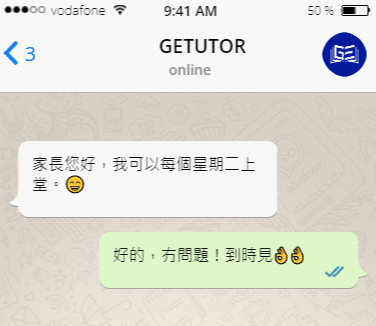
Through GETUTOR's A-level Chemistry tutorials, I have not only improved my Chemistry grade, but also increased my interest and confidence in learning. Thanks to the tutor's patience and encouragement, I was able to achieve the desired result in my A-level exams. - GETUTOR Students' Parents' Testimonials
If you are struggling with your A-level Chemistry exam, why not log on to GETUTOR's official website getutor.com.hk/findtutor, fill in your tutoring needs, and get a free A-level Chemistry tutor to start your road to success? Let GETUTOR be your A-level Chemistry tutor to meet the challenges of your exams and achieve your ideal results!
Mei received a C grade in Chemistry before the tutorial, but she was eventually awarded an A* in the exam under the tutor's careful guidance. Xiao Qiang learnt to solve problems scientifically under the tutor's guidance while consolidating her basic knowledge of Chemistry, and her grades rose steadily. The tutor provided intensive training for Siu Lai's weaknesses and helped her regain confidence in learning, resulting in a sharp improvement in her examination results.
Our team of tutors have a wealth of teaching experience and professional knowledge, and are able to develop a personalised learning plan for each student. Through systematic knowledge and question training, students will be able to better grasp the key points and difficulties of A-level Chemistry, and improve the efficiency and accuracy of problem solving.
| student name | Score before tutoring | Results after tutoring | Progress |
|---|---|---|---|
| Classmate Li | C | A* | 3 levels |
| Mr Chan | D | A | 3 levels |
| Classmate Wang | E | B | 3 levels |
As well as improving exam results, our A-level Chemistry tuition focuses on developing students' interest and confidence in learning. Through fun and engaging teaching methods and encouraging feedback, students are able to regain their passion for Chemistry and build up their self-confidence in learning. This not only helps them to do well in their A-level exams, but also lays a solid foundation for their future learning and development.
Choose a quality A-level Chemistry tutoring service and let our professional tutors help you overcome your learning difficulties and achieve breakthroughs and improvements in your results. Our success stories prove that with hard work, every student has the opportunity to achieve impressive results in Chemistry.
In conclusion, choosing a quality A-level Chemistry tutoring service is crucial for students to achieve the desired results. Professional tutors are able to provide students with personalised guidance on their learning difficulties, helping them to master chemistry knowledge and problem solving skills more effectively. According to statistics, there are more than 140,000 professional Chemistry tutors on GETUTOR, and students' grades have improved significantly after tutoring, with a parent satisfaction rate of 91.6%.
In addition, students need to study and practise consistently in order to consolidate what they have learnt and improve their problem-solving skills. Attending tutorials regularly and completing the exercises assigned by the tutor after class can help deepen the understanding and application of the knowledge points. Data show that most students attend tutorials 2-3 times a week, with each lesson lasting about 1.5-2 hours. After about 3 months of systematic learning, there is usually a significant improvement in their Chemistry results.
A-level Chemistry is an important foundation subject that plays a key role in further education and future development. We believe that by choosing a quality A-level Chemistry tutoring service and working hard, students will be able to achieve good results in their Chemistry exams, laying a solid foundation for their future studies and careers. GETUTOR, as the largest tutoring platform in Hong Kong, is committed to providing quality A-level Chemistry tutoring services for students, helping them to achieve their academic goals and build a better future for themselves.
A-level Chemistry tutorials help students to acquire a solid knowledge of Chemistry and improve their learning efficiency and examination results. Our professional tutors will provide personalised tuition to help students overcome learning difficulties and develop their interest and confidence in learning by focusing on their weaknesses.
A-level Chemistry covers a wide range of areas including inorganic chemistry, organic chemistry and physical chemistry. Topics covered include the Periodic Table of the Elements, chemical bonding, chemical equilibrium, reaction kinetics and chemical thermodynamics. Students are expected to have a solid theoretical knowledge of chemistry and be able to apply it flexibly to solve problems.
When choosing an A-level Chemistry tutor, you should consider the tutor's academic background, teaching experience, teaching style and style. A quality tutor should have a Bachelor's or Master's degree in a relevant subject, with rich teaching experience and an in-depth teaching style that inspires students to think and focuses on problem solving skills. You may refer to the tutor's past student evaluations and reputation to understand his/her teaching results and student satisfaction.
One-on-one tutorials can be tailor-made to meet the needs of individual students and provide a more flexible teaching programme. Small group tutoring can create an atmosphere of healthy competition and promote exchanges and discussions among students, but the teaching is more formalised. You can choose the most suitable mode of tutoring according to your student's characteristics and your parents' budget.
The analysis and derivation of organic chemical reaction mechanisms and synthetic routes is a major challenge for students. Chemistry calculation problems often test students' understanding of concepts and principles and their ability to perform calculations, which require a lot of practice. Chemistry experiments and data analysis are also difficult for many students.
The tutor will emphasise the rules and regulations of laboratory operations, such as preparation of reagents, use of equipment, etc. The tutor will teach the methods of recording, processing and analysing experimental data. They will teach the methods of recording, processing and analysing experimental data, and improve the ability of writing experimental reports. The tutor will start the specialised training on experimental investigation and learn to draw reasonable conclusions and provide explanations based on the data.
When preparing for the exam, you should study the syllabus carefully to determine the scope of the exam, the types of questions, and the weighting of the marks. Summarise the key knowledge of each chapter and section and the types of questions frequently asked, and check for gaps. Master the skills of answering multiple-choice questions, quizzes and other question types to improve speed and accuracy. Reasonable allocation of examination time, giving priority to the high-value questions.
It is recommended to arrange at least 1-2 tutorials per week, each lasting 1.5-2 hours, to ensure continuity of learning. The frequency of tutorials can be increased appropriately to consolidate the knowledge points before the examination. At the same time, it is important to balance the time between tutoring and classroom learning, extracurricular activities, etc. to avoid overwork.
由 GETUTOR 升學研究組撰寫 | 數據來源:GETUTOR 內部配對紀錄(2024-2026)
講真,A-Level Chem 同 其他國際學制 Chem 係兩個唔同嘅世界。唔少學生喺 其他國際學制 攞到 Level 5 甚至 5*,一過去讀 A-Level 頭半年就即刻撞板。唔係因為佢哋變蠢咗,而係 Edexcel 同 CIE 嘅出題邏輯同中文拆題方式完全唔同,好多同學以為「我讀過 其他國際學制 Chem,AS 應該無問題啦」,結果第一個 Mock 考 U。
根據 GETUTOR 後台過去兩年 超過 8,120 宗補習配對紀錄*,A-Level Chemistry 嘅配對需求係所有國際課程科目之中第二高,僅次於 A-Level Maths。當中有 約 57% 嘅學生係由 其他國際學制 體系轉軌過去,另外 43% 係傳統國際學校一條龍上嚟。呢兩類學生嘅痛點完全唔同,但我哋發現佢哋有個共通點 — 喺 AS Level(Year 12)第一個 term 就已經明顯跟唔上 Organic Chemistry 同 Energetics 呢兩個 Module。
*統計自 GETUTOR 後台 2024-2026 年全港 A-Level Chemistry 配對紀錄,樣本約 1,240 宗。
主補香港島區國際學校(例如 Island School、West Island School)同傳統英中 A-Level 學生、擁有 7 年教學經驗嘅星級導師 Dr. L(按導師私隱要求使用化名,導師資歷已獲 GETUTOR 平台認證)指出:「好多由 其他國際學制 轉過嚟嘅學生,一打開 Edexcel 嘅 Unit 1 就即刻頭痛。因為 Edexcel 將 Atomic Structure、Bonding、Redox 全部塞埋一齊考,唔似 其他國際學制 咁一個 chapter 一個 chapter 分開。我教學生嘅做法係先畫一張 Module Map,將 AS 嘅 Unit 1-3 同 A2 嘅 Unit 4-6 之間嘅關聯畫出嚟,等佢哋知道邊啲 concept 係會 recur。」
Dr. L 嘅教學法有個獨家位 — 佢會要求學生用「反向溫書法」:由 A2 嘅 Organic Synthesis 倒返去溫 AS 嘅 Functional Group。點解?因為 A-Level 嘅 Paper 5(Practical)同 Paper 6(Alternative to Practical,CIE)成日會考 multi-step synthesis,如果淨係 chapter by chapter 咁讀,到考 Mock 嗰陣就會發現成個 mechanism 連唔埋。
另一位專補 CIE 體系、香港科技大學化學系畢業、現職全職私補嘅 Mr. S(按導師私隱要求使用化名,導師資歷已獲 GETUTOR 平台認證),教學年資 5 年,累計教過超過 28 個 A-Level Chem 學生,當中 9 個最終攞到 A 或以上。佢嘅心得係:「CIE 同 Edexcel 最大分別喺 Paper 2 嘅 structured question。CIE 鐘意考 data response,俾一堆實驗數據叫你計出 enthalpy change;Edexcel 就鐘意考 conceptual,問你點解 reaction rate 會變。學生一定要知道自己考緊邊個 board,唔可以用同一套操卷策略。」
以下係 GETUTOR 超過 230 位 A-Level Chemistry 導師建議嘅中位數堂數(每堂 1.5 小時):
| Module | 建議堂數 | difficulty |
|---|---|---|
| AS Unit 1:Atomic Structure & Bonding | 5-6 堂 | middle |
| AS Unit 2:Energetics, Kinetics, Equil其他國際學制ria | 7-8 堂 | high |
| AS Unit 3:Organic Chemistry I | 8-10 堂 | 最難 |
| A2 Unit 4:Rates, Equil其他國際學制ria & Further Organic | 9-11 堂 | high |
| A2 Unit 5:Transition Metals & Organic Analysis | 8-10 堂 | 最難 |
| Paper 5 / 6:Practical Skills | 4-5 堂 | middle |
*堂數為導師建議中位數,實際因學生程度而異。由 其他國際學制 轉軌嘅學生平均要再加多 3-4 堂去補返 Edexcel / CIE 嘅 exam style。
| index | data |
|---|---|
| 試堂後繼續上堂比率(全港平均) | 81% |
| 導師平均教學年資 | 4.6 年 |
| 持有理科相關學位 | 72% |
| 自己考過 A-Level / 其他國際學制 / AP Chem 嘅比率 | 64% |
| Average Matching Time | 5.4 小時 |
*統計自 GETUTOR 2024-2026 年全港 A-Level Chemistry 配對紀錄,樣本約 1,240 宗。
你會見到 A-Level Chem 嘅配對時間(5.4 小時)比 其他國際學制 Chem(3.5 小時)長接近 54%。原因好簡單 — 唔係個個 其他國際學制 Chem 導師都識教 A-Level。好多導師一聽到要教 Edexcel Unit 5 嘅 Transition Metals 就耍手擰頭,因為呢個 chapter 其他國際學制 完全無。所以篩選導師嘅時候,一定要問清楚佢有冇教過對應 exam board。
伏位 1:以為 其他國際學制 Chem 基礎夠用
最大伏。Edexcel AS 嘅 Unit 1 Electron Configuration 會考到 s, p, d orbital 嘅 shape,其他國際學制 只係輕輕帶過。如果你唔補返呢個 gap,去到 A2 Transition Metals 嗰陣會完全一頭霧水。
伏位 2:Organic Mechanism 齋背唔識畫
A-Level 嘅 Organic 同 其他國際學制 最唔同嘅地方,係你要識畫 curly arrow mechanism。考評會扣分唔止係答錯 product,連 arrow 起點錯咗都會扣。我哋後台數據顯示,有 68% 嘅配對 feedback 提到學生 curly arrow 畫錯方向.
伏位 3:Practical Paper 當係 common sense
CIE Paper 5(Planning)係出名難攞分嘅 paper。好多學生以為做實驗嘢靠常識就得,結果連 variable 都分唔清 independent、dependent、controlled。呢個 paper 全球平均分得 58%*。
伏位 4:計算題唔識 significant figure
A-Level Chem 嘅 mark scheme 會扣 sig fig 分。其他國際學制 基本上唔扣,但 A-Level 無人幫你。
伏位 5:Edexcel 同 CIE 教材撈亂
兩個 board 嘅 syllabus 有差唔多 15% 內容唔同。例如 Edexcel 有 Chirality 做獨立 topic,CIE 就 embed 入 Organic。用錯教材操卷等於白做。
*數據來源為 Cambridge International 公開 examiner report。
| time | 預期進度 |
|---|---|
| 第 1-3 堂 | 導師診斷弱項,拆解 exam board 要求 |
| 第 4-8 堂 | 核心 Module(Energetics / Organic)概念打通 |
| 第 9-14 堂 | Past Paper 實戰,Mock 升一個 grade |
| 第 15-20 堂 | Paper 5 / 6 Practical 專項操練 |
| 第 20 堂之後 | A* 衝刺,穩定應付 synoptic question |
根據 GETUTOR 後台數據,由 C/D grade 升到 A 嘅平均時間係 3.2 個月(大約 16-18 堂),前提係學生肯自己做足課後練習。
一位就讀港島區傳統英中、其他國際學制 Chem 攞 Level 5 嘅 Year 12 學生,轉讀 Edexcel A-Level 之後第一次 Mock AS Chem 只係攞到 D。佢嘅主要問題係 Organic Mechanism 同 Energetics 計算完全跟唔上 Edexcel 嘅 exam style。經過 18 堂私補後(為期約 3.4 個月),AS 最終考到 B,去到 A2 再補 12 堂拎到 A