

7 years of tutoring experience in mental arithmetic HKBPA Level 3 mental arithmetic

Represented Hong Kong in international Mathematics, Olympiad & Abacus competitions.

Worked as a summer tutor at Maestro, focusing on the Bead and Cardinality programme.
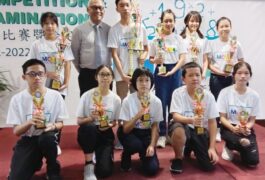
2-3 years of tutoring experience, recognised at Level 3 in mental arithmetic and Level 4 in numeracy.









At GETUTOR, we believe that every student is unique and we offer one-on-one maths tutoring services. Our tutors are tailored to the needs and characteristics of each student.Abacus mental arithmeticThe programme is designed to ensure that your child receives the right instruction for them. This ensures that your child receives the right instruction to not only improve their maths grades, but also to develop their mathematical thinking and problem solving skills.
For students who want to participate in maths competitions, we also provide professional training. With GETUTOR's guidance, every child has the opportunity to become an outstanding maths student. We help them succeed in maths in a professional, efficient and personalised way.

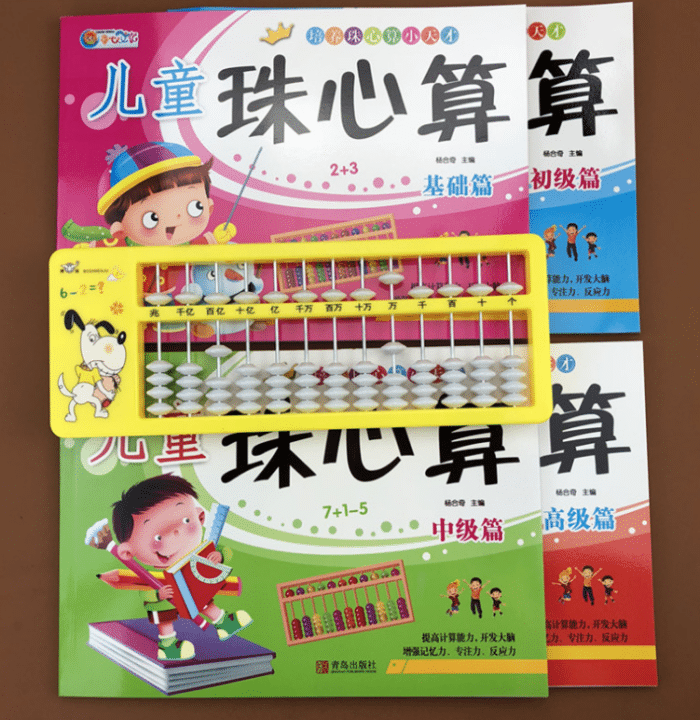
Bead counting is a technique of calculating with abacus beads. It comes from ancient Asia and has evolved over the centuries into its present form. This method makes use of the human brain's quick reflexes and memory to help with mental arithmetic. With practice, the speed and accuracy of calculations will improve.
According to statistics, the history of bead counting in China is more than 3,000 years, which is more than 1,800 years since the Southern Song Dynasty. In 1972, Zhou Enlai mentioned the preservation of the abacus, which led to the popularity of bead counting. The first revolution took place in 1972, when Zhou Enlai's support made it popular throughout the country and affected neighbouring countries. The second revolution took place in the 1980s, when China started to pay attention to the education of numeracy and planned to promote it to all young people in the country in the 1990s.
There are several steps in bead counting, such as placing beads, moving beads and closing beads. To become a master, one needs to be familiar with these techniques. By practising, one's speed and accuracy will increase. Research has found that children between the ages of 4 and 12 are best suited to learn bead counting. This is a critical time for brain development. Bead counting training can improve many of your child's abilities such as concentration, intelligence and memory. It is not only an efficient method of calculation, but also promotes the development of mathematical and thinking skills.
Research has found that bead counting helps to improve children's concentration and memory. It trains the brain to react quickly through repetitive calculations. This not only improves memory, but also increases calculation and mathematical logic.
Through continuous practice, children will be able to solve problems flexibly and strengthen their mathematical skills. Bead Maths is a holistic approach to improving skills. It helps children's brain and nerve development, and improves mental agility, imagination and observation.
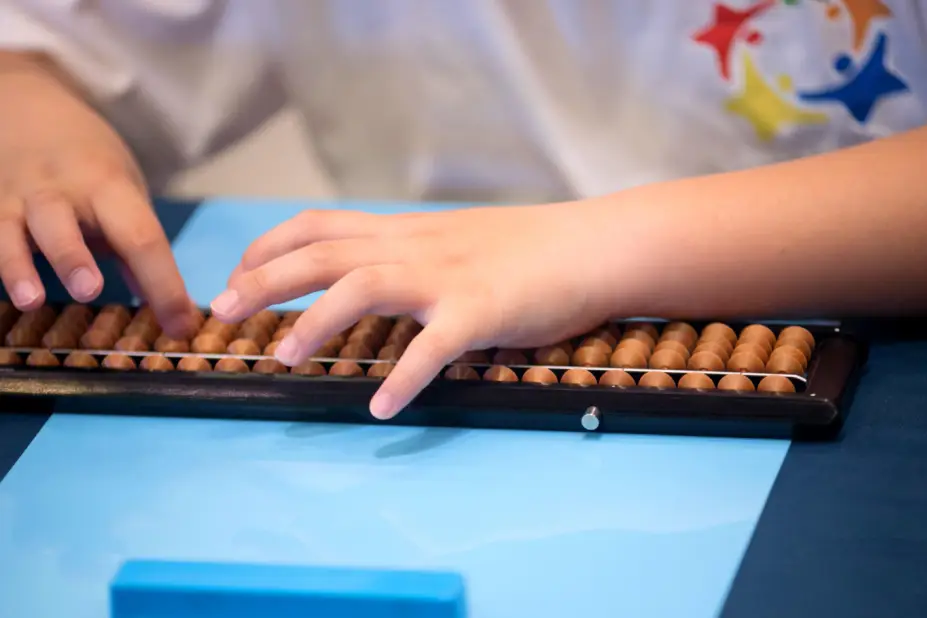
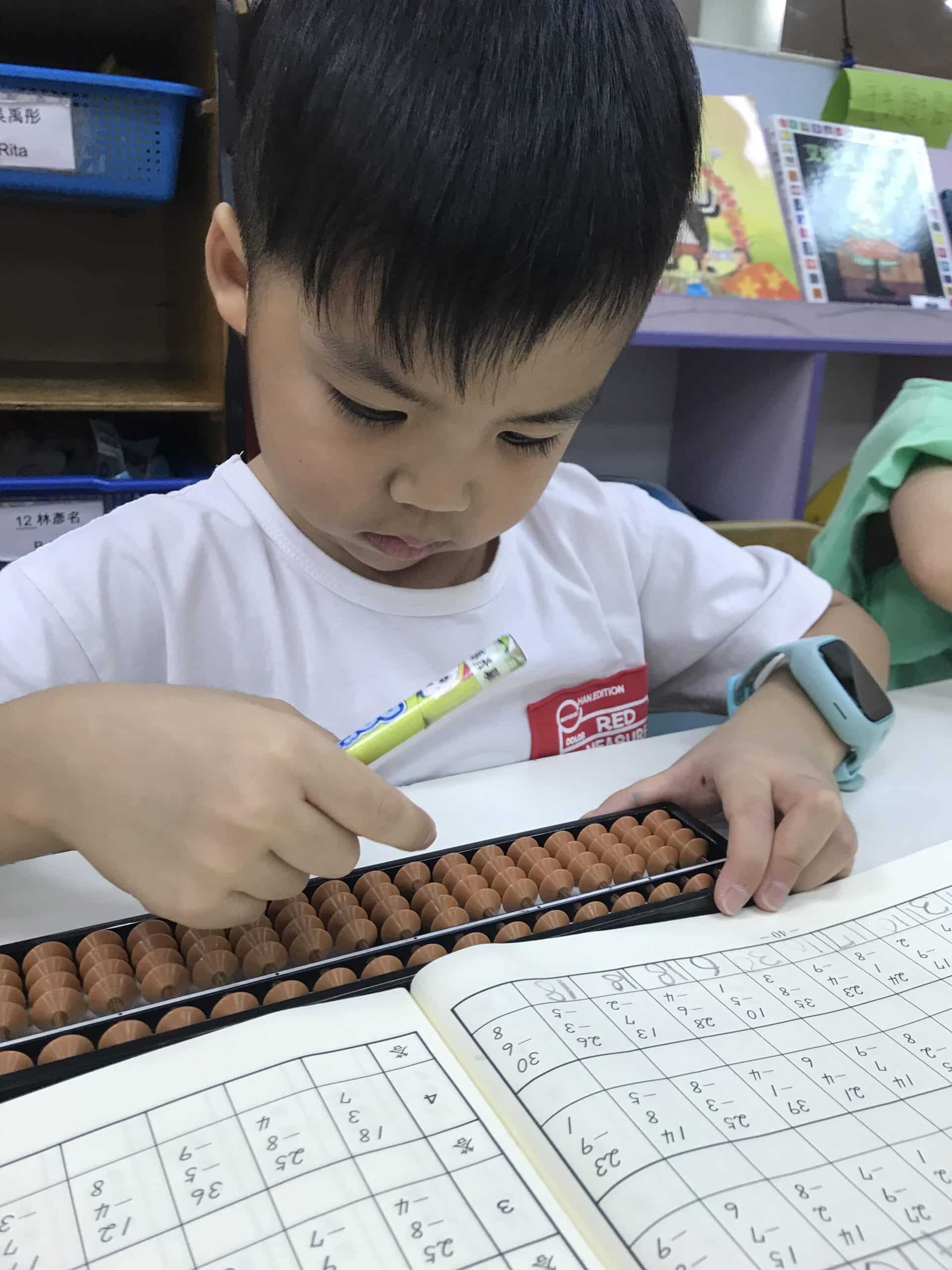
Bead counting uses abacus beads to calculate. Learners need to know how to place, move and close the beads. With constant practice, the brain is able to work quickly and remember each step.
As skills improve, the speed and accuracy of calculations will increase significantly. It is also important to learn to use different problem-solving methods, such as generalisation and deduction, flexibly to improve problem-solving skills.
Learning to read and write lies in mastering the correct way of teaching bead counting. Through continuous practice, the brain's reaction time and memory capacity can be improved. The use of a variety of problem solving methods also helps to improve the ability to solve mathematical problems.
| Bead counting step by step | Tips and Tricks |
|---|---|
| dangle a pearl | Quickly and accurately place the beads on the abacus. |
| move the pearl | Practise various types of bead transfers such as addition, subtraction, multiplication and division. |
| rosette | Quickly merge the moving beads to arrive at the final calculation result |
There are many famous training centres in Hong Kong, such as GETUTOR, MMP Mathematics and Olympic Mathematics. These centres have a team of professional teachers who provide structured courses on bead counting.
The programme includes training on basic skills, practical applications and preparation for competitions. Students will be able to learn more and achieve further success in the field of bead counting.
In Hong Kong, GETUTOR, MMP Maths and Olympic Maths are some of the famous training centres for beads. They have a lot of teaching experience and a team of professional teachers.
Their programmes are comprehensively designed to help students enhance their mathematical skills. Whether a student's foundation is strong or weak, these centres are able to provide a suitable education.
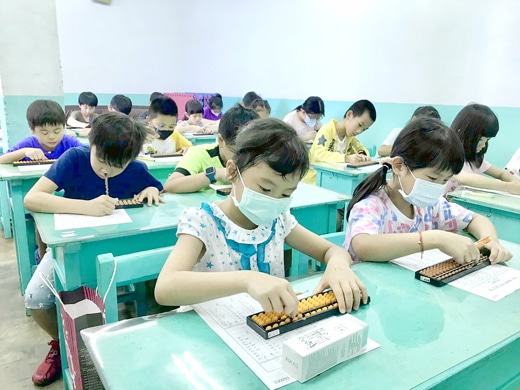
These numeracy training centres have different courses designed for students of different ages. Here students can learn various skills to improve their mathematical abilities.
Bead counting comes from ancient Asia. It is a technique of mental arithmetic using abacus beads. It has evolved over the years and is now a professional mathematical technique.
Through continuous practice, bead counting makes calculations faster and more accurate. It also improves concentration and memory. It even promotes the development of mathematical thinking.
It is important to choose the right beadwork class for your child. Firstly, you need to understand your child's interests and maths foundation. Then choose a suitable programme based on these.
Equally important is to pay attention to the teacher and the teaching environment of the bead centre. A good teacher will motivate the students and a good environment will help the children to learn.
Each child's interest and foundation in mathematics is unique. Parents should choose a programme based on their child's circumstances. This includes the child's preferences and mathematical abilities.
A good bead centre tutor needs to be experienced and professional. They should know how to teach the children according to their abilities and how to arouse their interest in learning.

It is important to have a good practice habit in order to make progress in the study of bead counting. Learners should practise every day and gradually master the basic skills.
Consistent practice allows students to quickly master basic skills such as placing, moving and closing beads. Long-term practice not only improves calculation speed, but also increases concentration and memory.
Parental involvement and encouragement are important in the development of bead counting. They should practise with their children, give good feedback and motivation, and create a good atmosphere for learning.
Bead counting is not only a maths skill, but also has a wide range of applications. It allows those who are good at it to excel in maths competitions and exams and achieve high scores. Similarly, it can be useful in everyday calculations.
For example, it is very useful in shopping and time management. Learning bead counting not only improves mathematical skills, but also helps to improve the quality of life.
In competitions and examinations, children who know beads have the advantage of quick calculation. They can achieve good results in a limited time. This helps them to develop flexibility and accuracy in calculation.
Therefore, learning bead counting is a good way to improve your maths results.
Not only is it advantageous in competitions and exams, but it is also useful in life calculations. For example, it can quickly help when calculating the cost of shopping. This increases the accuracy and efficiency of the operation.
Similarly, it helps in time management. The use of bead counting skills can help you organise your schedule better.
judgementAbacus mental arithmeticThe key to effective learning is continuous assessment. Participating in maths competitions is a good way to test your ability to calculate and solve problems. It is also important to see if there is any improvement in your computational efficiency in daily life.
Parents and teachers need to pay close attentionstudentThey should always adjust their teaching strategies to ensure the best results. They should always adjust their teaching strategies to ensure the best results. OnlyLearnersIf parents and teachers can work together, the effectiveness of learning can be truly enhanced.
| Assessment Indicators | Assessment method | Expected Targets |
|---|---|---|
| Calculation | Participation in Mathematics Competitions | Continuously improve problem solving speed and accuracy |
| Daily Applications | Observing Computational Efficiency in Life | Faster and more accurate calculations |
| learning status | Follow-up evaluation by parents and teachers | Adjust teaching plans in a timely manner |
rely on continuous assessment and adjustment.Abacus mental arithmeticLearners are able to excel. This provides them with a solid foundation for their journey in maths.
Bead counting is different from traditional arithmetic education. It does not only teach students to memorise knowledge and calculation. More importantly, it encourages students to think, develop mathematical thinking and decision-making skills.
Traditional education focuses on rote learning and manipulation. However, bead counting helps to train the brain through the use of beads. This allows students to become more responsive and flexible.
In addition, it also improves concentration, memory and logical analysis. This provides a solid foundation for students to cope with challenges at school and at work. Therefore, learning abacus is not only about learning skills, but also about overall mathematical literacy.
| index | Traditional Arithmetic Education | traditional teaching of Chinese character based on the Grammatical system |
|---|---|---|
| focus | Knowledge Memory and Mechanical Computing | Mathematical Thinking and Problem Solving |
| Capacity Building | Memory | Concentration, memory, logical and analytical skills |
| Assessment Indicators | Exam Results | Calculation speed, potential development |
| Advantage | Building a solid foundation of knowledge | Enhancing Mathematical Literacy |
Through the above table, we can see the difference between the two. The education of the Pearl River Delta (PRD) is enriched with mathematical thinking and problem solving skills. This not only enhances the speed of calculation, but also develops students' mathematical skills in all aspects. Therefore, learning bead counting is a good way to enrich skills and mathematical literacy.

Research has found that the age of 4 to 12 is the most suitable golden age for learning bead counting. At this age, a child's brain develops rapidly and can absorb new knowledge quickly. It is easy for children to form good learning habits. Also, this period is important because it helps children to develop concentration, memory and logic.
Allowing children to learn bead counting will not only help them to build a strong foundation in mathematics, but more importantly, lay a good foundation for their future development. More importantly, it will lay a good foundation for their future development.
| Research Data | Key Findings |
|---|---|
| A study conducted by Wong Kwok Wing in 2005 found that about 30% children aged 5-12 in Hong Kong had learnt bead counting, and the average learning time was 1-1.5 years. | Bead counting is one of the most popular skills among children in Hong Kong. |
| In Taiwan, bead counting education is mainly concentrated in professional training institutes for kindergarten and primary school students, with two 90-minute sessions per week. | In Taiwan, the education of mental arithmetic is widely valued and favoured by parents of children. |
| Although there has been a decline in the number of school programmes on bead counting, there has been a steady increase in the number of children learning bead counting through advocacy by non-government organisations. | The learning effect of beads is highly recognised by the community. |
| Research has shown that children between the ages of 4 and 13 are at an optimal stage for learning mental arithmetic, and that the one-bead method stimulates children's mental arithmetic skills. | The age of 4-13 is the golden age for learning bead counting. |
Learning bead counting can increase your child's maths achievement. At the same time, it will help them to develop their overall development. This training will stimulate your child's interest in mathematics.
They will practise mathematical thinking and problem solving.
Bead counting teaches children to use a flexible approach. It encourages them to come up with new solutions. This stimulates children's enthusiasm for mathematics.
They will be more motivated to learn and thus achieve better results.
Children are required to learn to think independently. They are expected to find solutions to problems on their own. This training not only strengthens mathematical skills, but also develops the ability to think independently and solve problems.
This will help your child to study and work in the future.
Bead counting is a mathematical skill. It uses an abacus to perform mathematical calculations. With constant practice, people can speed up their calculations and improve their accuracy.
This technique can also help to improve a child's concentration, memory and logic. In Hong Kong, there are many reputable bead counting institutions that offer courses. These programmes help children to learn mathematics better.
It is important to choose the right programme for your child. This will help your child to develop good practice habits. Parental involvement and support will also have a great impact on your child's learning.
Learning Bead Maths is not only useful for maths competitions and exams. In life, calculations are fast and precise and flexible. Therefore, this skill is very important for children's growth.
In addition, bead counting stimulates children's interest in mathematics. This way of learning develops their ability to think independently and solve difficult problems.
GETUTOR provides one-to-one tutoring in bead counting. It is very helpful for students. Parents are cordially invited to come and try it out.
Let's work together to open the door to success for our children.
Bead counting is an ancient method of mental arithmetic. It uses abacus beads to perform calculations.
This method originated in Asia and has been used for centuries. By practising it, you can train your brain to calculate quickly.
Learning bead counting will improve your child's mathematical skills. This includes concentration, memory and logical thinking.
Through continuous practice, learners will improve their problem solving skills. This also increases the speed and accuracy of calculations.
Beads are used for mental arithmetic. Learners need to master basic bead counting skills.
This includes placing, moving and closing the beads. After practice, the speed and accuracy of calculation will be significantly improved.
There are a number of well known bead counting organisations in Hong Kong, such as GETUTOR and MMP Maths. They provide high quality programmes.
These organisations have professional teachers. They provide suitable programmes for children of different ages.
Choosing a beadwork class is important. Parents should choose a class according to their child's interest and ability.
Pay attention to the teachers' qualifications and the teaching environment. A good teacher and environment will help your child learn better.
Developing good practice habits is important for progress. Learners need to practice every day.
Parents can be involved in encouraging their children and giving timely feedback. This helps to create an atmosphere for learning.
Bead counting is a very useful skill, not only for maths competitions. It is also useful in everyday life.
Bead counting can help speed up the shopping process. It also helps with time management and efficiency.
In order to assess the learning of bead counting, you need to participate in different competitions. This is a test of numeracy.
At the same time, attention should be paid to improving the efficiency of daily calculations. Parents and teachers should also pay close attention to their children's learning.
Pearl Mathematics focuses on mathematical thinking and problem solving. It is different from traditional arithmetic education which is based on pure memorisation.
Through repetitive manipulation of the abacus, it develops a wide range of skills. These include quick reflexes, memory and independent thinking.
Research has concluded that the best time to learn bead counting is between the ages of 4 and 12. This is a period of rapid development of the child's ability.
Entering this field will help them build a strong foundation in mathematics and develop a wide range of skills.
Bead counting helps to improve your child's maths performance. At the same time, it promotes the development of a wide range of abilities.
This includes mathematical thinking and problem solving skills. This is very helpful for learning and later life.