




Graduated with a Bachelor's Degree Over 8 years of teaching experience Short time to show results

Full-time tutoring 8 years tutoring experience

Early childhood education programmes for kindergarten teacher qualifications (qkt/ccw/ce)
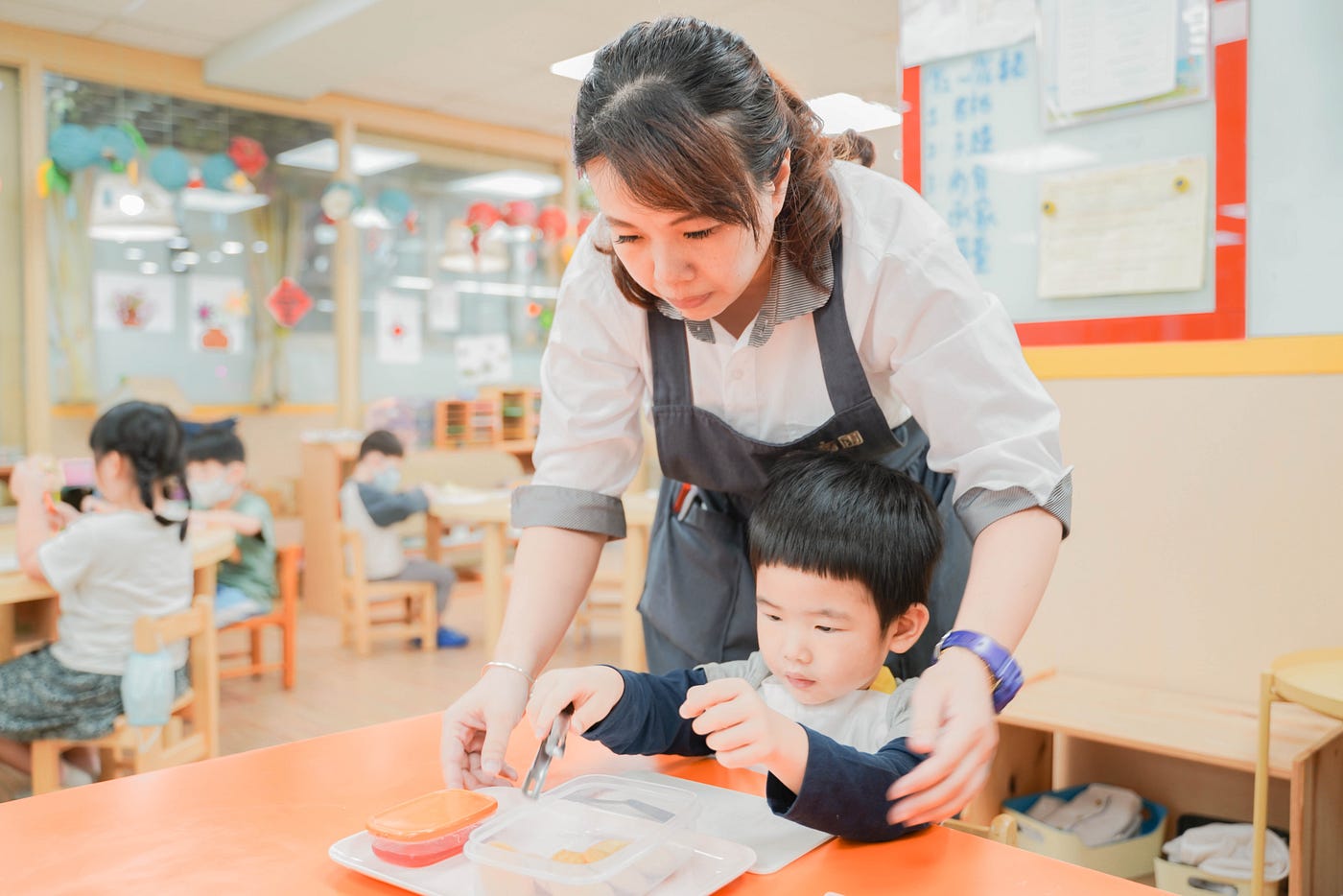
Over 8 years of tutoring experience

Over 4 years of tutorial experience The Hong Kong Institute of Education









Many parents choose to enrol their children in the programme in order to provide them with a solid educational foundation.Kindergarten supplementary lessonsThese tutorial classes are dedicated to teaching Chinese, English, Mathematics and other subjects. These tutorials are dedicated to teaching subjects such as Chinese, English and Mathematics. They help children get a balanced education in all areas.Pre-school Enlightenment.
Mothers and fathers usually choose tutors with educational certificates and experience. It is stated that the qualifications of the tutors range from Form 5 to university. The hourly salary ranges from $70 to $500, depending on the qualification and experience of the tutor. Courses are usually organised in one to five sessions per week, with each session lasting one to three hours.

In addition, the tutors will also give special instructions to the children in doing their homework. This will help your child to better digest what he/she has learnt and establish good study habits.
In conclusion.Kindergarten supplementary lessonsIt is important for the development of young children. It helps them to adapt smoothly to primary school. Parents should decide which tutorials are suitable for their children based on their age and learning needs.
Early education for children is important. Kindergarten tutoring is indispensable. This is a crucial time. Proper tutoring helps children build a good foundation for learning. It enhances the child's language skills, cognitive and social skills.
Why is tutoring so important? There are several reasons:
According to a survey, nearly 95% Malaysian families choose to send their children to kindergarten. This shows the importance and breadth of early childhood education. In Taiwan, although the government is trying to reduce the pressure of examinations, the number of students attending tutorial classes has increased. This shows the importance of changing parents' attitudes towards education.
Kindergarten tutoring has many benefits. It helps children grow in different ways:
| Benefits of Kindergarten Tutoring | Specific performance |
|---|---|
| Language Enhancement | Expand vocabulary and improve expression and comprehension skills. |
| Cognitive Development | Promote logical thinking and problem solving skills. |
| Improvement of social skills | Learning skills such as communication, co-operation and sharing |
| Emotional management skills | Learning to recognise and express emotions |
| Creativity Stimulation | Participate in arts, music, crafts, etc. |
Specialised educational philosophies such as Montessori and Waldorf can be very helpful in the holistic development of a child. Parents should carefully choose a kindergarten that focuses on holistic development, not just homework. This will help the child to develop an interest in learning and achieve holistic development.
Encouraging children to develop their creativity and imagination from an early age is essential to fostering a well-rounded education that is not limited to academic achievement, but also to the healthy growth of the child.
In conclusion, kindergarten tutoring is crucial to the development of children. Parents have to choose the right kind of tuition according to their children's needs. The key is to cultivate children's interest in learning. It is the synergy between home, school and tutoring that ensures that children grow up happily.
Kindergarten tutoring is very enriching. It includes English and Chinese language, maths, general knowledge and other subjects. There are also arts and crafts, music, and physical education. The curriculum is designed according to your child's age and ability. The aim is to provide children with a good foundation for learning. At the same time, we aim to stimulate their interest in learning.
In teaching, tutorials use games and interactions. The tutor will use interesting games and activities to attract children. This will make them enjoy learning more. For example, the tutor may sing English songs with the children or play word games. All of this is done in a fun and relaxed environment.
Play-based learning helps children to learn knowledge and skills. It is an important teaching method for tutoring.
In addition to this, tutoring also emphasises the importance of tailoring instruction to the child's needs. Each child is different and has different strengths and learning needs. The tutor will create a teaching plan based on the child's specific situation. This kind of individualised teaching allows each child to get the most suitable education.
| Tuition form | Price range (HK$/hour) | Features |
|---|---|---|
| One-on-one tutoring | 200 – 500 | Focused and tailored to the needs of the student. |
| Group Tutoring | 150 – 300 | Interacts well and improves social skills. |
In conclusion, kindergarten tutorials are varied in content, lively and interesting in approach, and emphasise individual differences. Such teaching methods show that children can be motivated to learn through diverse interactions and individualisation. This helps them to develop holistically at different levels.
Parents should consider many factors when choosing a kindergarten tutor. This is how your child will be educated and enlightened. A good tutor should not only have good qualifications, but also have a lot of experience in teaching.
The qualifications of the tutor are important. Some tutors come from prestigious schools and specialise in pre-school education. Their teaching experience allows them to better understand the needs of children and teach them better.
The instructor's teaching style is very important to children's learning. A good tutor likes to use interaction and games to stimulate children's interest in learning. They should be patient and kind so that children will enjoy being with the tutor.
Parents also need to consider the tutor's fees and hours. Fees are generally determined by the ability of the tutor and the quality of instruction. It is also important that the tutor's time slot is suitable for you.
| Instructor Age Group | Educational Background | Teaching experience | Average hourly wage |
|---|---|---|---|
| 16-19 years old | High School | No teaching experience | $150-475/hr. |
| 20-25 years old | University qualifications | 1-4 years teaching experience | $170-375/hours |
| 26-30 years old | Early Childhood Education | More than 3 years teaching experience | $165-375/hours |
| 36-40 years old | Master's Degree | More than 5 years teaching experience | $350-425/hr. |
| 41-45 years old | Bachelor's Degree and above | More than 10 years teaching experience | $475/hour |
To consider the academic qualifications of the tutors.,Teaching experience,We are looking for the best tutor for your child in terms of style and fees. This will help your child's learning process at the Head Start level to be smooth.
Parents play a very important role in their child's tutoring. They need to create a favourable learning environment. Parents also need to work closely with the tutor to ensure the child's healthy development. Parental parenting and involvement have a significant impact on the child's learning outcomes.

If you want your child to do well in tutorials, you need to create a suitable learning environment. This environment includes a suitable study corner and sufficient learning materials. At the same time, it is important to help your child organise his/her study and play time.
Parents' attitude and behaviour are also important in creating an environment. Parents should inspire their children by setting a good example and demonstrating their pursuit of knowledge. This will help children to develop interest and confidence in learning and help them to be more active learners.
It is important for parents and tutors to communicate and co-operate in the tutoring of their children. Parents should communicate with the tutor on a regular basis to understand how their child is learning. This way, problems can be solved in a timely manner.
In addition to communication, it is essential to establish good co-operation. Work together to set goals and methods for your child's learning. Parents work with the tutor at home to provide learning opportunities for their child. This will better meet your child's needs.
| Parental Involvement | specific measure |
|---|---|
| Creating a favourable learning environment |
|
| Maintain communication and co-operation with tutors |
|
In conclusion, it is important for parents to be involved in their children's tuition. By providing a good learning environment and working with the tutor, they can support their child's learning. This will help your child make progress in his or her studies.
The Ministry of Education points out that children aged 0-3, 3-6 and 6-9 have different reading needs.
Choosing appropriate reading materials for children, such as picture books and fairy tales, can help expand their vocabulary. Studies have found that children show more interest in reading when they choose their own extracurricular books.
| generation | Reading Time | Readability |
|---|---|---|
| 0-3 years | 10-20 minutes per day | Learn about the world through images and simple vocabulary. |
| 3-6 years old | 20-40 minutes per day | Can understand simple storylines and begin to read on their own. |
| 6-9 years old | 40-60 minutes per day | Mature reading skills, able to read independently and comprehend content. |
Parents' attitude towards reading directly affects their children's attitude towards reading and learning. Parents who read a lot tend to have children who are better readers. This shows that parents' reading habits and children's reading performance are closely related.
The main point of Mathematics education for children is to enable them to develop basic concepts of numbers. This develops their logical thinking skills. Through maths games and everyday life, children will gradually learn the meaning of numbers.
Here, children not only achieve excellent academic results, but also have strong problem-solving skills. Our senior teacher, Mr Weiszfeldt, has 43 years of teaching experience and has helped tens of thousands of children.
Activities such as sorting and sequencing, graphic recognition, etc. can help children learn about numbers. For example, counting steps and sharing snacks are good learning opportunities. These activities can deepen understanding of numbers.
Maths games,For example, number sequences and number matches can enhance children's number sense and calculation skills.
Educational toys and games are great for developing spatial thinking and logic. Examples include puzzles, stacking games, and mazes. These games inspire logical thinking.
Activities such as categorising and sorting will also enhance your child's logic skills. At Starr Maths, there is an active interaction between teachers and students. This allows children to learn in a fun atmosphere, which builds their confidence and allows them to overcome difficulties.
| Course type | Suitable Age | average tuition |
|---|---|---|
| Advanced Maths Skills | 7-15 years old | €19-26/week |
| One-to-one Childhood Maths | Pre-school - Grade 5 | €33-47 per session |
| Introduction to Kindergarten Mathematics | kindergarten | €8-14/week, €37-42/trip |
| Advanced Maths Challenge | 7-10 years old | €10-21/week |
| Singapore Maths Method | 5-10 years old | €19-21/week |
Statistics show that teachers at Starr Maths generally have a rating of 5.0, indicating that students and parents agree with the education model.
Many parents say that their children have become more interested in maths after attending CISTA. Their confidence and problem solving skills have also improved significantly.
With Siddhartha's teaching, we have seen our children exploring the world of maths with confidence. This makes us very happy. - Parents
Generally speaking, Mathematics education for children focuses on stimulating children's interest and teaching them through life and games. The guidance of parents and teachers plays a key role in children's education.
Children should learn English through fun. Teach English with fun songs, books and games.
Parents are important too. Watching animations and speaking English with your child can help.
“Learning English for young children should be fun. Provide fun and learning opportunities for children to learn English naturally.” - Zhang Xiangjun, Director, Institute of Children's English Education, Taipei Normal University
In short, learning English should be fun and enjoyable for children. It is more important to teach children to develop a sense of language. Memory should not be too strong. Create a happy learning environment for them. Teach them in a lively way so that they will love learning English and build a solid foundation.
The amount of homework in kindergarten is relatively small, but it is important for children's learning habits and independent learning ability. Parents and tutors should use some techniques to help children with their homework. These techniques will help your child to focus, learn good study habits, and develop independent learning skills.

Improving concentration is important for children to complete their homework. There are several ways that parents and tutors can help your child:
The ability to learn independently is fundamental to a child's development. Parents and teachers can encourage independent learning through various means:
Cultivating children's interest in learning and their ability to learn on their own is more conducive to children's long term development than strong supervision.
| Counselling Focus | practice | Effect |
|---|---|---|
| Improve focus | Create a quiet environment, study in sections, choose your interests, and take regular breaks. | Improve the quality of homework completion and reduce the pressure of learning. |
| Develop independent learning abilities | Encouragement to organise school supplies, make study plans, teach learning methods, and give choices. | Enhancement of learning motivation and laying the foundation for future learning |
It is important for parents and tutors to focus on developing children's interest in learning when they are in kindergarten homework help. They can help establish good study habits and methods. This will lay a solid foundation for your child's future learning.
Early childhood is an important developmental period for children. During this period, their language, cognitive and social skills are developing rapidly. This will have an impact on their future learning and life.
The study found that 80% children wanted to participate in tutoring, with 60% starting at age 4. This shows that kindergarten tutoring can provide more learning opportunities. However, it is important to maintain a balance between children's learning and playtime to reduce stress.
A study in Shanghai found that nearly half of parents enrolled their children in early education programmes. They spend an average of RMB 17,832 per year, which is 11.9% of the family's income, indicating the importance parents place on early childhood education.
Although parents are willing to invest in their children, they should give them enough love and support. This will help the child grow up healthy and happy.
| generation | Development Focus |
|---|---|
| Kindergarten for 2-3 years old | Important for regular routine, including basic self-care skills. |
| 3-4 Years Old Small Group | Emphasis is placed on the development of penmanship, basic visual perceptual skills, and the richness of gross motor activities. |
| 4-5 Years Old Intermediate Class | Children need to be familiar with word symbols, numbers, constructive play enrichment, reading skills development and teamwork. |
| Kindergarten 5-6 years old | For Kindergarten to Primary Years Bridging, emphasise on basic pencil skills, rule-based games, teamwork and competitive activities. |
Children of different ages have different developmental needs. Parents and educators should formulate appropriate programmes according to their children's characteristics.
For example, 2- to 3-year-olds should focus on developing discipline and self-care skills. For 5-6 year olds, they need to focus on improving their penmanship and teamwork skills in preparation for school.
The physical and mental development of young children is gradual. The family, the nursery and the community form the environment in which children grow up. We should work together so that children can be healthy, happy and fulfil their potential.
Tutoring can help young children build a foundation for learning. But too much tutoring can increase their stress. This may affect children's interest in learning and their health. About 70% of children need time to settle in when they first start school.
Parents should schedule tutorials according to their children's characteristics. Parents should not blindly pursue enrolment in classes. This will put too much pressure on the child.
Play is important for young children's development. It is important that they have a balance of learning and play time. This gives them the opportunity to explore and create.
In the city, many young children do not have much opportunity for exercise because their parents drive them around in the car. This affects their physical co-ordination. Therefore, after-school time should not be spent on tutoring. Free time and outdoor playtime should be reserved.
Parental support and companionship are important for young children. Besides tutoring, the home should be a warm place. Talk and interact with your child to make them feel loved and valued. Check your child's health regularly, especially his/her eyesight and teeth.
| Notes on Kindergarten Tutoring | Suggested Practices |
|---|---|
| Avoid excessive tutoring | Reasonable arrangement of tutoring time and content according to the age and ability of the child. |
| Balancing Learning and Playtime | Reserve enough free time and outdoor playtime for children |
| Parental Companionship and Support | Create a warm and tolerant family environment, and communicate and interact more with your children. |
| Concern for the physical and mental health of children | Regular health check-ups for vision, dental health and growth and development |
Tutoring is part of early childhood education. However, parents should pay attention to all aspects of their children's needs when choosing a suitable tutorial programme. Avoid excessive tutoring and focus on balancing learning and play. Parents' companionship and care are crucial to the growth of young children.
Kindergarten supplementary lessonsfor幼兒教育It is extremely important. It can help children build a foundation for learning and develop their interest and ability to learn. However, mums, dads and teachers need to be careful in choosing tutorials so that they don't put too much pressure on the child.
It is important to care not only about your child's academic performance, but also about their holistic development, such as physical and mental health and social skills. In this process, theparent involvementSupport is essential. By working closely with the tutors, we can create a favourable learning environment for the children to learn and grow happily.
Early childhood is a critical time in a child's development. Families, schools and communities need to work together. We should provide adequate educational resources and support and respect the unique needs of each child. In this way, children can grow up happily. And they build a strong foundation for their future.
Kindergarten tutoring includes Chinese, English, and Maths. There is also tutoring for all subjects. These subjects help children develop phonological skills and mathematical concepts.
It also strengthens integrated learning skills. It lays a solid foundation for future learning.
Requirements for instructors range from Form 5 to university graduate. A certificate in education or experience is a plus. Tutors must be patient and responsible.
They need to be good at communicating with their children. They have to be able to communicate with their children and teach them according to their situation.
There are 1-5 classes per week. Each class is 1-3 hours long. Classes usually start after 4pm.
Tutoring costs around $70-200/hour. This depends on the experience and qualifications of the tutor.
Tutoring can help your child build many foundations. This includes language, maths and social skills.
This increases children's interest in learning and their cognitive abilities. Moderate tuition also increases their self-confidence and independence.
Tutorials are often game-based and interactive. This attracts children's interest.
Instructors personalise the lessons to suit the needs of the child.
Increase interest in reading through storytelling and role play. Choose appropriate storybooks for shared reading.
This will help your child develop a reading habit.
The emphasis is on getting children interested in English. You can learn through songs, picture books, and games.
Don't over-emphasise rote learning and memorisation. Create a good English environment.
Tutoring homework should help your child focus. Moderate rewards can be used.
Children should also be taught the skill of learning on their own. This will help them to organise their own learning.
Parents should create a favourable learning environment. Provide necessary resources and support.
They have to co-operate with the tutor. Develop a culture that encourages children to learn. This promotes interest in learning as well as self-confidence.
Excessive tutoring puts undue stress on the child. It will affect their interest in learning and their health.
It is important to reasonably allocate your child's study and leisure time. Only in this way can children have the space to fully develop.
Now repost from the button below the blog to the GETUTOR website, "Contact the staff to get a $20 tuition fee waiver, without further ado, go and search for a suitable tutor to take classes now