




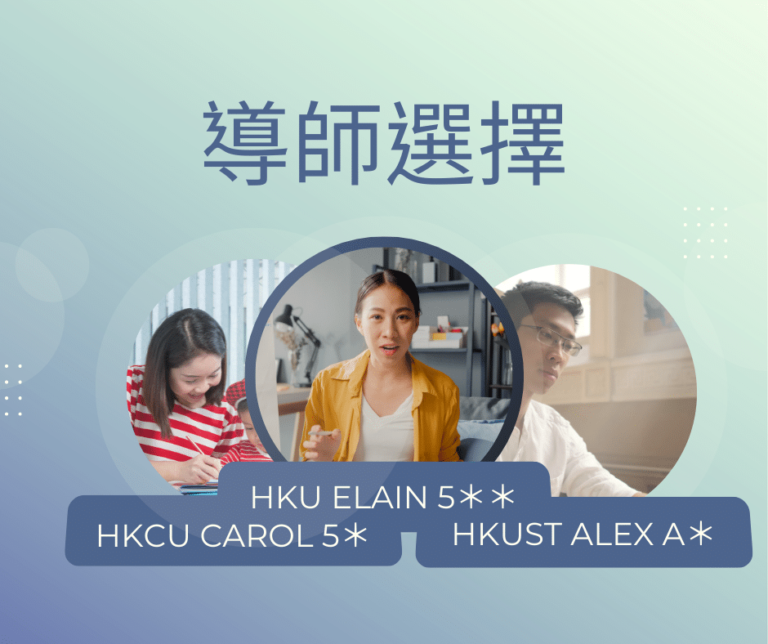
Incumbent teacher more than 10 years of teaching experience Graduated from the English Department

Graduated from the School of Journalism and Communication, The Chinese University of Hong Kong, 6 years of tutoring experience can be used for general tutoring in primary schools

5 years of tutoring experience, the Department of Social Sciences of the University of Hong Kong has rich experience in general tutoring in primary schools

More than 8 years of tutoring experience, graduated from the Chinese University of Hong Kong, can take general tutoring in primary schools and Chinese specialist tutoring

More than 4 years of tutoring experience to study the Bachelor of Business Administration and Law of the University of Hong Kong

More than 4 years of tutoring experience as a dentist at the University of Hong Kong









Did you know? According to statistics, more than70%In Hong Kong, the challenge of learning Mathematics in junior secondary school is particularly challenging for secondary school students, especially at the turning point of the S2 programme. In this year, students not only need to master more complex mathematical concepts, but also lay a solid foundation for future public examinations.
The core framework of the S2 Mathematics Curriculum covers a wide range of areas such as algebra, geometry and data manipulation, which are both key learning points and a source of difficulty for many students. To help students make a smooth transition, the professionalTutoringThe programme combines the teaching models of top schools to provide targeted learning strategies.
In recent years, the success stories of many DSE achievers have shown that a systematic approach to learning and consistent practice are the keys to improved performance. Through a dual curriculum design that integrates school progress with over-the-top learning, students are not only able to keep up with the pace of the classroom, but are also able to master upper-level content ahead of time.
If you're looking for an effective learning programme that delves into the S2sequenceThe structure and learning focus will be the first step towards success.
From primary to secondary school, the difficulty of the Mathematics curriculum has increased significantly, which has left many students feeling overwhelmed. According to a study, the amount of knowledge in Mathematics from Primary 6 to Secondary 2 has increased by300%This places a very high demand on the adaptability of students.
Primary school mathematics focuses on basic calculations, while secondary school introduces more complex concepts such as algebra and geometry. For example, learning positive and negative numbers and algebra is often the first challenge for students. Knight Maths' Pre-S1 Bridging Programme is designed to provide intensive training in these fundamentals to help students make a smooth transition.
In addition, comprehension of word problems is a major challenge. Many students make mistakes due to a lack of mathematical vocabulary, resulting in poor grades. ProfessionalTutoringThe programme can enhance students' understanding of word problems in a targeted manner, thereby improving the accuracy of problem solving.
Learning S2 Maths is not only a current challenge, but also a cornerstone for future studies. Research has shown that there is a correlation between S2 algebraic ability and DSE Maths results.0.78 positive correlationThis means that it is important to lay a good foundation.
For example, the foundation of trigonometric functions is crucial to the study of Physics. Famous schools such as Maryknoll College have adopted a 1.5 year advanced curriculum design to ensure that students can master the senior year content well in advance and be prepared for future public examinations.
"A systematic approach to learning and consistent practice is the key to improving grades." --Diocesan Girls' College Teaching Example
Through the dual-track curriculum design that integrates school progress and over-learning, students not only keep up with the rhythm of the classroom, but also master senior level content in advance, laying a solid foundation for future learning.
Understanding which factors are most critical when choosing learning support can make a difference to learning outcomes. The following is an in-depth look at how teacher qualifications, teaching modes and programme design affect student learning outcomes.
A good tutor not only imparts knowledge, but also stimulates students' interest in learning. For example, Knight Maths' elite classes use DSE 5 notes and self-created question banks to ensure that students master the key points of the exam. In addition, our experienced tutors can design a step-by-step training system based on the student's learning progress to enhance their problem-solving skills step by step.
Smaller class sizes provide more individualised instruction and allow students to receive immediate feedback. According to statistics, the frequency of individual guidance in a small class of 5 students can be up to 6 times per class, much higher than the 1-2 times in a large class of 10 students or more. This model not only strengthens students' weaknesses, but also enhances learning efficiency. Data from the past three years show that the average progress of students in small classes is 42%.
Synchronisation of curriculum design with the progress of schools is crucial to the effectiveness of learning. For example, the Dynamic Curriculum Adjustment System (DCA) can keep pace with the progress of 38 secondary schools to ensure that students can master the classroom contents in a timely manner. In addition, monthly progress tests and three topic-specific quizzes help students review their learning outcomes and remediate their weaknesses.
| Teaching mode | Individual Guidance Frequency | Average rate of progress |
|---|---|---|
| Small group of 5 | 6 per class | 42% |
| Large classes of 10 or more | 1-2 times per class | 25% |
Through the above analyses, choosing the appropriate learning support can help students to improve their performance effectively and lay a solid foundation for future learning.
Mastery of the core content of S2 Mathematics is the key to enhancing learning effectiveness. This year's programme covers a number of important areas, including estimation, multinomial arithmetic and the application of Bees' Theorem. These elements are not only key to learning, but also form the basis for future public examinations.
Estimation problems are often confusing for students, especially the calculation of approximations. Knight Maths has developed a unique "3-step checking method" to solve the problem of approximation error. The method consists of:
For example, when dealing with the estimation of decimal places, students often ignore the rule of rounding. Through systematic training, students can quickly master the skills and avoid common mistakes.
Polynomial operations are an important part of algebra learning. A quick-solve module designed for schools such as SPCC can help students improve their computational efficiency. Here are the key points:
For example, when dealing with polynomial multiplication, students can simplify the complexity of the operation by breaking it down step by step.
Beeson's theorem is a core concept in geometric studies, especially in real-life examples such as building surveys.The importance of this is demonstrated by the fact that the percentage of DSE related questions in 2024 is 15%. Below are the application tips:
For example, in calculating the length of a hypotenuse, students can quickly derive the answer by using Bickel's Theorem and apply it to practical problems.
| Theme | Common Challenges | Solution Strategy |
|---|---|---|
| Estimates and approximations | Rounding error | Three-step verification algorithm |
| Multinomial Computing | High operational complexity | Quick Release Module |
| Bi's theorem (in calculus) | Difficulty in understanding application questions | Practical Training |
Through systematic learning and targeted strategies, students will be able to effectively master the core content of S2 Mathematics, laying a solid foundation for future learning.
In a highly competitive learning environment, how do top tutoring organisations stand out? Their success depends not only on their rich teaching resources, but also on their unique teaching strategies and execution. Below is an in-depth look at the core strengths of these organisations and how they help students achieve excellence.
Each student's learning needs and progress are different, so personalised teaching solutions are key. For example, Knight Maths creates a learning map for each student, using 78 assessment indicators to accurately diagnose students' strengths and weaknesses.

Elite teaching methods focus on advanced learning and efficient training. For example, the Elite programme is designed to be completed two years in advance, allowing students to master the content of the higher grades in advance. This approach not only enhances students' competitiveness, but also prepares them for future public examinations.
In the last three years, data shows that organisations that have adopted the Elite Teaching Method have successfully trained 355 students. The success of these students would not have been possible without the instructors' immediate feedback and correction mechanism to ensure that every step of learning is precise and error-free.
The following are the core features of the Elite Approach:
Through a combination of personalised and elite teaching, Top Tutoring not only helps students to improve their grades, but also develops their interest in learning and self-confidence. Choosing the right learning support is an important step towards success.
During the learning process, many students encounter specific difficulties and these challenges often affect their learning outcomes. For exampleStudents of 65%There were comprehension difficulties in the conversion of algebraic symbols, which prevented them from successfully completing the questions.
To address these issues, specific solutions are provided below:
These solutions not only help students overcome learning difficulties, but also enhance their interest and confidence in learning. Through systematic training and targeted strategies, students will be able to master maths more effectively, laying a solid foundation for future learning.
"Understanding students' difficulties and providing targeted solutions is key to enhancing learning outcomes." --Education Specialist
Choosing the right learning support will be an important step towards success.
Every student has different learning abilities and needs, so tutoring programmes need to be tailored to achieve the best results. Whether a student is at the top of their game or in need of remedial support, professional tutoring can provide targeted support to help them break through bottlenecks in their learning.
For students who perform well academically, tutorial institutions often design more challenging programmes. For example, top classes use Olympiad-style questions and pre-university content to give students an early introduction to higher-order knowledge. This kind of advanced learning not only stimulates students' potential, but also prepares them for future public exams.
For students with a weak learning foundation, remedial programmes focus on consolidating the fundamentals. For example, 15 minutes of daily basic exercises can help students gradually master core concepts. Data from the past three years show that the average improvement of remedial students is as high as 2.5 grades, demonstrating the effectiveness of this approach.
In addition, the combination of mind mapping and counselling can help students rebuild their confidence in learning. Through systematic training and patient guidance, students can not only improve their grades, but also develop an interest in learning.
Whatever the level of the student, tutoring can provide targeted support to help them on their way to success in their studies.
In Hong Kong, students in prestigious schools are generally under greater pressure to learn, so many parents choose to take extracurricular tutorials to help their children improve their grades. According to statistics85%Students from prestigious schools, such as Diocesan Boys' School (DBS) and St Paul's Co-educational College (SPCC), take part in off-campus tutorials in order to cope with the challenges of their heavy academic workload.
In addition, special weekend courses are a popular choice for top students. These courses include2 weeks ahead of scheduleThe students are able to master the school curriculum in advance and reduce the pressure in class. This mode of advance learning not only boosts students' self-confidence, but also prepares them for future public examinations.
The following are the key features of the tutorial model for top students:
These tutoring modes not only help top students to improve their grades, but also develop their interest and self-confidence in learning. Choosing the right tutoring programme is an important step towards success.

According to statistics.Students of 67%Within 3 months of attending the tutorials, grades improved by at least one level. This short-term improvement not only boosts students' confidence, but also lays the foundation for future learning.
In the long term, the impact of tutoring is even more profound. The data shows that the percentage of long-term learners getting a 5 in the DSE exam is higher than the average of3.2 timesThis demonstrates that systematic learning support can lead to lasting academic excellence. This suggests that systematic learning support can lead to lasting academic advantage.
Effectiveness evaluation is not only concerned with the improvement of scores, but also the establishment of problem-solving speed and thinking patterns. For example, the tutorial students' thinkingTitleThe average increase in problem solving speed is40%.
The following are key indicators for evaluating the effectiveness of tutoring:
| Assessment Indicators | Short-term results | Long-term Effectiveness |
|---|---|---|
| Performance improvement | 67% Student upgraded by 1 level | 5 3.2 times higher acquisition rate |
| Problem solving speed | Average lift 40% | Mindset Building |
Through systematic effectiveness evaluation, students and parents can have a better understanding of the actual effectiveness of tutorials and formulate more effective learning plans.
In the learning process, how to balance the time for independent study and tutorials is the key to enhance efficiency. According to research, daily1.5 hoursThe self-directed practice coupled with2 hours.This is a good way to enhance the effectiveness of learning through tutorials. This allocation of time not only consolidates knowledge, but also enables students to engage in in-depth learning outside the classroom.
In addition, the online Q&A system guarantees a 24-hour response time, allowing students to resolve their learning queries at any time. This kind of real-time support can effectively enhance learning efficiency.
The following is a comparison of the knowledge retention rates of different learning modes:
| Learning Mode | Knowledge Retention Rate |
|---|---|
| Self-learning | 60% |
| Tutoring | 75% |
| Independent Learning + Tutoring | 85% |
With AI-assisted learning tools such as Math GPT Pro, students are able to conduct self-directed review more efficiently. These tools not only provide real-time feedback, but also adjust the learning content according to the student's progress.
All in all, reasonable time allocation and systematic learning strategies can help students find the optimal balance between independent learning and tutorials, thus enhancing their learning effectiveness.
Parents play an integral role in their child's learning process, especially in the area of academic support. Detailed monthly progress reports are provided to help parents understand their child's performance and areas for improvement. These reports cover 12 key indicators, such as problem solving speed, concept mastery and learning attitude, to help parents provide more targeted support.
In addition, quarterly parent workshops are organised to share practical counselling skills that can enable parents to better participate in their children's learning. For example, how to guide children's thinking through daily conversations or how to use simple tools to reinforce basic concepts. These techniques not only enhance learning efficiency, but also strengthen parent-child relationship.
Another important measure is the establishment of a dedicated communication platform to enable parents to maintain real-time contact with tutors. Through the platform, parents can keep track of their children's learning status and receive professional advice. This real-time feedback mechanism can effectively solve learning problems and ensure that children continue to make progress.
Research has shown that there is a significant positive correlation between parental involvement and children's achievement. For example, parents who participated in regular workshops had children who improved at an average rate higher than25%This shows that active parental involvement can have a far-reaching positive impact on a child's schooling. This shows that active parental involvement can have a profoundly positive impact on a child's schooling.
"Parental support and guidance are important drivers of a child's academic success." --Education Specialist
In short, parents are not only supporters but also important guides in their children's learning process. Through systematic involvement and professional support, parents can help their children achieve greater academic success.
Choosing the right learning support is the first step to enhance learning effectiveness. In Hong Kong, there are many tutorial institutions offering professional programmes, but how to choose the most suitable one? Below is a comparison of 6 major tutorial providers.course featuresIt also provides 12Trial Hall AssessmentKey points to help parents and students make informed decisions.
First of all, it is important to understand the seven core criteria of programme quality. These include teacher quality, teaching mode, curriculum design, frequency of interaction, learning resources, progress tracking and student feedback. For example, some organisations adopt small class teaching to ensure that each student receives adequate attention.
also,Teacher Accreditation SystemIt is also a key point of assessment. Good tutors not only have professional knowledge, but also have rich teaching experience. Parents can judge a tutor's teaching ability by looking at his/her qualifications and student evaluations.
Different modes of teaching are suitable for different types of students. For example, small classes are suitable for students who need more individualised guidance, while large classes are suitable for students who are more self-disciplined. Below is a comparison of the major tutorial institutions:
| Institution Name | Teaching mode | course features | Tuition Fee Effectiveness Ratio |
|---|---|---|---|
| Organisation A | Small class size | Tutorial | high |
| Organisation B | large class system | Systematic Courses | middle |
| Organisation C | Online Tutorials | Flexible time | Low |
| Organisation D | hybrid model | Physical + Online | mid-to-high |
| Organisation E | One to one | Highly personalised | high |
| Organisation F | group teaching | Strong interoperability | middle |
The safety assessment of venue facilities should not be overlooked. Parents should ensure that the environment of the tutorial centres is safe, for example, whether the fire fighting facilities, ventilation system and emergency exits are up to standard.
Finally, understandTransfer mechanismandRefund PolicyThis will avoid unnecessary disputes. Certain organisations provide flexible options for class transfer, while the refund policy should be transparent and reasonable.
Through the above analysis, parents and students will be able to choose suitable tutorials more effectively, laying a solid foundation for their learning path.
Success in learning depends on three major factors:Systematic Training,Continuous practiceas well asThe Right Learning ModelThese elements will not only help students overcome their current challenges, but will also provide a strong foundation for future education. These elements not only help students to overcome current challenges, but also lay a solid foundation for future studies.
Through professional guidance and targeted programmes, students can effectively improve their problem-solving skills and learning efficiency. This will not only help them cope with exams, but also develop long-term academic competitiveness.
Establishing the right learning habits at an early stage is the key to success. If you need further advice, please feel free to contact us for more professional advice.
S2 Mathematics is an important stage in the transition between primary and secondary school. Tutorials can help students overcome learning challenges and lay a solid foundation for their future studies.
When choosing a tutorial class, you should consider the experience of the teacher, whether the mode of teaching is small class size, and whether the contents of the programme can closely tie in with the progress of the school.
Core content includes the mastery of estimation and approximation, key techniques in multinomial arithmetic, and a practical approach to the application of Bey's Theorem.
For top students, remedial teaching provides them with advanced challenges; for bottom students, targeted teaching helps them lay a good foundation for gradual improvement.
Parents should be actively involved to understand their child's learning progress and maintain communication with the tutor to ensure that their child receives the most appropriate teaching support.
Top students tend to choose individualised teaching plans and focus on elite teaching methods to ensure learning efficiency and performance improvement.
The effectiveness of tutorials can be assessed through short-term improvement in academic performance, long-term enhancement of learning ability, and key indicators such as examination scores.
Tutorials should complement independent learning, and students are required to carry out revision and practice after lessons to consolidate their knowledge and enhance their learning effectiveness.