
"The Memorial to the Emperor on Departure" is a memorial written by Zhuge Liang to Liu Bei, discussing the situation of Shu Han at that time. It also expresses his feelings towards the first emperor Liu Bei and the last emperor Liu Chan. We will analyze the translation, annotation, word meaning, style, motivation, theme, etc. This is very helpful for preparingHKDSEThe classmates were very helpful.
"The Memorial to the Emperor on Leaving the Capital" shows Zhuge Liang's lobbying talent and wisdom. He was full of concern for the fate of the country and also thought about the relationship between the monarch and his subjects. Through in-depth analysis, one can feel his sincerity.Dedicated to the cause until death). This article is alsoDSE ChineseThis is an important essay. Exams often use this essay as a question. Therefore, students should read the original text carefully, understand the meaning of words and the author's emotions, and master writing skills.
GETUTOR provides professional teaching services for "The Memorial to the Emperor". This will help students improve their reading and writing skills in classical Chinese and help them achieve excellent results. getutor.com.hk/findtutor Find your private tutor now!
Collection of worksheets on benevolence, filial piety, and being a gentleman
Quick Facts
- "Chu Shi Biao" is a lyrical essay that discusses the current situation of Shu Han and expresses the feelings towards the previous emperor and the next ruler.
- The article pointed out that Yizhou was exhausted and in danger of survival, and advised the emperor to listen to honest advice and appoint wise officials.
- Zhuge Liang convinced people with reason and moved them with emotion, and his lobbying skills were vivid and vivid.
- Zhuge Liang describes the hardships of starting his own business and expresses his determination to serve Shu Han and march north to the Central Plains
- Through positive and negative arguments, metaphors and symbols, etc., the theme is deepened and thought-provoking
- DSE exam focus: reading comprehension, writing topics, classical Chinese words and phrases, rhetoric, etc.
The Original Text and Translation of "Chu Shi Biao"
"Chu Shi Biao" is a letter from Zhuge Liang to Liu Chan, expressing his loyalty to the late Emperor Liu Bei. It also puts forward several views and suggestions on the future of Shu Han. The full text has seven paragraphs, each of which has profound meaning. Next, we will explain the content of "Chu Shi Biao" paragraph by paragraph to help you better understand this letter.
The first paragraph of the original text and translation
The late emperor died before he had completed half of his career. The country has been divided into three parts, and Yizhou is in danger; it is a matter of life and death. But the palace guards are working tirelessly, and the loyal men outside are risking their lives. I want to repay the late emperor's kindness and be placed outside your majesty.
I advise Your Majesty to be open-minded in government affairs, honor the late emperor with virtue, and inspire the hearts of the people with lofty ideals. Do not listen to the words of villains and block the way for loyal officials to make suggestions.
Translation: The late emperor founded the country, but died before it was halfway completed. Now the world is divided into three parts, and Yizhou is in danger, facing life and death. However, the palace guards are guarding with all their heart, and the loyal officials outside are full of enthusiasm. They want to repay the late emperor's trust in them with loyalty, and also hope to make contributions to the new master.
They believe that Your Majesty should praise the late emperor more to revitalize the country and should not be misled by some insincere people and hinder honest advice.
The second paragraph of the original text and translation
The palace and the government should be united as one, and there should be no difference in rewards and punishments for the noble and the humble. If there are those who do unjust things and those who are loyal and kind, they should be dealt with according to the law to ensure that Your Majesty has a clear mind and governs righteously; the laws and regulations should not be different for the inside and the outside.
Translation: The palace and the government should be one, and should treat matters of all sizes fairly. Those who act unjustly or are loyal and kind should be dealt with according to the law to maintain your Majesty's clean government. The law cannot be changed for different people.
The third paragraph original text and translation
Guo Youzhi, Fei Yi, Dong Yun and others are all loyal and virtuous people, and the late emperor highly valued them. I think we should consult them on everything and then implement it, which will surely make up for the shortcomings and benefit many people.

Paragraph 4 Original text and translation
General Xiang Chong is a man of great ability and wisdom. He is well versed in military affairs and was used on trial in the past. The late emperor considered him "useful". I advocate that we should seek his advice more often when encountering problems. This will surely ensure that the positions are stable and the levels are clear.
Translation: General Xiang Chong is respectable, smart and capable, and knows military affairs well. The emperor believed that he was very talented after early trials. I think we should listen carefully to Xiang Chong's advice when handling military affairs. His advice will surely make the soldiers harmonious and each do his job.
Paragraph 5 Original text and translation
Being close to the wise and keeping away from the small is the way for the prosperity of the Western Han Dynasty; loving the small and hating the wise is the reason for the demise of the Eastern Han Dynasty. When the late emperor discussed this matter, he always sighed and was deeply saddened by the deeds of Huan and Ling. The Shizhong, Shangshu, Changshi, Canjun, etc. are all loyal people. I hope Your Majesty will use them, so that the Han Dynasty will surely be revived.
Translation: Being close to virtuous officials and staying away from villains is the key to the prosperity of the Western Han Dynasty; on the contrary, being close to villains and abandoning virtuous officials led to the demise of the Eastern Han Dynasty. The late emperor often mentioned this matter and was deeply saddened by the wrong policies of Huan and Ling. These loyal officials died for the country, and I hope Your Majesty will cherish them, so that the revival of the Han Dynasty is just around the corner.
Paragraph 6 Original text and translation
I am an ordinary person from Nanyang. I only wanted to live in peace and not seek fame and fortune. The late emperor did not despise me, but was willing to come to ask me three times in person for my views on current affairs. I was deeply moved at the time, so I worked hard to manage government affairs according to the late emperor's instructions. It has been 21 years since I was trapped and obeyed the emperor's orders.
Translation: I was born a commoner from Nanyang. I only wanted to live in peace and not seek wealth. The late emperor valued me and respected my opinions on state affairs. He personally visited me three times to inquire about government affairs. I was grateful at the time and worked hard to fulfill the late emperor's wishes. I encountered setbacks, but I moved forward according to his orders. I have experienced many ups and downs in the past 21 years.
Paragraph 7 Original text and translation
The late emperor placed great hopes on me and entrusted the fate of the country to me when he was dying. Since then, I have toiled day and night, fearing that I would fail in my duty and regret it. In May, I crossed the Lu River and entered the remote area. Now that the troops are ready, I should march north to the Central Plains to fulfill the late emperor's will.
Translation: The late emperor appreciated my prudent character and entrusted me with important matters before his death. I took on the responsibility and worked hard day and night. In order not to disappoint the late emperor, I bravely crossed the Lu River in May and entered an uninhabited area. Today, our military power is so great that we are invincible. We should lead the three armies to the north. Everyone should work harder to drive out the enemy, restore the Han Dynasty, and return to Luoyang. This is my explanation to the late emperor and my loyalty to Your Majesty.
I would like to lead the army north to defeat the rebels and revive the Han Dynasty. If this fails, please examine my mistakes and apologize to the late emperor. I may be able to propose one or two good policies and blame Guo Youzhi, Fei Yi, Dong Yun and others for not speaking up. Your Majesty should take charge of yourself, listen to the advice of loyal and good people, and read the will carefully. I am leaving, and I am worried about you. I am heartbroken and have no words to say.
By reading the original text of "The Memorial to the Emperor on Departure", we have a deep understanding of Zhuge Liang's beliefs and practices before the Northern Expedition. He was loyal to Liu Bei and determined to support Shu Han; he had high hopes for wise ministers and hoped that the emperor would sincerely accept the loyal advice and realize the wishes of the previous emperor. The whole text is full of worries about the national crisis and the future, as well as loyalty, which is deeply touching.
Collection of worksheets on benevolence, filial piety, and being a gentleman
Analysis of Classical Chinese Words in Chu Shi Biao
The article "Chu Shi Biao" is very interesting and full ofclassical ChineseThrough careful analysis, we can better understand the author Zhuge Liang's writing skills and ideas. Below we will focus on some words and explain their meanings.
Not halfTranslated into modern language, it means "not even halfway done", which refers to the fact that the late emperor Liu Bei died before completing his career.
Middle RoadThe original meaning of "middle of the road" is "middle of the road". Here it is used to describe that something is halfway done. It is a pity that Liu Bei was only halfway done before his death.
DeathIt means that the emperor has passed away. When used on Liu Bei, it expresses respect and mourning for him.
SincerityThe true meaning of is true and not false. The extended meaning here is "earnest" and "speaking from the heart". It shows Zhuge Liang's sincere attitude in speaking.
shouldIt means should or ought to. It is often used to make suggestions or give advice. For example, "宜力精图治" means to persuade people to take the initiative to govern the country.
In addition, there are manyTongjiziUsage. Tongjia characters are used to express the meaning of the original character through other characters. For example:
- 「ConsultYou can also useConsult", which means to ask for advice or to inquire.
- 「You"Pass"Place", meaning something or that.
- 「Que"Pass"lack", refers to lack or deficiency.
Throughlanguage translationandtranslate, we can more clearly understand the modern meaning of these ancient words. For example, "Er Lai twenty-one years" is translated into "From then until now, it has been 21 years." The "有" here is equivalent to "又", emphasizing the passage of time.
The conduct of a gentleman is to cultivate oneself in tranquility and to cultivate virtue in frugality. Without simplicity one cannot make one's ambitions clear, and without tranquility one cannot achieve far-reaching goals.
Zhuge Liang quoted many ancient teachings and famous sayings. These were all to teach the monarch to govern the country with the virtues of a gentleman. His extensive knowledge was repeatedly reflected in his articles.
By analyzing the key words and sentences in "Chu Shi Biao", we can have a deeper understanding of the author's use of words and sentences. This not only helps us grasp the main idea of the article, but also inspires us to write and appreciate classical Chinese.
Stylistic Analysis of "Chu Shi Biao"
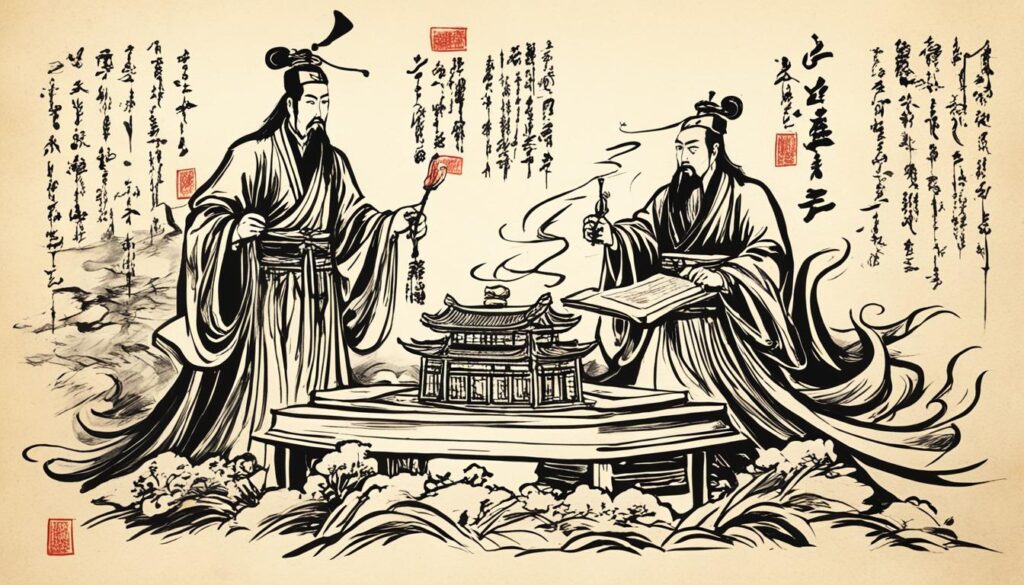
"Chu Shi Biao" isZhuge LiangGiveLater Emperor Liu ChanThis article is very serious, and the content is rigorous and organized. It expresses Zhuge Liang's loyalty and responsibility to the country to the later lord.
Characteristics and functions of the table
"Biao" is a form of writing in ancient times to express opinions to superiors. "Chu Shi Biao" is a typical example, which includes:
- Strict format:
- Rich in content:
- Choose words carefully:
- Integrate emotion and reason:
This memorial explained to the later lord the reasons why Zhuge Liang went on the Northern Expedition. It also advised the later lord to make wise decisions and appoint talented people. Therefore, this memorial played an important role at that time.
| Features of the table | The "Chu Shi Biao" reflects |
|---|---|
| Strict format | According to the format of court documents, including title, text, signature, etc. |
| Informative content | Detailed analysis of current situations, problems and countermeasures, with clear logic and sufficient arguments |
| Language Careful | The words are elegant, the expressions are careful and appropriate, and the loyalty to the emperor and the country are evident in the words. |
| Reasonable and emotional | While stating the pros and cons, he also expressed gratitude to the late emperor and his concern for the country. |
Zhuge Liang's Motivation for Writing
Zhuge Liang wrote "The Memorial to the Emperor on Leaving the Capital" for several purposes:
- He hoped that the later ruler would learn from the previous emperor's practice, listen to different opinions, and avoid the country from repeating the same mistakes. He did this to help the later ruler rule wisely.
- This memorial announced important information to the emperor and the whole of China, and stated the reason for the Northern Expedition. This helped to unite the people.
- By doing so, Zhuge Liang also reminded himself to be loyal to the late emperor and work hard to help the later lord realize his dream. This was also his promise to the late emperor.
I am a commoner, tilling the land in Nanyang, trying to survive in troubled times, and I do not seek fame and fortune among the princes. The late emperor did not regard me as humble and mean, and visited me three times in my thatched cottage to consult me on current affairs. I was grateful for this and promised to serve the late emperor.
From this perspective, the motivation for writing "The Memorial to the Emperor" is multi-faceted. It reflects Zhuge Liang's love for the country and the people, and also shows his loyalty.
Summary of the main idea of Chu Shi Biao
"The Memorial to the Emperor on Leaving the Capital"This is a letter from Zhuge Liang to the later emperor Liu Shan. He wrote it mainly to persuade the later emperor to listen to advice and complete the great mission of revitalizing the Han Dynasty. This article is full of in-depth analysis and suggestions on the current situation.
Zhuge Liang began by reviewing the glorious history of the six generations of the previous emperor. He showed his respect for the previous emperor. Then, he described the crisis-ridden situation of Shu Han. At this time, the Shu Han Dynasty was facing unprecedented challenges.
In the text, Zhuge Liang strongly advised the emperor to adopt good advice. This includes: open up the channels for communication and accept advice with an open mind; deal with rewards and punishments seriously and demonstrate fairness; select talented people and employ them according to their abilities. These advices are crucial to revitalizing the country.
To discuss a dangerous course and see if it is feasible, and then to stick to it and set out to serve as a model for the army is what is meant by this.
Zhuge Liang also cited the fall of the Eastern Han Dynasty as a warning. He said that we must be careful of those corrupt officials who undermine politics. He repeatedly emphasized: "The ruler of a ruined country must follow this path." This shows his deep love for the country.

"The Memorial to the Emperor on Leaving the Capital"It is of great significance and is intended to teach. This article expresses Zhuge Liang's infinite loyalty to the country. His loyalty and ideals are full of emotion throughout the article. The image of Zhuge Liang, a loyal minister, is vividly portrayed in this article.
Lu You said: "Leaving the capital to gain fame in the world". This sentence represents the greatness of "Leaving the capital to gain fame in the world". The article has a far-reaching influence, making it an immortal masterpiece of political commentary.
| Main Points | Reflection chapter |
|---|---|
| Advise the emperor to listen to the advice | The palace and the government are one, and promotion and punishment should not be different. |
| Complete the cause of restoring the Han Dynasty | I have devoted my life to this cause and will not stop until my death. As for success or failure, it is beyond my ability to foresee. |
| Show respect to the late emperor | The late emperor died before he could complete his career. Today the world is divided into three parts and Yizhou is exhausted. This is truly a critical moment for our survival. |
| Analyzing the current crisis | However, the ministers who serve as guards at home are working tirelessly, and the loyal and dedicated men are willing to sacrifice themselves for the outside world. This is because they are grateful for the special treatment shown by the late emperor and want to repay it to Your Majesty. |
| A loyal subject | It is truly appropriate to open up the imperial ears, glorify the virtues of the late emperor, and boost the morale of the people with lofty ideals. |
Here we see the purpose of writing "The Memorial to the Emperor on Departure". It calls for courage and begins with loyalty to the monarch and the country. The writing is clear and touching, and the theme is noble and profound. This masterpiece has deeply influenced future generations and reflects the author's loyalty and dreams.
Collection of worksheets on benevolence, filial piety, and being a gentleman
The main idea of the paragraph
- The first paragraph outlines the purpose and background of Zhuge Liang's writing of this memorial. This paragraph sets the tone for the entire article.
- The second to fourth paragraphs explain the importance of morality, talent, and history, and mention the principles of openness and honesty and appointing people based on their merits. These paragraphs are the main axis of the article and demonstrate important points.
- The fifth paragraph reverses the direction of the article, with Zhuge Liang sharing his own experiences and aspirations. He expresses his loyalty to his country and his determination to serve with no regrets.
- In the sixth paragraph, Zhuge Liang persuaded the lord to consider carefully and humbly accept the advice, which shows his expectant care for the lord.
- The seventh paragraph again emphasizes loyalty and determination, and he expresses his willingness to take on the heavy responsibility himself. This ends the whole text and expresses the deepest wish.
Studying each paragraph helps us better understand the background of the whole article and the author's purpose of writing. Each paragraph has a unique theme, which echoes each other and builds a complete structure of the article. Grasping the core of the paragraphs of "Chu Shi Biao" helps readers deeply understand the essence of this ancient article.
Kong Ming used the article "Departure to the Imperial Academy" to show his wisdom in governing the country and his loyalty to the country. Every word is precious and worth savoring carefully.
Understanding the excerpts of each section of "The Memorial to the Emperor on Departure" is crucial to understanding its content and characteristics. I hope this article can become an important reference for governing the country and inspire future generations.
| paragraph | Important content | Central idea |
|---|---|---|
| Paragraph 1 | Background and purpose of writing | Summarize the whole article and set the tone |
| Sections 2 to 4 | Advise from the perspective of morality, personnel, and history | Be open and honest, and employ the best talents |
| Paragraph 5 | Recounting the experience and ambition of repaying kindness | Expressing loyalty and determination |
| Paragraph 6 | Please be clear about the gains and losses of governing the country | Be open to advice |
| Paragraph 7 | Reaffirm loyalty, show determination, and promise to the country | Push to the climax |
Who is the "villain" mentioned in the table?
The word "villain" is often mentioned in "The Memorial to the Emperor on Departure", which is worth our consideration. From the text, we can understand that "villain" refers to those treacherous people who deceive or flatter the king. When Zhuge Liang saw the collapse of the Eastern Han Dynasty, he reminded his lord not to trust these treacherous people again.
During the Eastern Han Dynasty, the government was corrupt and filled with treacherous officials. Loyal people were not valued and the country was in chaos. Zhuge Liang knew this historical lesson and personally reminded the leaders of the country. He said that the rulers at that time often made a big mistake, which was to ignore loyal officials and welcome treacherous officials. Zhuge Liang hated those treacherous officials who destroyed the country. He believed that leaders must be vigilant and protect the country and the people.
The rulers of ruined countries are all blinded by villains. Their words cannot enter their ears, let alone their hearts.
As Zhuge Liang said, the sweet words of treacherous officials can easily deceive the leaders of the country. This led to the loss of favor of loyal officials, while treacherous officials were able to gain power in the court. In the end, this situation harmed the country. "The Memorial to the Emperor on Departure" clearly reveals the danger of "villains" in a euphemistic way. It also shows Zhuge Liang's love for the country and the people.
- In the early years of the Western Han Dynasty, Emperor Gaozu of Han "invited wise men to assist him" and the country prospered.
- In the late Eastern Han Dynasty, villains took control of the government, Zhongxian was removed from office, and the country was in chaos.
On the other hand, "villain" also refers to all unworthy people. Zhuge Liang warned the emperor not only to beware of the treacherous officials in the court, but also to be careful of bad elements in society. He believed that only by staying away from these "villains" and getting close to truly kind people could we avoid repeating the mistakes of the Eastern Han Dynasty and protect our country.
| Close objects | Alienated Object | dynasty | National Destiny |
|---|---|---|---|
| Good Minister | Villain | Western Han Dynasty | Prosperity |
| Villain | Good Minister | Eastern Han Dynasty | Decline |
In general, Zhuge Liang demonstrated extraordinary political wisdom through his analysis of "villains" in "The Memorial to the Emperor on Leaving the Capital". As a wise minister at the time, he used his wisdom to guide the monarch and hoped to help the country overcome difficulties. But seeing that his lord was hesitant, Zhuge Liang was anxious. We readers also deeply felt his worries and expectations for the future of the country.
Zhuge Liang's lobbying skills in "The Memorial to the Emperor on Departure"
"The Memorial to the Emperor on Departure" is an article Zhuge Liang wrote to Liu Shan before he went to war. The purpose was to urge him to listen to the loyal advice and thus achieve the goal of restoring the Han Dynasty. Zhuge Liang used his superb lobbying skills to try to convince Liu Shan of the necessity and feasibility of the Northern Expedition.
Reasonable
Zhuge Liang used the principles of justice between the monarch and his subjects, the safety of the country, and historical references to explain his argument. He mentioned many times that "every man has his share of responsibility for the rise and fall of a country", emphasizing that every subject should do his best for the country. At the same time, he pointed out that Shu Han was in crisis and the later lord needed to take responsibility.
Appeal to emotions
Zhuge Liang's touching words are also emotional. He repeatedly described the special treatment of the late emperor and missed the friendship in the past. These affectionate descriptions touched many people.
Through his own experience, Zhuge Liang showed his loyalty to the country and the late emperor. This also reminded Liu Chan that he should carry on the late emperor's will and complete the unfinished cause. He finally expressed his strong will and determination for the Northern Expedition.
| Lobbying skills | Specific performance | effect |
|---|---|---|
| Reasonable | Argument from the perspectives of righteousness between the monarch and his subjects, the safety of the country, and historical references | Demonstrate the legitimacy and necessity of the Northern Expedition and convince people |
| Appeal to emotions | Recalling the kindness of the late emperor, expressing the determination to repay the kindness; self-motivation, expressing loyalty | Touching people's hearts, inspiring the next ruler to carry on the will of the predecessors and complete the great cause |
In short, Zhuge Liang combined both rationality and sensibility. His articles are full of logic and deep emotions. This shows his rich knowledge and extraordinary dialectical ability. In his call for the Northern Expedition, he showed the noble qualities of patriotism and compassion, which will shine for thousands of years.
Collection of worksheets on benevolence, filial piety, and being a gentleman
The wording and tone of voice when advising superiors
"The Memorial to the Emperor on Leaving the Capital" is a good example of Zhuge Liang giving advice to his monarch. He uses humble words to show his respect. Zhuge Liang is very smart, and the advice he wrote is both polite and persuasive to the monarch. This shows Zhuge Liang's loyalty and modesty.

The purpose of discussion is to communicate one's thoughts; the purpose of loyal admonition is to move and enlighten. If one thinks that what can be rebuked is not accepted, and what can be ignored is not examined, then one is no longer connected with good words and good ways. Therefore, speaking directly and not concealing anything is what wise rulers prefer.
Zhuge Liang pointed out that the monarch and his subjects should treat each other sincerely. As a subject, he should give honest advice to the monarch. Only in this way can the monarch make the right choice. This passage shows his determination to give advice and his strong attitude.
- In the Memorial to the Emperor on Departure from the Capital, Zhuge Liang used humble and polite words to show his respect for the monarch.
- When talking about the monarch's mistakes, Zhuge Liang often used euphemisms to show his loyalty and prudence.
- The tone of the "Departure to the Imperial Court" is sincere and earnest, and the advice is appropriate and sharp, showing Zhuge Liang's intelligence and broad mind.
- By cleverly using words and tone, Zhuge Liang enhanced the persuasiveness of his advice and demonstrated his superb literary accomplishment.
| Features of the wording of "Chu Shi Biao" | illustration | Effect |
|---|---|---|
| Self-deprecation | "I think" "I am a commoner" | Show respect for the monarch |
| Euphemism | Rhetorical questions, metaphors, exhortations, etc. | Show a loyal and respectful attitude |
| sincere | Speak politely but also with a sharp edge | Demonstrating intelligence, wisdom and vision |
| Straightforward | "So speaking frankly and without reservation is what the wise rulers prefer." | Enhance the persuasiveness of advice |
"The Memorial to the Emperor on Leaving the Capital" shows Zhuge Liang's qualities and abilities. He sincerely gave advice with exquisite words, which reflected his loyalty, bravery and wisdom. This unique admonition describes Zhuge Liang's spiritual mission. He showed an attitude of not fearing power and following the turning point of his belief.
The role of Zhuge Liang's self-narration of his aspirations to be indifferent to worldly affairs (paragraph 6)
The sixth paragraph of "The Memorial to the Emperor on Leaving the Capital" is very crucial. Zhuge Liang talked about his life experience and ambitions. He expressed his indifference to fame and wealth and his wholehearted devotion.
He admitted that he was just an ordinary person who lived a simple life. If Liu Bei had not come to him three times, he might have avoided the war. But in order to repay the trust of the late emperor, he gave up his comfort and helped with all his strength for decades.
These words showed his loyalty to Liu Bei. At the same time, they also showed Liu Bei's ability to judge people. One side gained something, and the other side helped selflessly.
I was originally a commoner, tilling the land in Nanyang, trying to survive in the chaotic world, not seeking fame and status among the princes. The late emperor did not regard me as humble and mean, but visited me three times in my thatched cottage and consulted me on current affairs. I was grateful for this and promised to serve the late emperor. Later, when the country was overthrown, I was appointed to lead the defeated army and was ordered to help in times of danger. It has been twenty-one years since then.
Through this story, Zhuge Liang showed his indifference and Liu Bei's vision. This connected his past with Liu Bei's political achievements. This writing choice made the article more convincing and also paved the way for the following story.
It seems that Zhuge Liang is just telling his story. But his words carry deep emotions and political wisdom. It makes people think about many things.
| figure | event | time | significance |
|---|---|---|---|
| Zhuge Liang | Assist Liu Bei and sort out the national affairs | The third year of Zhangwu in Shu Han (223 AD) | Show loyalty, not fame or fortune |
| Zhuge Liang | A memorial to the emperor, advising him to open up the channels for public opinion | The fifth year of Jianxing (227 AD) | Demonstrating responsibility and admonishing the monarch |
| Zhuge Liang | Before the Northern Expedition to Cao Wei, he submitted a memorial to Liu Chan | The fifth year of Jianxing (227 AD) | Ask for orders to fulfill the last wish |
Conclusion: The sixth paragraph of "The Memorial to the Emperor on Departure" is very important. Zhuge Liang uses his own story to illustrate the simplicity and wisdom of Liu Bei. This kind of writing not only enriches the story, but also allows people to have a deeper understanding.
Analysis of the Writing Techniques of Chu Shi Biao
Zhuge Liang's "The Memorial to the Emperor on Leaving the Capital" uses many sophisticated writing techniques. His argument, dialectic and rhetoric are outstanding in literature. Exploring these techniques can help us gain a deeper understanding of the core of this classic.
Pros and cons argument
Zhuge Liang is good at using positive and negative contrasts. He uses the negative image of the late Eastern Han Dynasty to emphasize the reasons for its decline. At the same time, he uses the positive image of the early Western Han Dynasty as a contrast and praise. Such opposing arguments strongly support the main theme of the article.
Blending Reason and Emotion
The "Book of Departure" is full of emotion, showing the author's deep feelings. Zhuge Liang often carries passion when conducting rational analysis. For example, when he advised the emperor to be cautious, he wrote down his inner feelings. This writing style makes the article more appealing.
Speak your mind
There are also parts in the article that directly express emotions. At the end of the article, Zhuge Liang confesses his inner thoughts. He explains that he was worried day and night. Such honest and true descriptions show the author's sincerity.
A combination of parallel and scattered language style
Zhuge Liang's language is known for its simplicity and elegance. Sometimes he uses parallel sentences, which are quite powerful. Sometimes he chooses ordinary sentences, but hides mysteries. Such clever use of language adds color to the whole text.
| Writing Techniques | Specific application | effect |
|---|---|---|
| Pros and cons (contrastive arguments) | The late Eastern Han Dynasty is a negative example, and the early Western Han Dynasty is a positive example. | Sharp contrast to support the central idea |
| Reasonable and emotional | Rational analysis mixed with sincere and touching emotional expression | Enhance the appeal of your article |
| Direct Lyrics | Frankly speaking about inner loyalty, worries and self-blame | Show gratitude to the first emperor and sincerity to the next emperor |
| A combination of parallel and scattered language style | Use parallel sentences and prose style together | Add literary talent and enrich language expression |
In summary, "The Memorial to the Emperor on Leaving the Capital" demonstrates Zhuge Liang's outstanding literary attainments. The poet skillfully uses a variety of techniques, such as contrast and argumentation, the combination of reason and emotion, and direct expression of emotion, to make the work touching and profound. He fondly recalls the former emperor and is loyal and sincere to the later emperor. This emotional connection runs through the whole text and is truly moving.
Analysis of the Intonation of "Chu Shi Biao"
Then, Zhuge Liang talked about the national crisis and suggestions, choosing his words very carefully. This showed his maturity and prudentToneBut sincere.
Being close to virtuous ministers and keeping away from villains is the reason why the First Han Dynasty prospered; being close to villains and keeping away from virtuous ministers is the reason why the Later Han Dynasty declined. When the First Emperor was alive, he always sighed and hated Huan and Ling whenever he discussed this matter with me.
Zhuge Liang quoted stories from the Han Dynasty to admonish the later emperor. He wrote down the scenes of the conversation between the former emperor and him, aiming to teach the later emperor how to govern correctly.
In addition, when it comes to the Northern Expedition and serving the country, hisToneBecome positive and full of hope. Zhuge Liang was very passionate when expressing his loyalty to the country.
Finally, the article mentions Zhuge Liang's feelings when he was leaving. He vaguely expressed his reluctance and sadness, and this tone was very contagious.
| The excerpt from the | Primary tone/intonation | Emotional characteristics |
|---|---|---|
| Opening (The Emperor's Unfinished Business) | Gloomy and tragic | Mourning |
| Advise the emperor to listen to advice | Be tactful, sincere, cautious and polite | Loyal and devoted, concerned about the country and the people |
| Expressing the ambition of the Northern Expedition | High-spirited and enthusiastic | Enthusiasm for serving the country and firm belief |
| Farewell words | Low and gentle, lingering | Farewell, complicated emotions |
In short, "The Memorial to the Emperor on Departure" uses theToneandIntonationThe changes show Zhuge Liang's different emotions. The whole text is full of sincerity, loyalty, and eclectic style.
Rhetoric of Chu Shi Biao
Zhuge Liang used a wealth of rhetoric to make "The Memorial to the Emperor on Departure" more persuasive and appealing. His contrasting method of thesis and antithesis made the article lively. In the article, he quoted textbooks from the late Eastern Han Dynasty and compared them with examples from the early Western Han Dynasty. This helped to argue the necessity of the Northern Expedition.
At the same time, Liang is good at using logic and emotion. He persuades readers from the perspectives of justice, safety, and historical lessons. He also sincerely expresses his love for loyalty to the emperor and his country. This statement touches people's hearts and makes the article full of power.
Zhuge Liang also used metaphors, parallelism, and gradation. For example, he used "革、鞅、始、吕" to refer to treacherous ministers. He compared himself to a commoner by comparing himself to "fisherman, woodcutter, Zhongli, Wanluocao", which is full of literary talent and profound meaning. The language of the article has a deep literary background, simple and beautiful.
In general, "The Memorial to the Emperor on Leaving the Capital" demonstrates Zhuge Liang's multifaceted language skills. He uses positive and negative arguments, layered expression, analogy, and the integration of emotion and reason. The structure of the article is both rigorous and profound, and it is very persuasive. This article is regarded as a classic of argumentative writing.
The exam will also test the theme, argumentation method, lyrical skills and rhetoric. Students should practice more and analyze this classic in depth. If you need help with Chinese studies, the GETUTOR platform can provide free Chinese tutors.
Chu Shi Biao Worksheet
1. Explain the meaning of the following words: (4 marks)
a) I am a commoner: _______
b) Dedicate oneself to the cause until death: _______
2. Translate the following sentences into vernacular: (4 marks)
"To be close to virtuous ministers and to stay away from villains is the reason why the early Han Dynasty prospered; to be close to villains and to stay away from virtuous ministers is the reason why the later Han Dynasty declined."
3. Which last wishes of the late emperor (Liu Bei) did Zhuge Liang mention in the text? (4 points)
4. Explain the meaning of “托孤寄命” and its role in the text. (3 points)
5. The article mentions "Shizhong, Shangshu, Changshi, Canjun, all of whom are loyal and steadfast ministers who died for their loyalty." What does this sentence reflect? (3 points)
6. How did Zhuge Liang evaluate himself? Why did he evaluate himself in this way? (4 points)
7. Translate the following sentences into modern Chinese: (4 marks)
"If there is no talk of promoting virtue, then the blame will be placed on Youzhi, Yi, Yun and others for being slow."
8. Briefly describe the main idea of this article and analyze how Zhuge Liang expressed his loyalty and expectations through writing. (4 points)
FAQ
How many paragraphs are there in the original text of "Chu Shi Biao"? What is the main idea of each paragraph?
There are seven sections in "Chu Shi Biao". The first section mentions that the former emperor gave up halfway in starting his business, the world was divided into three parts, and Yizhou was in a coma. The second section advises the later emperor to be modest and to show his virtue, which the former emperor lacked.
The third paragraph hopes that the emperor will employ several loyal ministers. The fourth paragraph uses the rise and fall of the Han Dynasty as a warning, advising the emperor to keep the wise close and stay away from the weak.
In the fifth paragraph, Zhuge Liang stated his ambitions and pledged his support to the Central Plains. In the sixth paragraph, he advised the emperor to distinguish right from wrong and to accept suggestions with an open mind.
The seventh paragraph once again reiterates the loyalty to the first and second lords, and urges caution in the Northern Expedition.
What kind of literary genre does "Chu Shi Biao" belong to? What are its functions and characteristics?
"Chu Shi Biao" is a "biao", a formal document used to report to the monarch. The article has a clear structure and rigorous wording. Through this work, Zhuge Liang expressed his loyalty to the country and the monarch, and persuaded the later emperor to listen to loyal advice.
What is the purpose of Zhuge Liang’s narration of his half-life experience in “The Memorial to the Emperor on Leaving the Capital”?
In the sixth paragraph, Zhuge Liang recounts his ordinary life. In order to repay the three visits, he vowed to fight in the north, and ended up assisting Shu Han for more than 20 years.
This passage expresses his loyalty and shows his deep loyalty. At the same time, his self-introduction also highlights an important part of the story.
How did Zhuge Liang persuade the emperor in "The Memorial to the Emperor on Leaving the Capital"? What persuasion skills did he use?
Zhuge Liang demonstrated the importance of the Northern Expedition in a multi-level manner. On the rational level, he demonstrated it from many aspects, including justice, crisis, and history.
Emotionally, he uses elements of feeling and humanity to move people. This two-pronged approach, color-related, shows his knowledge and persuasiveness.
What are the characteristics of the argument in "The Memorial to the Emperor on Leaving the Capital"?
Zhuge Liang used positive and negative comparisons to demonstrate his strategy of governing a country by using historical events to show his loyalty to the wise and disregard for the weak.
This shows his deep understanding and is very convincing.
What are the characteristics of the language style of "The Memorial to the Emperor on Leaving the Capital"?
The language of "The Memorial to the Emperor on Leaving the Capital" is refined and beautiful, with a compact structure and flexible wording, showing Zhuge Liang's literary attainments.
His writing style is elegant, inspiring and impressive.
What is the main theme of "The Memorial to the Emperor on Leaving the Capital"?
The purpose of "Chu Shi Biao" is to persuade the emperor to listen to more loyal advice, employ wise ministers, and unite as one. The mission is to complete the Northern Expedition and restore the Han Dynasty.
Zhuge Liang presented various evidences and insights to demonstrate his patriotism and aspirations.