


1對1私人上門補習中介平台
配對專業 上門補習 線上補習 導師

商業獲獎 行業領導

精選最新個案
精選最新個案
q=&case-maney=&case-banji=
補習個案[C22484]
中三
每小時學費 $180-200
英文
青衣
- 學生班級:中三
- 補習科目:英文
- 補習地區:青衣
- 每星期堂數:1_次
- 每節補習時間:2_小時
- 預算每小時學費: $180-200
- 學生程度:普通
- 特別要求:
補習個案[C22483]
成人
每小時學費 $300
普通話
太子
- 學生班級:成人
- 補習科目:普通話
- 補習地區:太子
- 每星期堂數:1_次
- 每節補習時間:1_小時
- 預算每小時學費: $300
- 學生程度:普通
- 特別要求:普通話水平測試一甲
補習個案[C22482]
學前
每小時學費 $550-650
英文
On line
- 學生班級:學前
- 補習科目:英文
- 補習地區:On line
- 每星期堂數:1_次
- 每節補習時間:1_小時
- 預算每小時學費: $550-650
- 學生程度:普通
- 特別要求:My daughter will take IB exam in 2024-25.
補習個案[C22481]
中一
每小時學費 $250-300
英文
油麻地 九龍站
- 學生班級:中一
- 補習科目:英文
- 補習地區:油麻地 九龍站
- 每星期堂數:1_次
- 每節補習時間:1.5_小時
- 預算每小時學費: $250-300
- 學生程度:普通
- 特別要求:女導師,星期六早上可以補
補習個案[C22480]
學前
每小時學費 $350-600
英文
將軍澳(離地鐵站5分鐘)
- 學生班級:學前
- 補習科目:英文
- 補習地區:將軍澳(離地鐵站5分鐘)
- 每星期堂數:1_次
- 每節補習時間:1.5_小時
- 預算每小時學費: $350-600
- 學生程度:普通
- 特別要求:K1, 專業及有耐心一點, 星期一至六16:00都可以
補習個案[]
每小時學費 $
- 學生班級:
- 補習科目:
- 補習地區:
- 每星期堂數:
- 每節補習時間:
- 預算每小時學費: $
- 學生程度:
- 特別要求:Navigating the world of IELTS speaking can be daunting, with an abundance of advice and tips from various sources. In this comprehensive blog, we'll explore the most popular IELTS speaking tips and tricks, analyze them against the official guidance from the British Council, IDP, and Cambridge, and provide you with the confidence to approach your IELTS speaking test successfully.Table of ContentsBe Polite, Friendly, Body Language, Eye ContactBe Formal and Don't Use SlangLearn Lists of Fancy VocabularyLearn Common Topics and QuestionsMemorize PhrasesIdiomsPart 2 Bullet PointsBe Polite, Friendly, Body Language, Eye Contact Mastering the art of communication during the IELTS Speaking test involves more than just speaking fluently. While your primary focus should be on showcasing your language skills, understanding the role of non-verbal cues can enhance the overall interaction. Why Politeness and Friendliness Matter Being polite and friendly can create a positive atmosphere during the test. Although these qualities are not directly assessed, they contribute to a smoother conversation flow, making it easier for you to articulate your thoughts. The Role of Body Language Body language, though not a part of the evaluation, helps convey confidence and engagement. Simple gestures, like nodding to acknowledge the examiner's questions, can make the exchange seem more natural. Maintaining Eye Contact Eye contact is another non-verbal aspect that, while not scored, supports effective communication. It signals attentiveness and can help build a rapport with the examiner, facilitating a more interactive dialogue. Be Formal and Don't Use Slang The IELTS Speaking test assesses your ability to communicate effectively in English across a variety of contexts. While the test isn't overly formal, maintaining a certain level of formality is crucial. Avoid Slang and Informal Language Using slang or overly casual language can detract from the clarity and appropriateness of your responses. Opt for clear, standard English to convey your ideas effectively. Understanding the Formality Level It's essential to strike the right balance in formality. You're not in a strictly academic setting, but you're also not chatting with a friend. Tailor your language to be polite, respectful, and clear. Learn Lists of Fancy Vocabulary While having a rich vocabulary can benefit your IELTS Speaking score, focusing solely on memorizing complex words can backfire. It's more important to use vocabulary accurately and confidently. The Myth of Fancy Vocabulary Many believe that using sophisticated words is a shortcut to a higher score. However, misusing these words or using them inappropriately can actually harm your score. How to Improve Your Vocabulary Instead of memorizing lists of fancy words, focus on expanding your vocabulary through reading, listening, and practice. Learn new words in context and practice using them in sentences to ensure you understand their usage fully. Using Vocabulary Appropriately On test day, use words you are comfortable with and understand completely. This approach will help you speak more naturally and accurately, positively affecting your fluency and coherence scores.Learn Common Topics and Questions Understanding the range of topics that might appear in the IELTS Speaking section is crucial for effective preparation. While it's impossible to predict the exact questions, familiarizing yourself with common themes can boost your confidence and readiness. What to Expect in Each Part The IELTS Speaking test is divided into three parts, each focusing on different aspects of communication. Part one covers general questions about yourself and everyday topics like work, family, and hobbies. Part two involves speaking about a given topic for two minutes, and part three extends the discussion to more abstract ideas related to the part two topic. Common Topics While the test may include a wide array of subjects, certain areas are frequently touched upon. These include personal experiences, education, environment, technology, and health. Preparing for these topics can help you articulate your thoughts more fluently during the exam. Memorize Phrases Equipping yourself with a repertoire of phrases can enhance your fluency and help you express ideas more naturally. However, it's important to use these phrases judiciously to avoid sounding rehearsed. Phrases for Transition and Opinion Learning phrases for transitioning between ideas and expressing opinions can be particularly useful. Phrases like "On the one hand," "From my perspective," and "It seems to me that" are versatile and can fit into various contexts. Avoid Over-reliance on Memorization While memorizing phrases can be beneficial, relying too heavily on them may backfire. Examiners are trained to spot memorized answers, which can negatively impact your score. Focus on understanding the phrases you use and adapting them to the specific question at hand. Idioms Incorporating idioms into your responses can showcase your proficiency with the English language. However, their use should be natural and relevant to the conversation. Understanding Idioms Idioms are expressions whose meanings cannot be inferred from the literal interpretation of the words they are composed of. They are used to add color and expressiveness to your speech. Examples include "hit the nail on the head" and "once in a blue moon." Using Idioms Appropriately When using idioms, it's crucial to ensure they fit the context of your discussion and that you understand their meanings fully. Overusing idioms or using them inaccurately can detract from your credibility and coherence, potentially lowering your score. Idioms and Scoring While idioms can enrich your language, they are just one aspect of the lexical resource criterion in IELTS Speaking. Your score will also depend on your use of vocabulary, grammatical accuracy, and fluency. Therefore, focus on using idioms as part of a broader strategy to enhance your language skills. Part 2 Bullet Points Understanding how to approach Part 2 of the IELTS Speaking test is crucial for success. The key lies not in rigidly adhering to bullet points but in engaging fluently on the topic at hand. Common Misconceptions There's a widespread belief that candidates must discuss each bullet point in Part 2 for a set period. This strategy, often propagated by online resources, can inadvertently hamper performance rather than enhance it. Official Guidance on Bullet Points The official stance from IDP emphasizes that the primary objective is to speak fluently on the topic for two minutes, not to methodically cover each bullet point. Bullet points serve as aids, not strict directives. Strategies for Success Instead of focusing solely on bullet points, candidates should concentrate on discussing the main topic comfortably. If certain bullet points pose a challenge, it's advisable to weave in related subjects that the candidate feels more confident discussing. Avoid rigid adherence to bullet points Focus on fluent discussion of the main topic Incorporate related subjects as needed The Impact of Misleading Advice Following ill-advised strategies can not only limit a candidate's ability to showcase their speaking skills but also contribute to unnecessary stress and hinder performance. It's essential to discern between helpful guidance and popular but ineffective tips. Conclusion IELTS Speaking success lies in the ability to communicate ideas naturally and fluently. By understanding that bullet points are merely prompts, not strict checkpoints, candidates can navigate Part 2 with greater ease and confidence.
補習個案[C22479]
中三
每小時學費 $200
中文, 英文
觀塘
- 學生班級:中三
- 補習科目:中文, 英文
- 補習地區:觀塘
- 每星期堂數:1_次
- 每節補習時間:2_小時
- 預算每小時學費: $200
- 學生程度:普通
- 特別要求:
補習個案[C22478]
大專
每小時學費 $$350-450
生物
線上補習
- 學生班級:大專
- 補習科目:生物
- 補習地區:線上補習
- 每星期堂數:2_次
- 每節補習時間:2_小時
- 預算每小時學費: $$350-450
- 學生程度:普通
- 特別要求:
補習個案[C22477]
中四
每小時學費 $200
企業概論
九龍東
- 學生班級:中四
- 補習科目:企業概論
- 補習地區:九龍東
- 每星期堂數:1_次
- 每節補習時間:2_小時
- 預算每小時學費: $200
- 學生程度:普通
- 特別要求:
補習個案[C22476]
學前
每小時學費 $300
英文
油塘鯉魚門邨
- 學生班級:學前
- 補習科目:英文
- 補習地區:油塘鯉魚門邨
- 每星期堂數:2_次
- 每節補習時間:1_小時
- 預算每小時學費: $300
- 學生程度:普通
- 特別要求:
補習個案[C22475]
小四
每小時學費 $180
經濟
土瓜灣問題
- 學生班級:小四
- 補習科目:經濟
- 補習地區:土瓜灣問題
- 每星期堂數:1_次
- 每節補習時間:1.5_小時
- 預算每小時學費: $180
- 學生程度:普通
- 特別要求:
補習個案[C22474]
小五
每小時學費 $150
跟功課, 全科
彩虹村
- 學生班級:小五
- 補習科目:跟功課, 全科
- 補習地區:彩虹村
- 每星期堂數:2_次
- 每節補習時間:2_小時
- 預算每小時學費: $150
- 學生程度:普通
- 特別要求:1900-2100補課 女導師
補習個案[C22473]
成人
每小時學費 $200-250
跟功課
Tseung Kwan O
- 學生班級:成人
- 補習科目:跟功課
- 補習地區:Tseung Kwan O
- 每星期堂數:1_次
- 每節補習時間:1.5_小時
- 預算每小時學費: $200-250
- 學生程度:普通
- 特別要求:Final year of undergraduate, essay paper tutoring.
補習個案[C22472]
學前
每小時學費 $300-400
中文
紅磡海逸豪園
- 學生班級:學前
- 補習科目:中文
- 補習地區:紅磡海逸豪園
- 每星期堂數:2_次
- 每節補習時間:1.5_小時
- 預算每小時學費: $300-400
- 學生程度:普通
- 特別要求:
補習個案[C22471]
中三
每小時學費 $300-400
生物, 經濟, 會計
奥運站
- 學生班級:中三
- 補習科目:生物, 經濟, 會計
- 補習地區:奥運站
- 每星期堂數:2_次
- 每節補習時間:1.5_小時
- 預算每小時學費: $300-400
- 學生程度:普通
- 特別要求:女老師,有 past paper,懂得問學生問題以確保其明白
補習個案[C22470]
中四
每小時學費 $200
英文
長沙灣聯邦廣場附近
- 學生班級:中四
- 補習科目:英文
- 補習地區:長沙灣聯邦廣場附近
- 每星期堂數:3_次
- 每節補習時間:2_小時
- 預算每小時學費: $200
- 學生程度:普通
- 特別要求:
補習個案[C22469]
學前
每小時學費 $250
跟功課, 全科
大坑龍華花園
- 學生班級:學前
- 補習科目:跟功課, 全科
- 補習地區:大坑龍華花園
- 每星期堂數:2_次
- 每節補習時間:1.5_小時
- 預算每小時學費: $250
- 學生程度:普通
- 特別要求:
補習個案[C22468]
小二
每小時學費 $$150-180
中文
元朗錦上路
- 學生班級:小二
- 補習科目:中文
- 補習地區:元朗錦上路
- 每星期堂數:2_次
- 每節補習時間:1.5_小時
- 預算每小時學費: $$150-180
- 學生程度:普通
- 特別要求:5:30 - 7:00
補習個案[C22467]
中三
每小時學費 $300
中文, 數學, 經濟
- 學生班級:中三
- 補習科目:中文, 數學, 經濟
- 補習地區:
- 每星期堂數:1_次
- 每節補習時間:2_小時
- 預算每小時學費: $300
- 學生程度:普通
- 特別要求:星期一或三晚7一9点
補習個案[C22466]
小四
每小時學費 $200-600
英文
online
- 學生班級:小四
- 補習科目:英文
- 補習地區:online
- 每星期堂數:4_次
- 每節補習時間:1.5_小時
- 預算每小時學費: $200-600
- 學生程度:普通
- 特別要求:1.現職老師, 識普通話($400-600/hr) 2.英文件oral, 要識普通話($200-300/hr)
家長學生認同
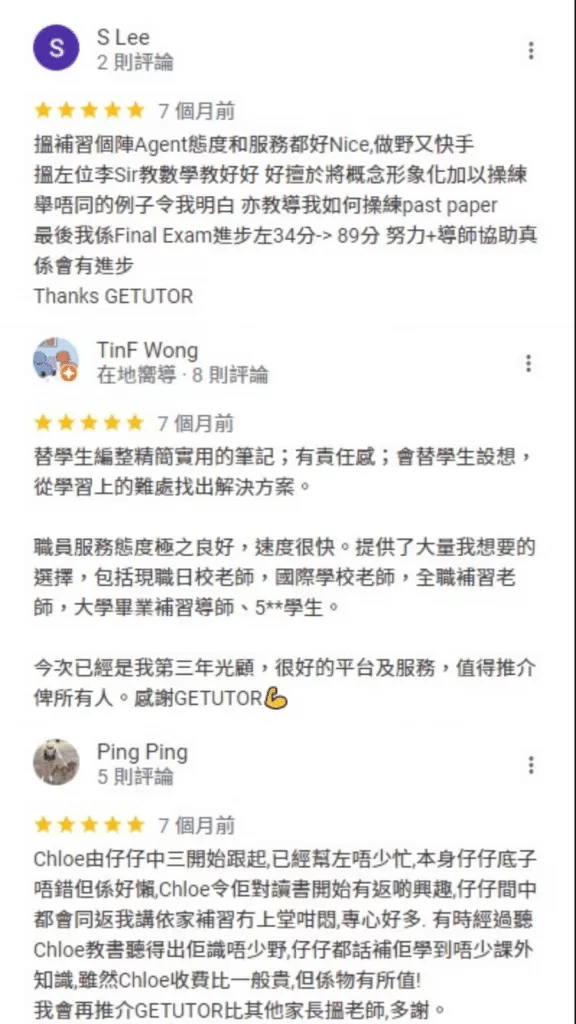
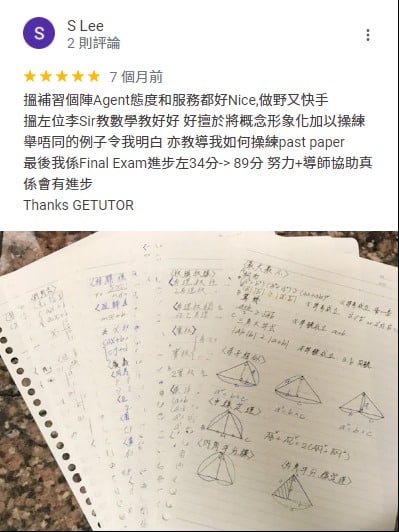
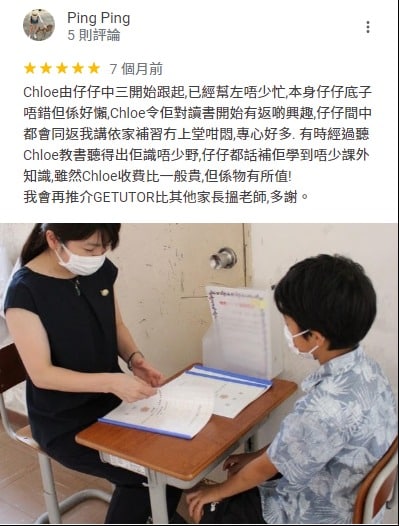
Rated 5 out of 5
Trustindex verifies that the original source of the review is Google. Agent 好 nice, 有問必答, 搵俾我既老師好專業, 好好 , 五星好評!👍👍Trustindex verifies that the original source of the review is Google. 多謝香港導師總會幫女兒找到合適老師,回覆很快會根據家長要求找導師,非常專業的服務,謝謝你們!Trustindex verifies that the original source of the review is Google. 老師好專業,教得好好,謝謝介紹🤗


> 提供服務的學制:
DSE, IGCSE,GCE , A-Level , IB ,其他
本公司提供所有學制的導師,不論是DSE補習,IGCSE補習,A-Level補習,IB補習,或其他補習學制。

服務商户
機構
為學校,補習社,專業機構等提供補習導師服務
實體公司
實際營運補習中介公司 信心保證



[table id=4 /]
