Taking the IB is not an easy task, and some students are not guaranteed to pass the exam even if they put in the effort and time. Because the content of the exam is so varied, it is difficult for the average student to keep up without an IB tutor.
Unless, really, someone is a true hex warrior and has strong learning ability and interest in all their subjects, the average person may struggle to achieve high grades without the support of an experienced IB tutor. In addition, many international school teachers themselves do not really understand and have taken IB courses. It is difficult for unknown candidates and parents to distinguish who are experienced, professional IB tutors with first-hand qualification certificate experience.
IB aims to cultivate reflective and critical thinkers, but in terms of English language and literature or theory of knowledge, many teenagers may often be unable to complete the exam due to lack of interest, weak foundation, etc., so professional IB tutoring is very important for candidates Crucial. Many IB tutors and tutors do not offer the personalization, academic rigor, one-on-one support and exceptional coaching methods.
GETUTOR's IB tutors break people's inherent views on tutoring through online and face-to-face teaching, and provide personalized IB tutoring for students of all levels.
Success in taking the IB exam depends on three things:
- Knowledge of the course syllabus (required to score 7 points)
- Time management (organizing and controlling tasks)
- Determination to improve (addressed during coaching)
All these factors are maximized with the help of GETUTOR's IB tutors.
Our professional IB tutors help candidates from Hong Kong and overseas achieve perfect scores in the IB exams every year. So we are proud of the bespoke teaching approach that has proven so successful and extends it to all our subjects. Please contact us now and start enjoying professional courses from GETUTOR IB instructors immediately.
FAQ (2025 latest update)
What is the IBDP and what will it cover in 2025?
IBDP, the International Baccalaureate Diploma Programme, is an academic program with personal development as its core. This program is designed to develop students' academic abilities, international perspectives and personal qualities and prepare them for entry into university or other higher education institutions.
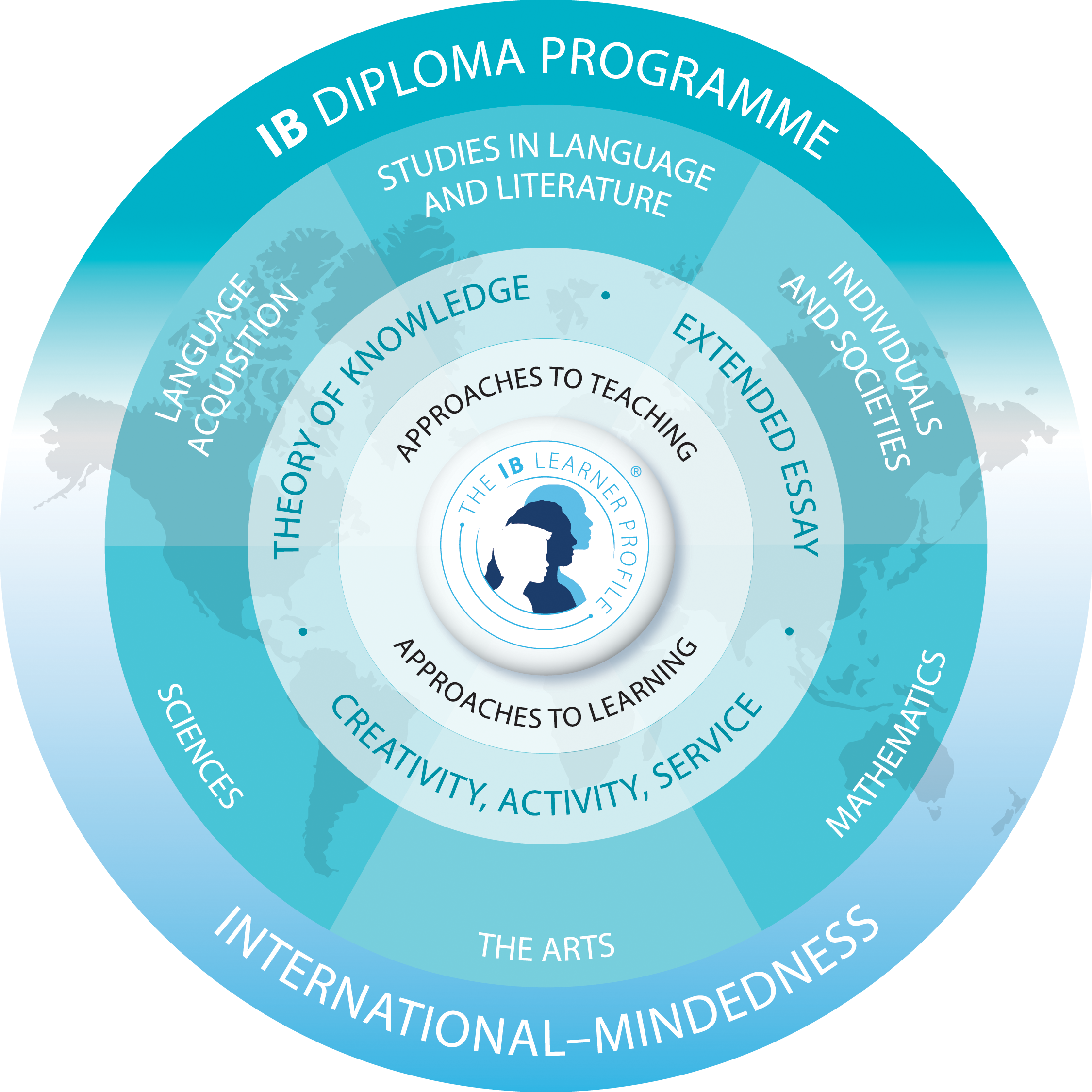
The IBDP curriculum is broad and diversified, covering six subjects: Language and Literature, Second Foreign Language, Social Sciences, Science, Mathematics, and Arts and Sports. In addition to these core subjects, students complete a comprehensive University Diploma including personal projects, creativity, action and service.
One of the characteristics of IBDP is its international and global perspective. The course encourages students to cross borders and understand and respect different cultures and values. The course also promotes students' thinking and understanding of global issues and equips them with the ability to solve real-world problems.
How is IB graded? (2025)
The IB (International Baccalaureate) is a widely accepted high school program in the world and is graded differently from other programs. The IB's scoring criteria are based on a seven-point system, and scoring uses a variety of assessment methods. In IB grading, the scores for each subject are assessed on a seven-point system. A score of seven represents the highest score, while a score of one represents the lowest score. The seven-point system represents different levels of academic achievement, from the highest seven points to the lowest one point. Most universities and educational institutions will accept IB scores on a seven-point scale.
Students are required to participate in every subjectinternal assessmentandexternal evaluation, and need to complete aExtended EssayandCAS activities (Creativity, Action and Service).
Internal assessment:
Internal assessment is conducted by teachers within the school. School teachers will evaluate students' learning outcomes based on their homework, exams and other performances, and then refer to the standards set by the school.
External evaluation:
External assessment is an assessment method conducted by the IBO (International Baccalaureate Organization), an organization that implements international curricula. This part of the assessment is mainly filled out based on the student's performance in the exam. Exams are usually divided into different sections such as multiple choice questions, quiz questions, and lab reports. External assessments for each subject are marked by exam invigilators appointed by the IBO.
Will I be able to apply to a US university through IB in 2025?
When it comes to applying to colleges in the United States, many students may wonder whether they can apply through the International Baccalaureate (IB).
The answer is yes, an international academic qualification accepted by many US universities.
What is the International Baccalaureate (IB)?
The International Baccalaureate (IB) is an academic competency standard provided by the International Baccalaureate Organization (IBO). It focuses on developing students' academic and social skills. Many American universities recognize the IB Diploma because it represents student learning outcomes achieved under international academic standards.
How to enter a US university?
If you plan to apply to universities in the United States through IB, you should apply for an IB authorized school and complete a complete IB course. In addition to your transcript, you will also need to provide scores from the SAT or ACT, which are the standard admissions tests for American universities.
The IB Diploma also offers some additional benefits. Many universities offer additional credits or scholarship opportunities to students with an IB diploma. In addition, the comprehensive nature of the IB program also makes it easier for students to adapt to the requirements and challenges of university.
All in all, it is completely feasible to apply to universities in the United States through IB. If you perform well in the IB Diploma and gain an internationally recognized academic qualification, you have a great chance of getting into the US university of your choice.
Are IB or A-Levels more acceptable to UK Universities (2025)
When discussing the admission standards of UK universities, one would like to know whether UK universities accept International Baccalaureate (IB) or A-Level courses more. In fact, there is no clear answer to this question as each university has its own admission criteria and requirements.
However, based on official website information and admissions statistics from many universities, we can draw some conclusions. Although A-Level is the mainstream high school graduation course in the UK, many British universities also accept IB results. Some well-known universities even provide more favorable conditions for IB, believing that this international course can better promote students to develop interdisciplinary comprehensive abilities.
While specific admissions criteria may vary from university to university, whether it is IB or A-Level, the key lies in the grades a student has achieved in these courses and the quality of their recommendation letters. Universities often focus more on students' academic performance, creativity and potential than just the course itself. This means that students should choose courses that interest them and can fulfill their potential, and improve their overall quality by actively participating in academic and extracurricular activities.
All in all, whether it is IB or A-Level, when applying to British universities, the focus should be on the student's individual academic performance, interests and potential. Universities will take these factors into consideration and evaluate the overall quality of students. Therefore, students should choose a learning environment and courses that are more suitable for them, and fully demonstrate their abilities and talents in them.
Is the IB academic system easy (compared to other academic systems)?
When it comes to the International Baccalaureate (IB) academic system, many students and parents ask this question:
Is the IB academic system easy? How does it compare with other academic systems?
In fact, this question is not easy to answer, because the difficulty of the academic system is closely related to the individual differences of each student and their interest and ability in learning. However, we can understand the characteristics of the IB academic system from some aspects.
First of all, the IB academic system emphasizes comprehensive learning, covering a series of subjects, including natural sciences, social sciences, humanities, etc. This requires students to have a broader range of knowledge and skills, understanding and applying concepts and theories in different fields. In contrast, a traditional academic system may focus more on in-depth study of a specific subject. Therefore, the IB academic system may place a relatively heavy learning burden on students.
Secondly, the IB academic system also emphasizes independent thinking and critical thinking. Students are required to demonstrate their abilities in seminars, research papers, and creative projects. This is very important for cultivating students' problem-solving and critical thinking skills. However, this also means that students need more time and energy to think independently and conduct research.
Finally, the IB academic system requires students to participate in social service and international activities. This is very beneficial for students’ personal development as it makes them more open-minded and caring towards society. However, this also increases students’ extracurricular load. In contrast, other academic systems may not have such strong requirements for this.
In general, the IB academic system is not easy. It emphasizes comprehensive learning, independent thinking and social responsibility. For students who are interested in learning and have a certain ability to learn independently, the IB academic system may provide a more comprehensive and in-depth educational experience. When making choices, parents and students should use their own judgment based on individual needs and interests.
Is IB harder than A-Level?
When choosing an international qualification program, a common question is which is more difficult, IB or A-Level. While it's difficult to give a definitive answer because each student has different talents and interests in different subjects, we can look at some common characteristics to help us compare the difficulty of the two courses.
Common features:
First, the IB curriculum is very broad and diverse. Students need to choose six subjects, including arts, science and optional subjects. This variety allows students to expand their knowledge, but it also means they need to study intensively and quantitatively. A-Level is relatively focused and students need to choose three to four specific subjects. This allows students to focus more on their area of interest, but may also limit opportunities for students to dabble in other subjects.
Secondly, one feature of IB is comprehensive evaluation. Students not only need to sit exams, but also complete extended research, personal projects and language subject content. This comprehensive assessment method can help students develop more comprehensive abilities, but it also requires more time management and organizational skills. A-Level mainly relies on examinations and focuses on students' test scores. This may be more appropriate for students who perform well under exam pressure.
Finally, the difficulty level between IB and A-Level is also affected by region and school. Some schools may have stronger teaching resources and teaching standards for a certain course, which may make the course more difficult or easier in those schools. In addition, there are slight differences in examination standards and scoring standards in different regions, which will also affect students' feelings about the difficulty of the course.
In summary, both IB and A-Level have their own difficulties, but this depends on the student's individual talents and interests, as well as the school and district standards. It's important to choose a course that best suits your learning style and goals to ensure you reach your full potential.
How much does IB tutoring cost? Compared with IB tutoring agency, what is the cost of private tutoring at GETUTOR? Is the CP value high?
Best IB Tutoring Agency 2025
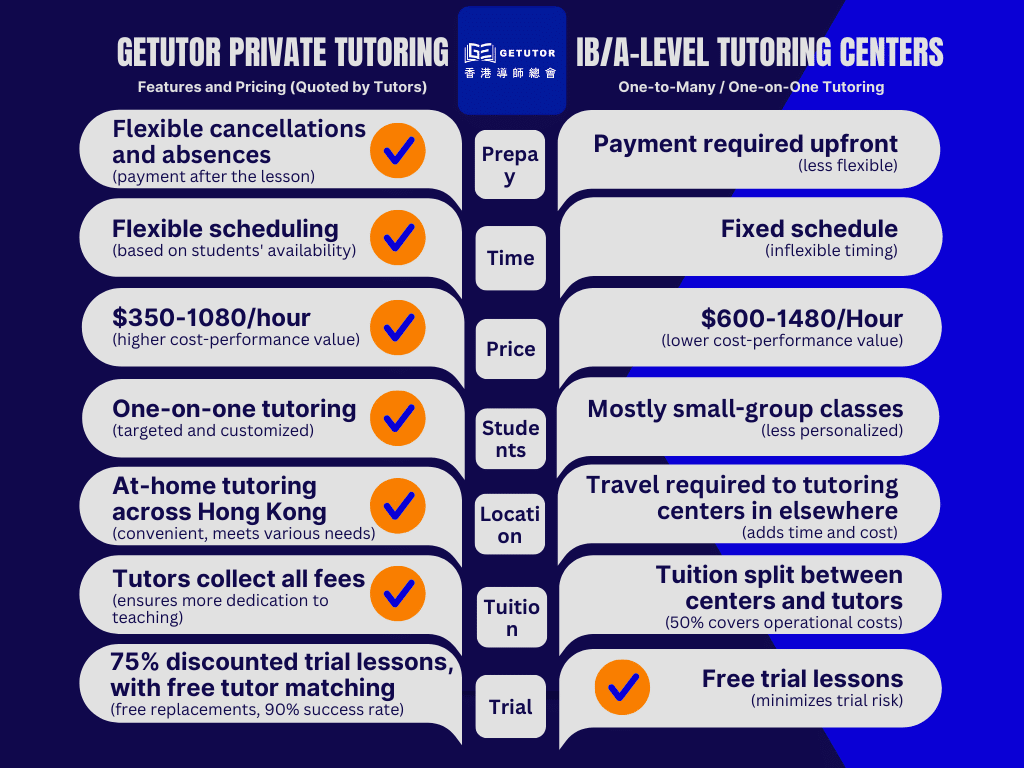
The cost of IB tuition is one of the most important issues for many students and parents considering enrolment. With the popularity of the IB programme and increasing competition, tutors are offering a wide range of programmes to improve results. In this regard, GETUTOR, as a private tutoring organisation, offers quality IB tutoring services and is widely recommended for its relatively low fees (only $400-1000/hour) compared to tutoring agencies ($1000-$1200).GETUTOR guarantees that the price is lower, but the quality of the service is not lower.
GETUTOR has an experienced and professional team of teachers with deep academic backgrounds and rich teaching experience. These teachers provide individualized guidance according to each student's learning needs and level, ensuring that students can fully understand the course content and achieve good results.
In addition, GETUTOR also provides a flexible teaching model that can arrange tutoring courses according to students' schedules and needs. This flexible arrangement allows students to better balance academic studies and other activities while maximizing learning benefits.
In summary, GETUTOR's private tutoring fees are relatively low and provide high-quality tutoring services. Students and parents can safely choose GETUTOR as their IB tutoring institution and enjoy excellent teaching and relatively low burden. When choosing an IB tutoring institution, come and learn about GETUTOR and experience their distinct advantages and unique teaching concepts!
If you have any other questions, please contact us, just clickHere.That’s it.
Popular searches for tutors:
In addition to the above introduction, interested parents and students are also welcome to click on the link below to view tutoring materials for other subjects.
DSE tutoring
IGCSE tutoring
A-Level Tutoring
IB tutoring
由 GETUTOR 升學研究組撰寫 | 數據來源:GETUTOR 內部配對紀錄(2024-2026)
IB 補習:點解國際學校學生補 IB 比 DSE 仲難搵啱嘅導師?
每年踏入 9 月開學,GETUTOR 後台都會收到一波 IB 補習查詢,當中超過 41% 嚟自 DP1 同 DP2 學生家長。根據 GETUTOR 後台 2024-2026 年 IB 課程配對紀錄,樣本約 612 宗,IB 學生最常查詢嘅補習科目係 Mathematics(AA / AI 兩條 stream)、Chemistry HL、Economics SL 三隻。呢三隻加埋已經佔咗 IB 配對總量約 58%。
但講真,IB 補習唔係搵個「教書好」嘅人就掂。國際學校進度差異大,有啲校跟 IB Programme 教 4 年(MYP + DP),有啲就 DP 兩年衝刺。即係話同樣係 DP1,唔同學校學生嘅 baseline 可以差成個 grade 咁多。
導師 Quote:IB Maths AA 嘅常見伏位
「香港大學數學系畢業、教 IB Maths 7 年嘅 Mr. K(按導師私隱要求使用化名,導師資歷已獲 GETUTOR 平台認證)指出:『好多 DP1 學生由 MYP 升上嚟,會以為 Maths AA 同 IGCSE Extended Maths 差唔多,其實 AA HL 入面 Calculus 同 Vectors 兩個 chapter 已經比 DSE M2 仲深。我會叫學生做齊舊年 IBO past paper,再對返自己內部考試,搵出邊啲 sub-topic 失分最多。』」
呢個方法外面學唔到,因為 IB 唔似 DSE 有公開 marking scheme,IBO 嘅 examiner report 寫得好抽象,要有教過十幾屆 DP 嘅導師先睇得出 trend。
IB DP 各科建議堂數
| suject | 建議堂數(每堂 1.5 小時) | difficulty |
|---|
| Maths AA HL | 28-32 堂 | 最難 |
| Maths AI SL | 18-22 堂 | medium |
| Chemistry HL | 24-28 堂 | 難 |
| Economics SL | 14-18 堂 | medium |
| English Lang & Lit | 20-24 堂 | 難(IA 重) |
*堂數為導師建議中位數,實際因學生程度而異
IB 導師地區評分
| index | data |
|---|
| 試堂後繼續率 | 83% |
| Average years of teaching experience | 5.7 年 |
| 持有相關大學學位 | 74% |
| Average Matching Time | 6.4 小時 |
*統計自 GETUTOR 後台 2024-2026 年 IB 課程配對紀錄,樣本約 612 宗
防伏位
GETUTOR 導師防伏貼士:好多家長以為 IB 配對同 DSE 一樣快,其實平均要 6.4 小時先配到啱嘅導師。原因係 IB 導師唔單止要識內容,仲要識用英文教材教,仲要熟 IBO marking。如果你只揀「DSE 5** 數學」嘅導師,佢未必教得到 Maths AA HL 入面 Sequences and Series 個 IB 特色 angle。
仲有一個常見錯:IB 學生臨近 mock 先補,呢個時候已經太遲。IA(Internal Assessment)佔每科 20-30%,要喺 DP1 學期尾就開始預備。
IB 補習進步時間線
| time | 預期 |
|---|
| 第 1-3 堂 | 搵到 IB syllabus 各 sub-topic 弱項 |
| 第 4-8 堂 | 核心概念補完,IA 開始有方向 |
| 第 9-16 堂 | Past paper 操練,predicted grade 上升 1 個 level |
| 第 17-24 堂 | Mock 穩定喺 6-7,final exam 預備 |
真實案例
個案分享(已匿名處理):一位讀九龍塘區國際學校嘅 DP1 學生,Maths AA HL mock 得 4。經過 22 堂私補後,DP2 final IBO 出 grade 攞到 6。配對前佢主要卡 Calculus 同 Vectors,導師用 IB past paper 由 2014 操到 2023,每堂針對失分最多嘅 sub-topic。
CTA
想了解更多 IB 補習嘅實際情況,可以入 GETUTOR 配對系統睇下有咩 IB 導師適合你嘅 stream(AA / AI)同 level(HL / SL)。我哋平均 6.4 小時配對,IB 試堂繼續率 83%。
進入 GETUTOR 配對系統
FAQ
DP1 先開始補 IB Maths AA 仲趕唔趕得切?
趕得切,但要密啲補。建議每星期 2 堂,連續 6 個月,可以補返 90% 內容。如果到 DP2 學期中先補就好趕。
IB 學生最常卡邊個 chapter?
Maths AA HL 卡 Calculus(佔 35%)同 Vectors(佔 22%)。Chemistry HL 卡 Organic(佔 38%)同 Energetics(佔 24%)。
IB 導師同 DSE 導師最大分別係咩?
IB 導師要識用英文教材教,要熟 IBO marking 同 IA 要求。DSE 導師未必處理到。
內部連結
本文旨在幫助家長及學生了解 IB 補習嘅實際情況,作出更好嘅判斷。如有任何補習相關疑問,歡迎聯絡 GETUTOR 團隊。
關於本文引述導師:Mr. K(化名),香港大學數學系畢業,教學年資 7 年,主補 IB Maths AA / AI HL & SL。導師資歷已獲 GETUTOR 平台認證。
按導師私隱要求使用化名