


current teacher

2 years of tutoring experience specializing in math and science subjects

More than 10 years of tutoring experience

7+ years tutoring experience

More than 3 years of specialized mathematics experience

4+ years tutoring experience

7 years of teaching experience

Worked as a marker for a large-scale mock examination and as a teaching assistant in the Department of Mathematics in a large-scale tutorial centre.

Master of Science in Mathematics, The Chinese University of Hong Kong

Current Teachers in the UK










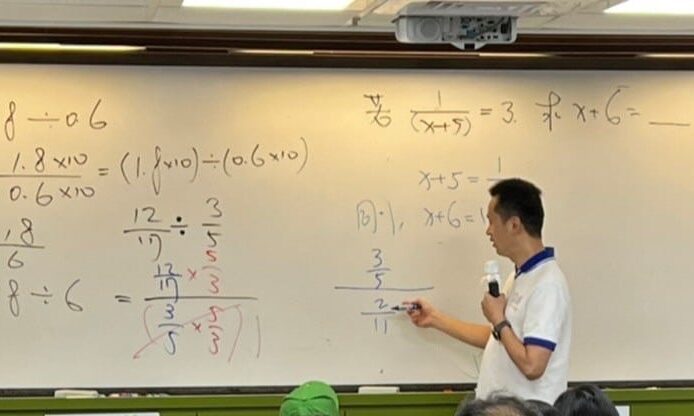
There are many ways to learn mathematics—asking a math teacher in school, private math tutoring, or specialized math tutoring in a tutoring club—but no matter which way you learn, you need to understand one basic principle. Principle: The only way to learn math is to do more problems!
Mathematics is a subject that can only be improved by doing exams, so students should use their spare time to do exams. Examination is one of the most important parts of learning mathematics. Within one to two months, students will progress at a speed that is visible to the naked eye.
The most important thing in learning mathematics is to review regularly. Mathematics knowledge sometimes depends on each other. If you miss a certain concept or question type, subsequent learning will become more difficult. Regular review keeps you informed about mathematics as a whole while helping you better understand each concept.
In addition to doing questions, learning mathematics also requires finding suitable learning resources. These resources can be textbooks, exercises, instructional videos, etc. It's important to choose a resource that's right for you, as everyone's learning style and speed is different. Don’t be afraid to try different resources and find what works for you.
In short, learning mathematics requires perseverance and investing some time in practicing every day. Only through continuous practice can one truly master this subject. Doing more questions, reviewing regularly and finding suitable learning resources are the three key points to improve your math ability. Don’t be afraid to challenge yourself, stay on the path to math mastery, and you’ll get great grades!
Learning math strategies is a long-term process that requires a consistent investment of time and energy. Practice hard every day, and only through practice can you truly master this subject. Doing more questions and reviewing regularly are one of the important ways to improve your mathematical ability. Through repeated practice and review, you can firmly remember different concepts and formulas and improve your problem-solving abilities.
At the same time, finding suitable learning resources is also one of the key points in learning mathematics. Some people may prefer to read books, while others prefer to find relevant resources online. Whether it is books, online lectures or online teaching videos, they can help you understand the concepts and techniques of mathematics more deeply. Choosing learning resources that suit you can improve learning results and make progress faster.
Finally, don’t be afraid to challenge yourself. Mathematics is a subject that requires thinking and reasoning, and sometimes there are difficulties and setbacks. However, only by persisting and overcoming difficulties can you truly master mathematics. Believe in your own abilities and believe that you can overcome challenges, and you will definitely achieve good results!
All in all, learning mathematics requires persistence and devoting time to practice every day. Doing more questions, reviewing regularly and finding suitable learning resources are the three key points to improve your math ability. Don’t be afraid to challenge yourself, stay on the path to math mastery, and you’ll get great grades!
Private tutoring in math is an effective way to learn and progress in primary school math. In private tutoring, students receive individualized guidance and the opportunity to have their questions answered. Teachers can more easily discover students' weaknesses and provide targeted coaching and exercises to help students overcome difficulties. In addition, students are freer to ask questions and explore problems in depth in a one-on-one setting, allowing them to understand and master mathematical concepts faster. It can also help students identify and correct errors and remind them of areas where they need to continue working.
To sum up, to improve DSE mathematics ability, we need to persevere and adopt some effective methods. Students can look for private math tutoring to get individual guidance, find learning resources that suit them, and review learning content regularly. As long as you work hard and persist, everyone can make progress in elementary school mathematics!

Mathematics is a subject that requires your full attention, so avoid multitasking or studying in distracting environments, such as noisy cafes or in front of the TV. An important condition for learning math quickly is to find a place where you won't be called away or tempted by distractions like food, chores, or your cell phone.
If you want to know how to learn math quickly, here are some helpful teaching materials,private tutoring services和學習技巧可以幫助您。無論DSE數學/其他學制數學/其他學制數學,還是Hire a tutor to help you achieve your learning goals, GETUTOR can help you.
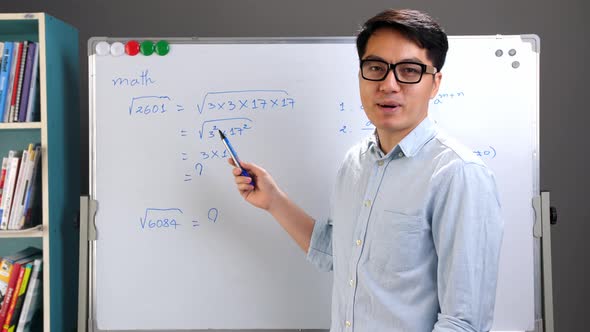
If you think you're studying math alone and still don't understand something, you canFind a private tutor to help. GETUTOR can match you with specialized tutors for math tutoring: private math tutoring/home-based math tutoring/online math tutoring/middle school math tutoring/primary school math tutoring.Instantly match with math tutors in Hong Kong.
For many people, mathematics is a difficult subject to master. But in fact, anyone can achieve excellent results in the DSE mathematics exam as long as they master the correct study methods. This article will share learning experience and help you understand how to achieve excellent results in the DSE Mathematics exam through systematic exercises and learning strategies.
On the road to pursuing high scores in DSE mathematics, it is crucial to understand the core requirements of the exam and high-scoring strategies. This section will delve into how to effectively prepare for the DSE Mathematics exam to excel in this challenge.
A frequently heard saying is “the best test results are obtained by drilling the paper”, and this is especially true during the preparation process for DSE Mathematics. Through extensive practice with past test questions, students not only become familiar with test question types, but also master time management and problem solving speed.
It is important to choose practice papers that suit your level and exam requirements. From basic to advanced, gradually increasing the difficulty will help establish a solid mathematical foundation.
Scheduling mock exams during preparation can help students adjust to the pressure and pace of a formal exam. This not only improves problem-solving abilities, but also enhances psychological quality.
In the learning process, it is extremely important to establish a wrong question book. This not only helps students record their mistakes in solving problems, but also effectively conducts targeted review.
The first step in establishing a wrong question book is to learn from mistakes. Whenever you make a mistake, you should not just focus on the mistake itself, but more importantly, analyze the cause of the mistake in depth.
Categorizing errors allows for more efficient review. For example, they can be classified according to error types (such as calculation errors, conceptual misunderstandings, etc.) or related knowledge points.
Effective incorrect questions should be easy to access and review. Here are some practical suggestions to help students create an efficient error book.
Whether it is a paper wrong answer book or an electronic wrong answer book, choosing a recording method that suits you is the first thing. The electronic wrong question book is convenient for searching and updating, while the paper wrong question book is more suitable for handwriting and reading at any time.
When recording in the wrong question book, it should include complete information about the wrong question, analysis of the cause of the error, and correct problem-solving ideas and answers. This will help you review and learn later.
After establishing a wrong question book, regular review is indispensable. You can set up a fixed review plan, such as reviewing the wrong question book once a week or every two weeks to ensure that mistakes are not repeated.
Self-study and preview play a key role in the preparation for DSE Mathematics. Through independent learning, students can have a certain understanding of the content they are about to learn before formal lectures, so that they can focus more on the teacher's explanations and in-depth discussions in class.
The Internet and libraries are treasure troves of learning resources. Students should actively look for teaching materials and tutoring materials suitable for their own learning stages and goals, and preview them in advance.
Effective self-study requires planning. Students should develop practical and feasible study plans based on their own learning progress and goals and stick to them.
On-campus examinations are not only an important means of testing learning effectiveness, but also an important part of preparing for public examinations. Taking every on-campus exam seriously can help students discover and make up for their knowledge deficiencies in a timely manner, while improving their test-taking skills.
After each on-campus exam, students should reflect on their performance in the exam in a timely manner, identify errors and deficiencies, and adjust their study plans and strategies based on the reflection results.
When preparing for on-campus exams, try to simulate the real exam environment. This will help students adapt to the pressure of formal exams and improve their test-taking abilities.
Mathematics tutors provide assistance in DSE mathematics and other aspects to meet your students' mathematics learning needs and improve students' mathematics scores and logic levels. But more importantly, his/her self-confidence will grow.
Other benefits include:
Most parents and students who recognize that private math tutoring is one of the most successful teaching/learning models choose our math tutors. They all have the following insights or goals:
Each student's learning style and learning speed in mathematics is different, so in one-to-one tutoring, students receive dedicated teaching from mathematics tutors. Math tutors can tailor math learning courses to individual students, taking into account learning styles, strengths and interests, and work with students to achieve their goals and progress together.
GETUTOR We have been serving Hong Kong for ten years by matching students' academic needs and learning styles with suitable tutors. All of our DSE Math tutors join based on their desire to become educators, but equally important is their love of teaching.
GETUTOR 擁有200000名專業數學補習導師,值得信賴的補習專員團隊,涵蓋所有範疇的數學補習,包括數學DSE,M1,M2,其他學制數學補習等。
Unlike similar tuition intermediaries,GETUTOR is committed to providing flexibility and the highest quality mathematics education with a professional approach.
GETUTOR: The tutoring agency platform with the highest parent satisfaction
Click here to register for tutoring
After parents register for math tutoring in GETUTOR, GETUTOR's customer service specialists will provide math tutoring based on the student's math scores, goals (target scores for DSE math or other public exams), areas of difficulty/strength in math learning, and learning styles of math subjects. Teacher expectations, etc., to match you with the math tutor that is best for you. Once we find a suitable math tutor, we will contact the parent/student and provide the tutor's information and background. The entire process usually only takes a few hours or days.
數學導師的收費取決於導師的數學教學經驗以及該導師在公開試數學科(DSE數學、其他學制數學、其他學制數學等)。一般而言,一般大學生老師的時薪約為$180-250,全職補習老師的時薪約為$250-400,現職老師的時薪則$400起。
Note: The above prices are for reference only.
一般而言,多數的DSE數學補習、其他學制數學補習學生及數學補習導師都會要求每一節數學科補習至少1.5小時。GETUTOR亦建議家長及學生最好維持每節的數學補習課堂在1.5小時至2小時間,這樣對學生的數學科學習最有效益。
這取決於學生的當前數學水平、目標以及學生時間安排。大多數的DSE數學學生、其他學制數學學生或其他學制數學學生每週都至少與他們的數學補習導師進行一至兩次數學補習課,這樣才能有成效。一些數學科基礎較差的學生甚至每週進行3次以上DSE數學補習/其他學制數學補習。
DSE數學、其他學制數學、其他學制數學科等都非常着重學生在數學科的基礎,所以數學補習的結果會隨著時間的推移而出現。平均而言,學生或家家可以在大約三個月後發現數學補習的成效。數學補習其中一個主要目標是為學生養成成功的學習和學習習慣,這個過程需要一些時間。學習,尤其數學科學習是講究一理通百理明,學生一旦學會,就會對學生在數學科,甚至整個DSE/其他學制/其他學制/其他學制的學術生涯的學習產生積極影響。
一般而言,DSE數學補習/其他學制數學補習大多在學生家中進行,而其他學制數學補習和其他學制數學補習則多為線上補習。如果家長覺得上門補習不方便,那麼亦可考慮線上補習/zoom補習。在家裡zoom補習一來時間更容易與數學補習老師遷就,二來學生一般對線上補習會感到更舒適和放鬆,因此會對數學DSE補習、其他學制數學補習、其他學制數學補習或其他學制數學補習學習更加開放和接受,所以當在家中進行線上補習時,學生可以在數學補習課中事半功倍。
數學導師提供的數學補習課程完全是為了滿足學生在DSE數學科/其他學制數學科/其他學制數學科/其他學制數學科的需求而創建的,所以如果數學導師在補習課堂中覺得學生需要額外的數學練習時,我們的數學補習老師導師會在數學補習課堂之外為學生提供額外的功課。
GETUTOR會安排數學補習導師或老師在課堂開始前和家長聯絡,這樣數學補習導師了解學生在各學制的數學科(包括DSE數學,其他學制數學,其他學制數學,ICGSE數學等)的學習需要,數學補習老師亦可以在補習課後告知家長學生的進步,並反映學生在數學科可能需要額外幫助的地方。家長、數學補習導師和GETUTOR三方合作,助你的學生於數學DSE、其他學制數學其他學制數學或其他學制數學中奪取佳績。
One, make sure math tutors and students have all the materials they need and a quiet place to do math tutoring. Make sure students have all applicable math textbooks and other math materials before starting math tutoring.
Second, follow up with students on math remedial courses and set appropriate math learning goals. Maintain an active line of communication with your math teacher after your math tutoring class, provide specific and positive feedback to your math tutor on your student's math learning, and contact us with your math tutor and GETUTOR to provide us with feedback and suggestions.



全港數學補習: 返回全港數學補習導師名單 →


